 BORETS
In this guide
A grappling week can contain plenty of hard efforts and very little controlled, steady work. An easy aerobic session offers a different training stimulus, but it still adds load. Its value depends on whether you can repeat it and continue learning well on the mat. Do not judge the session by how exhausted it makes you. Choose an activity, a manageable effort and a place in the week first. Then use your response to decide whether the duration should grow, stay the same or shrink.
Choose an activity with a low learning cost
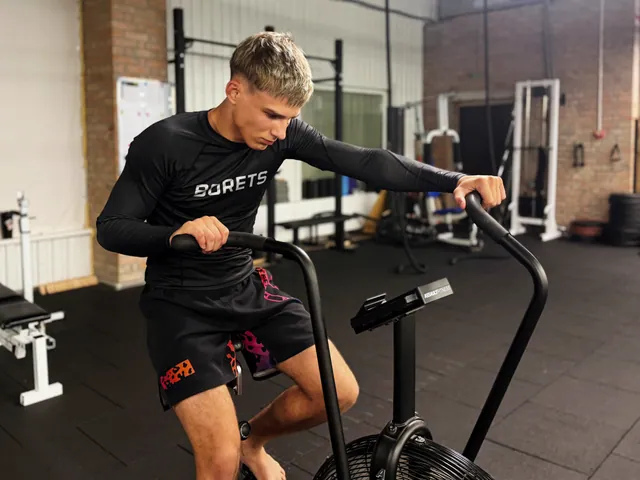
A stationary bike, brisk walk or easy jog can all work. Prefer an option you already tolerate and can control continuously. If running is new, do not assume an easy breathing pace makes a sudden large increase in running volume easy for the legs. Walking or cycling may fit better initially. Set up the bike comfortably and choose a route or machine that allows a steady pace. Rowing is another option, but heavy forearm work may be inconvenient after a week of demanding grip sessions.
Use speech and effort instead of chasing a number
During this session, you should be able to speak in complete sentences without repeatedly breaking for breath. The CDC uses the talk test to describe relative aerobic intensity; it is a practical guide, not a laboratory measurement of a specific training zone. Start around an easy-to-moderate personal effort and lower the pace if conversation becomes strained. A watch can help compare your own sessions, but an age-based heart-rate formula does not identify everyone’s individual thresholds. Heat, fatigue and the chosen activity can change the response.
An introductory adult session
Try five easy minutes, 15 minutes at a conversational pace and a few easier minutes to finish. A trained adult who already tolerates steady activity might use 20–30 minutes in the main block; someone returning after a break can start with less or alternate short walking segments with rests. These are examples, not universal requirements. Keep the first session deliberately manageable. You should finish able to imagine doing it again, rather than needing to lie down or cancel the next day’s practice.
Fit it around the demanding sessions
If hard grappling is Monday and Thursday, a short Wednesday aerobic session may fit, but check Thursday’s performance before adding another. An athlete already training twice daily may have less room than a recreational student. Easy work is not automatically a recovery treatment, and it does not replace sleep or a day off when one is needed. Start with one added session. If the week remains manageable, consider a second on a separate day rather than making the first much longer and harder.
Track the next session, not only this one
Log activity, duration, perceived effort and how the next mat warm-up felt. After a couple of stable weeks, add a few minutes while keeping effort similar, or keep the dose unchanged if it already fits. Faster pace at a similar effort can be useful progress; more fatigue is not required. Reduce the work when persistent tiredness or declining mat quality appears. Stop for concerning symptoms such as chest pain or dizziness. For children, varied active play and age-appropriate coaching are preferable to copying an adult mileage target.