 BORETS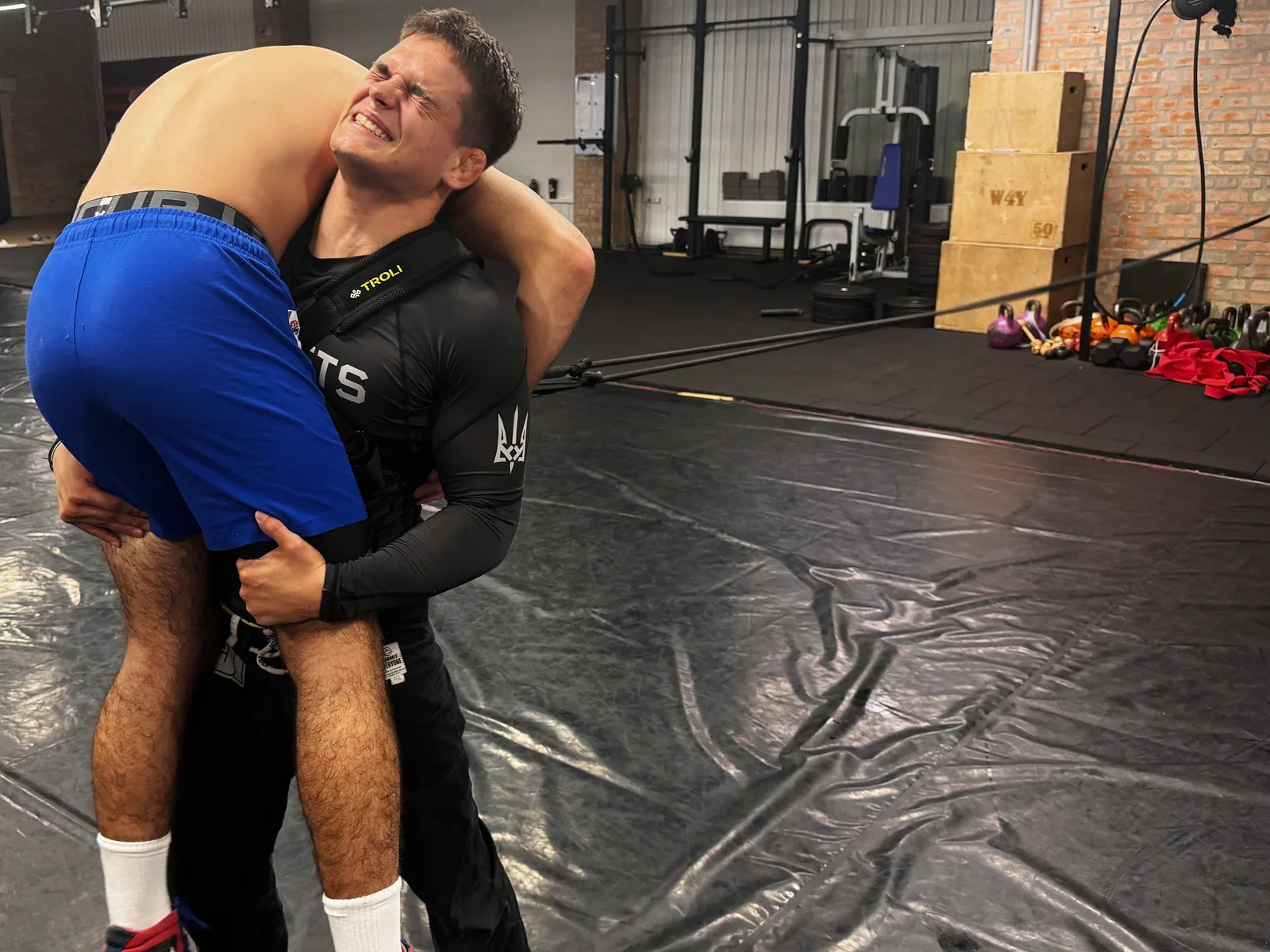
In this guide
An explosive entry combines force with timing and a useful direction. Jumping higher may improve one physical quality, but it does not teach you to enter when an opponent’s weight shifts. Train these pieces alongside one another: a simple power exercise, a technically organised entry, and enough recovery to repeat both well. A session that ends in slow, collapsing repetitions has changed its purpose. For power work, the quality of the first and final repetition should remain recognisably similar.
Learn to stop before trying to jump farther
Start with a shallow squat and a quick rise, then practise a small two-foot jump that finishes in a balanced stance. Hold the landing briefly. The feet stay planted, the knees follow the direction of the feet and the torso does not pitch forward uncontrollably. A beginner can first rehearse the landing without leaving the floor: rise onto the toes, then lower into the receiving position. Use a non-slip surface and clear space. Distance is secondary until stopping is predictable.
Add one throw that stays fast
A medicine-ball chest pass offers another simple option. Use a ball light enough to accelerate visibly, a suitable wall or a clear throwing lane, and an agreed retrieval routine. From a stable stance, drive the ball away without turning the finish into a large lower-back arch. Reset before each repetition. If the ball is so heavy that the throw becomes a slow press, reduce the load. A standing fast band press can be a simpler alternative where throwing is impractical, provided the anchor is secure.
Use a small adult session as a starting example
After warming up, an adult familiar with basic landing mechanics could try three sets of three low jumps and three sets of three light chest passes. Rest roughly 90–120 seconds between sets, extending recovery if speed or landing quality has not returned. This deliberately modest example is not a minimum workload. Begin with fewer sets when the movements are new. NSCA guidance on plyometrics emphasises low volumes of high-quality repetitions; the aim is to produce force quickly, not to accumulate breathlessness.
Connect the quality to an actual entry
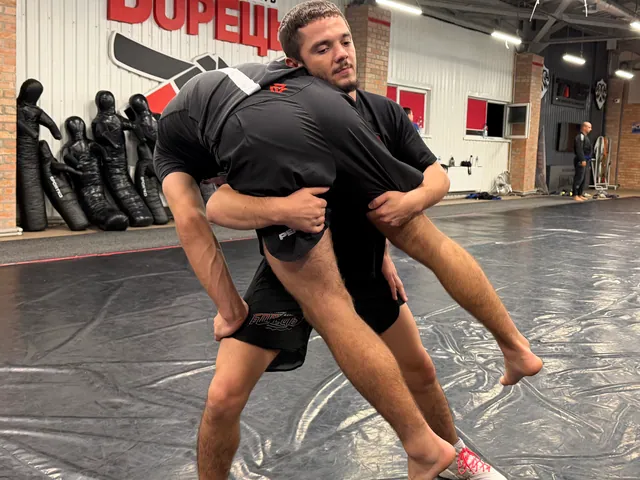
Keep technical entries in their own controlled block. Practise a level change and short entry step on a mat, first alone and then towards a cooperative partner without finishing a takedown. Look for the rear foot recovering underneath you after contact. A strong jump does not excuse reaching from too far away or driving the head down. Film one entry from the side and ask whether the whole body travels together. Progress the opponent’s movement separately from the intensity of the power exercise.
Stop when the output changes
End the set when jumps become visibly lower, landings need extra recovery steps or throws lose speed. Do not rescue the prescribed number with harder effort and worse mechanics. Place this work early in a session, after the warm-up, rather than after exhausting live rounds. Log the exercise, sets and quality of the final repetition. Increase difficulty only after repeatable sessions. Children need age-appropriate landing games and light implements under supervision; adult volume and loaded jump challenges are not their default progression. Pain is a reason to stop the exercise, not a signal to jump through it or compensate with a different landing.