 BORETS
Can grapplers copy each other’s movement?
July 15, 2026This episode replaces a match with a movement challenge. Athletes from BJJ, freestyle wrestling and sport sambo take turns demonstrating an acrobatic task, while the others try to reproduce it. The opening includes a berimbolo-style movement. The rest of the session asks how a shared grappling background helps when the pattern itself is unfamiliar.
The demonstrator changes with the discipline
The BJJ athlete sets the opening task. At 1:36 the wrestler introduces a movement, followed by the sambo round at 2:16. A second cycle begins at 2:51. The changing demonstrator means that no athlete remains the expert for every exercise.
That is the useful difference from a normal demonstration video. The film includes watching, attempting, adjusting and trying again. A movement that looks obvious to the person who practises it can become a genuine coordination problem for an experienced athlete from another discipline.
Observe the correction between attempts
Rather than asking only who can copy the movement immediately, watch what changes on the second attempt. Does the athlete alter the order of the movement, the direction of rotation or the point of support? These are ways to read the process without treating a successful imitation as proof that the athlete has mastered the entire skill.
The shared grappling base gives the participants familiar experiences of balance and body control. It does not make every new pattern automatic. The value of the exchange is seeing experienced athletes become learners in front of one another.
The final round adds a speed condition
At 4:25 the group moves into the final speed challenge. The task now includes performing the movements together at a faster pace, adding a different demand to the earlier attempts to understand the pattern. It remains a movement session, not a contest decided by takedowns or submissions.
Use the film to notice how the athletes learn and adapt, rather than as a ready-made acrobatics programme. Copying an unfamiliar rotation from a short edit misses the coaching, preparation and suitable practice conditions behind the visible attempt.
From the YouTube description
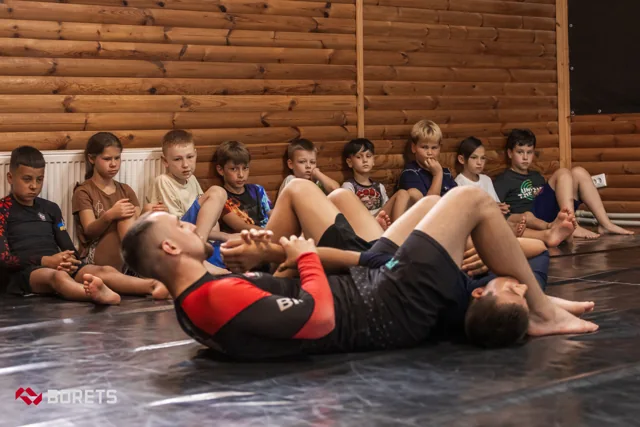
Kolya Chaban, a Ukrainian national-team freestyle wrestler, stunned a room full of Sambo and BJJ fighters before the real challenge even began. At BORETS LAB in Kropyvnytskyi, Ukraine, he demonstrates a series of explosive acrobatic movements that look almost impossible. Then everyone else has to try them. Can athletes from Sambo and Brazilian Jiu-Jitsu match the coordination, explosiveness and body control of a high-level freestyle wrestler? Our team trains across BJJ, Sambo and freestyle wrestling, so we’re always testing what athletes from different grappling styles can learn from one another. This time, there are no submissions or takedowns—just an insane acrobatics challenge that becomes much harder than anyone expected. Watch until the end to see who adapts fastest, who surprises the entire gym, and which movement causes the most trouble. Subscribe to BORETS LAB for real training, cross-style challenges, hard sparring and competitions . Who impressed you the most—and what challenge should we try next? #Wrestling #Sambo #BJJ #Grappling #BORETSLAB
What viewers say on YouTube
Recent public comments on this video, shown in their original language. These are channel comments, not reviews of a school subscription.