 BORETS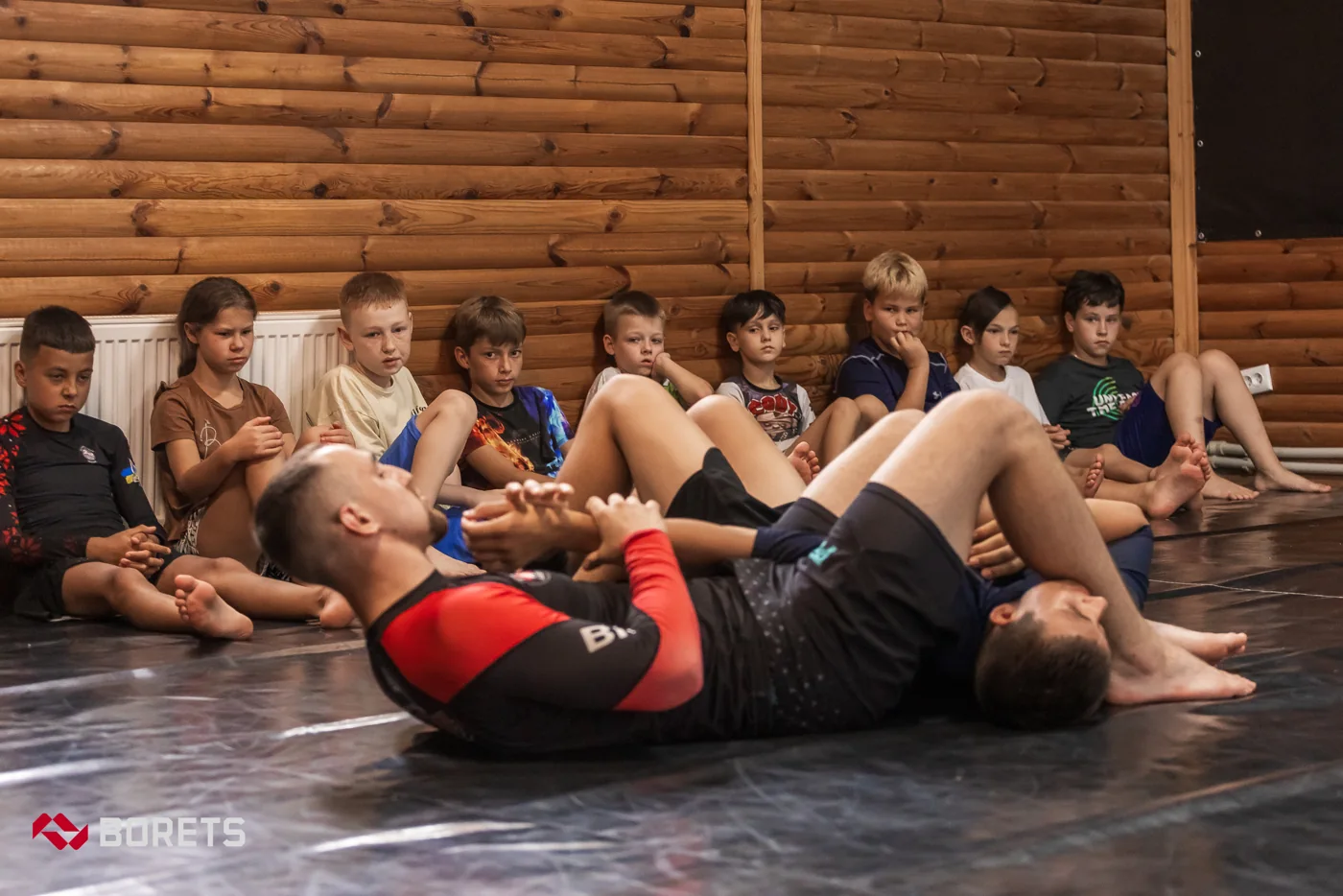
In this guide
Nobody tells you the most important thing about your first jiu-jitsu class: you are supposed to be bad at it. Everyone on the mat was bad at it once, including the black belt teaching you. The beginners who stay are the ones who understood early what class is for, what to pay attention to and how to measure progress when the belt is not going to change for a long time. This guide is that understanding, from a school that has walked hundreds of people through their first month.
What actually happens in a BJJ class
Most classes run sixty to ninety minutes and follow a shape you will recognise within a week. A warm-up of ten to fifteen minutes: running, shrimping, forward rolls, bridging. Then technique: the coach shows a position and two or three details, and you drill it with a partner who is not resisting. Then positional sparring, starting in the position you just learned against a partner who now resists. Then, for those who want it, free sparring, called rolling.
Ask how the school introduces sparring; you can tell the coach you want to begin with controlled positional work. What you will be asked to do is tap: two clear taps on your partner or the mat, or a loud verbal tap, the moment a submission is on. Tapping is not losing; it is the reset button that lets you train tomorrow. Etiquette is simple: slap hands to start, keep your nails short, wear a clean gi or rash guard, and never talk through the coach's demonstration.
The positions to learn first, in order
Jiu-jitsu has a hierarchy of positions, and a beginner's job is to learn what each is for before learning to submit from it. Start with the two you will spend the most time in: the bottom of side control and the bottom of mount. Learn what a frame is, how to keep your elbows in and how to bridge and shrimp to make space. Surviving there without panic is the first real skill.
Next, closed guard, the position where a beginner has the most control with the least skill: legs wrapped around the partner, hands working their posture. Learn to hold it, break posture and do one sweep and one submission from it. Then the top positions: holding side control without leaning on your hands, staying heavy in mount, passing with pressure rather than speed. Finally the back, taking it and defending it. If you can name each position and say what you are trying to do from it by the end of month one, you are ahead of most beginners.
Training habits that separate the people who stay
Come to class with one question. Not a technique you want to learn, but a problem from your last session: I keep getting passed to the left, I cannot escape mount, my partner always gets the underhook. A specific problem gives your coach a clear place to start.
Drill slower than feels natural. Fast drilling practises the version that works on a partner who is not resisting, which is not the version you need. Our school’s story is built on athletes who developed from childhood through years of training, not on shortcuts past the basics. And roll to learn, not to win: tapping five times to a purple belt is not a bad round if you kept your elbows in and recovered guard twice.
A first-month plan
Week one: two classes. Learn to tap, shrimp and bridge, and learn what the positions are called. Leave each class knowing where you were and why, even if you could do nothing about it. Week two: two or three classes. In positional sparring, start on the bottom of side control every round and work only on frames and escapes. Ask your partner to use enough resistance for you to work without turning every attempt into survival.
Week three: add closed guard. Get there every round you can, hold it, try one sweep the coach has shown. Week four: pick one problem from the previous three weeks, ask the coach, and spend the week trying their answer. Write down what changed. Three classes a week is a good rhythm for most adults; two is sustainable; five in the first month usually produces a body that revolts in week three.
Mistakes every beginner makes
Using strength instead of position: when something fails, the reflex is to push harder, but the answer is usually that you are pushing into your partner's weight. Holding your breath: if you are gasping after a minute, you were not breathing out during the hard parts. Collecting techniques instead of positions: twenty guard passes from the internet are twenty things you cannot do; learn one properly and the rest become variations. Skipping the warm-up movements because they feel silly, when those movements help create space in many common escapes. And rolling only with people you can beat, or only with people who crush you; the rounds that matter are the ones where both of you have a chance.
How to judge progress before the belt changes
Belts often take years, and the IBJJF sets minimum periods for many promotions. There is no minimum period at white belt, and time alone does not earn a promotion. If the belt is your only measure, you will wait a long time between signals. Use better ones: how long you survive in a bad position against the same partner; how many times per round you escape side control or mount; how often you keep your guard when someone tries to pass; fewer taps to the same person over a month. These numbers move within weeks, and they are honest.
The most honest measure is whether you can describe a round. A beginner who can say I lost guard because I gave up both sleeves, then could not frame because my elbow was out, is progressing regardless of results. Understanding arrives before ability.
What to watch, and a place to ask
Watch positional sparring and technique breakdowns, not highlight reels; watch hips and elbows, not the submission at the end. The BORETS YouTube channel shows how our team trains and how standing and ground work connect. Skip anything that promises a shortcut: there is no ten-technique system that skips the months on the bottom.
When your one question a week outgrows what your class can answer, BORETS membership puts it in front of Ievgen Skyrda, Oleksandr Oliinyk, Kostiantyn Zhyvanov, Yaroslav Blazhko and Mykola Chaban, with the option to request a video breakdown of your exact problem. The video school is still being prepared, so registering now is the first step. It does not replace your coach or your partners; it adds a team that has taken beginners to black belt to the people watching your progress.