 BORETS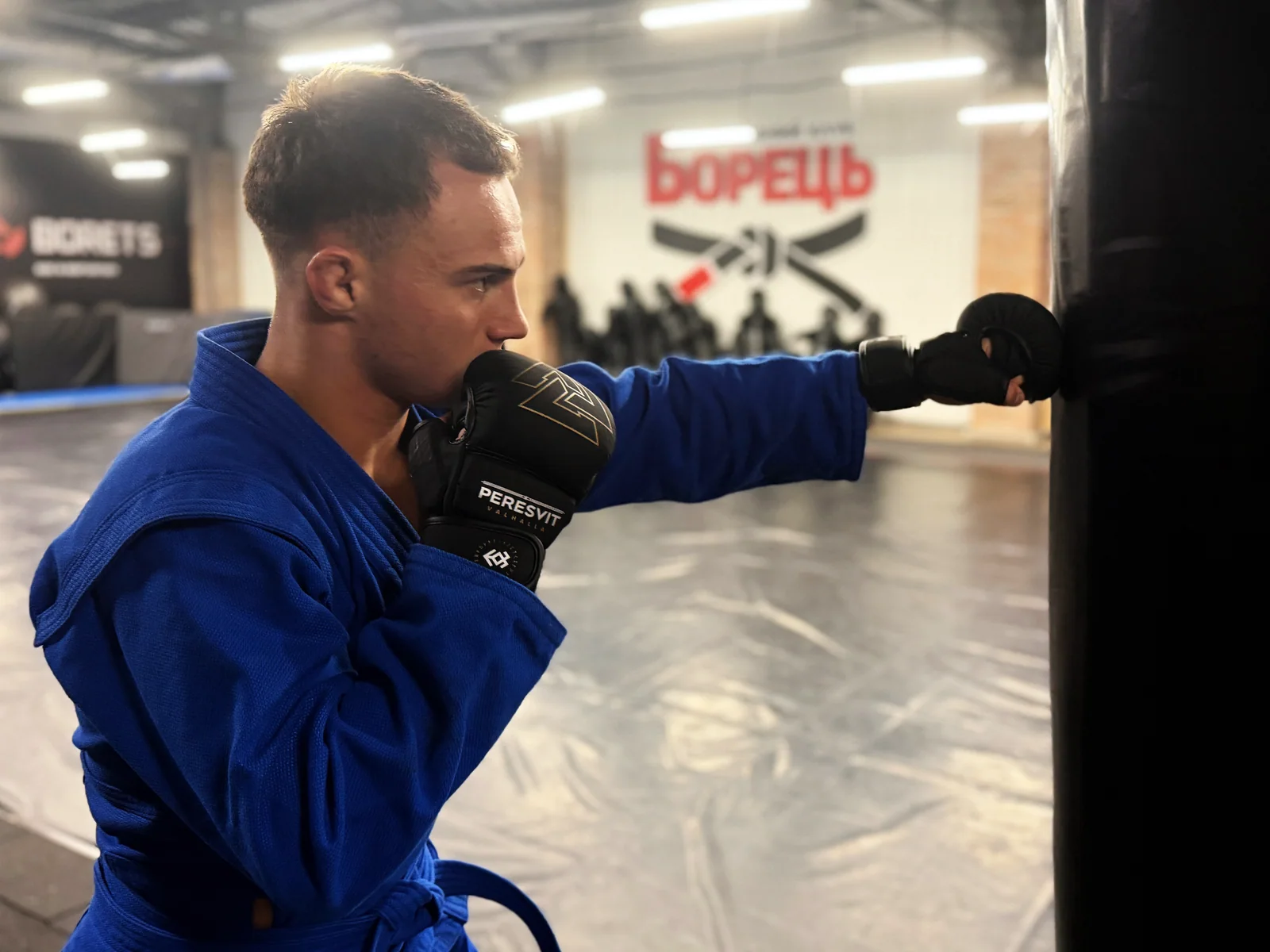
In this guide
- What combat sambo training includes
- Start with stance, movement and controlled falls
- Introduce striking and clinch work as separate clear tasks
- Groundwork belongs in the foundation
- Connect striking and grappling without losing control
- Progress from cooperation to limited resistance
- What you can usefully do at home
- Where it fits in BORETS LAB
Combat sambo combines striking, throws and ground fighting. A beginner needs those elements introduced in a controlled progression, not a deadline for surviving full-contact rounds. This guide explains what to look for in adult classes and how the early stages can fit together. Progress depends on demonstrated skills and coaching judgement, not simply reaching week four.
What combat sambo training includes
FIAS combat sambo permits striking alongside throws, holds and submissions within its competition rules. That changes distance, posture and how athletes enter the clinch compared with sport sambo. The same position can demand a different response when strikes are available, so grappling experience alone does not establish readiness for contact.
The adult competition equipment includes a sambo jacket, shorts, shoes, helmet, gloves, shin protection and mouthguard; the rules specify additional groin protection for men and chest protection for women. A gym may use different equipment for particular drills. Protective equipment does not make uncontrolled contact safe or eliminate concussion risk.
Start with stance, movement and controlled falls
Early classes should teach a balanced stance, movement without crossing or tangling the feet, and how to maintain a useful distance. Practise changing direction and recovering posture before trying to move quickly under pressure. A coach should be able to correct these tasks while you are still working at an easy pace.
Learn falling on suitable mats from positions appropriate to your experience. Begin with the version your coach can supervise and progress gradually; standing throws and unexpected pushes are not required to prove courage. A returning judoka may progress differently from an adult encountering their first breakfall.
Introduce striking and clinch work as separate clear tasks
Shadowboxing, pads and bags can introduce a small set of strikes and defensive movements without making a partner absorb them. Work on balance after the action as well as the action itself. A punch that leaves you unable to move or regain stance is not ready to be combined with a takedown entry.
Clinch practice can begin with finding inside position, controlling grips and moving a cooperative partner. Add a familiar, supervised takedown only when both people understand the entry and landing. There is no need to teach several throws at speed before either person can receive one reliably.
Groundwork belongs in the foundation
Ground positions can be introduced alongside standing skills from the beginning. Learn how to frame, recover a useful base, escape a pin and recognise when the exercise should stop. Start with a clear task such as keeping inside position or recovering a knee between partners, rather than an unrestricted fight.
Before submission practice, establish physical and verbal tapping and immediate release. A qualified coach should introduce the applicable techniques and rules. Beginners do not need to experiment with unfamiliar leg locks, neck pressure or resisted submissions at home to keep up with class.
Connect striking and grappling without losing control
Use small combinations with agreed roles. For example, rehearse a strike on a pad, recover stance and then practise an entry with a cooperative partner. Another drill can begin from an established clinch and end when the athlete reaches a stable position, before adding a full takedown.
The key question is what changes between phases: distance, balance, grips and the opponent’s available actions. Add one new demand at a time. A drill intended to practise entry timing should not quietly turn into hard head contact or a scramble neither partner agreed to.
Progress from cooperation to limited resistance
Cooperative practice teaches the movement. Constrained practice introduces a known response or a narrow objective. More open training then asks the athlete to recognise which action is available. Move between these stages according to control, understanding and the coach’s assessment; the sequence is not a calendar-based promise of contact sparring after a month.
Before any contact round, agree the permitted targets, techniques and intensity. Match partners appropriately and stop when control breaks down. After a suspected concussion, stop participation and seek medical assessment; headgear is not permission to continue through symptoms.
What you can usefully do at home
Review terminology, study the rules and repeat familiar footwork or comfortable conditioning already taught by your coach. A short session with a specific objective can help you return to class with better questions. Leave throws, new breakfalls, partner striking and resisted submissions to a suitable supervised environment.
Video can show posture or timing that you missed, but it cannot provide a training partner or manage live contact. Obtain permission before recording others and share an unedited sequence that includes the setup, not only the final action. Ask one question that can be answered from what the camera actually shows.
Where it fits in BORETS LAB
BORETS LAB brings together the school’s experience in sambo, Brazilian jiu-jitsu, wrestling and physical preparation. Ievgen Skyrda entered BJJ after years in judo and sambo. That background makes the connection between disciplines part of the school’s story without making their rules interchangeable.
The online school is being prepared. Register to follow its launch and check the membership page for current access and the coaching team. In the meantime, use the public guides and BORETS YouTube channel to study specific questions alongside training with a qualified local coach.