 BORETS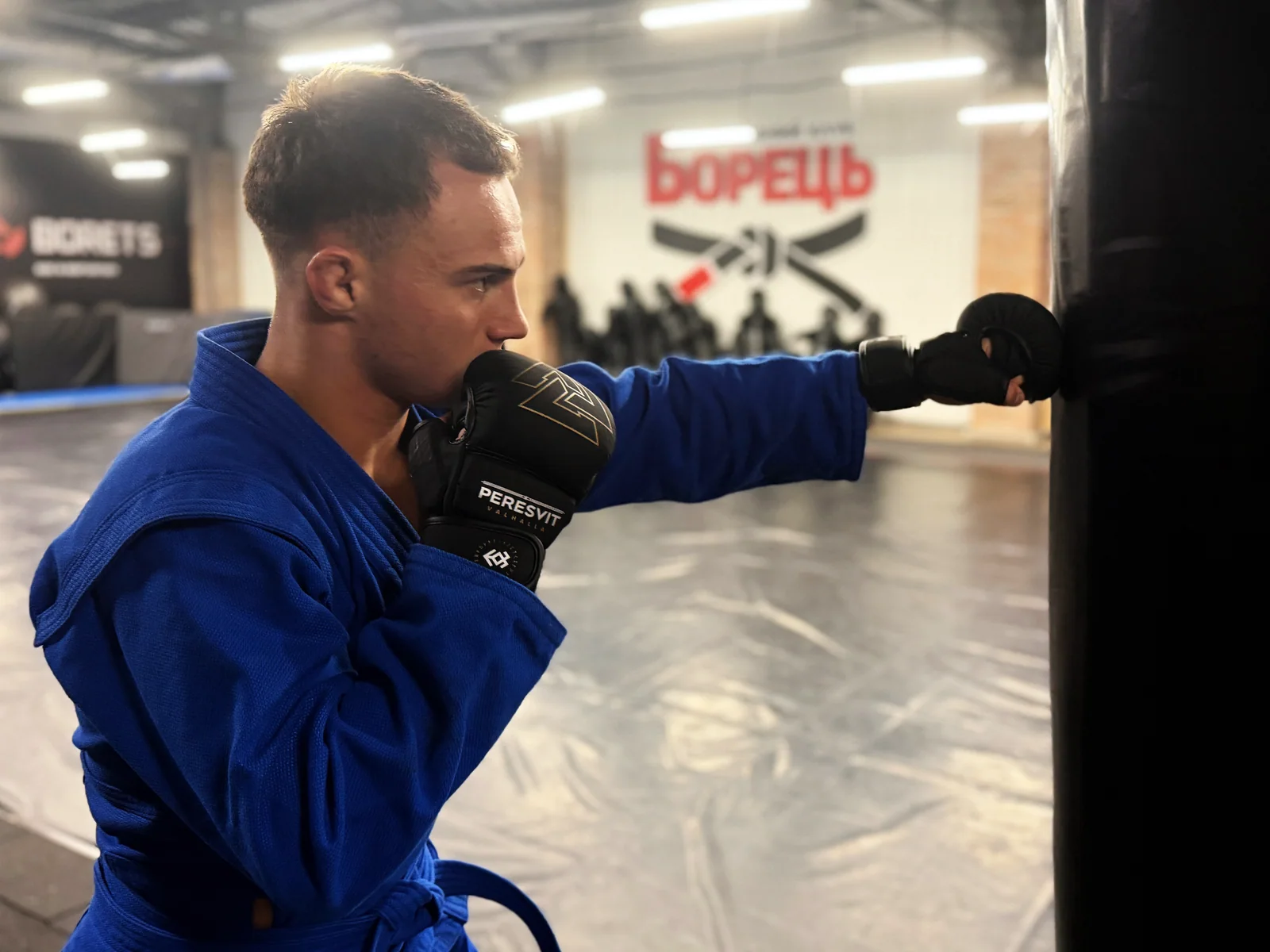
In this guide
Combat sambo permits striking and grappling within a defined competition system. It is not an unrestricted fight, and its scoreboard does not work like an MMA judges’ scorecard. To follow a bout, separate four questions: what actions are permitted, what earns points, what ends the contest and which rules apply to the athletes on the mat. This guide uses the FIAS adult and junior framework; youth divisions have separate regulations.
Read the action categories before the highlights
The framework includes throws, hold-downs, joint locks, chokeholds and permitted strikes, including punches and kicks. The word “permitted” does real work: legality depends on the target, the athletes’ positions and the division. A legal action in one category is not automatic permission to use it in another.
For example, FIAS’s recent rules explanation identifies a restriction on knee strikes to the head in women’s combat sambo. A highlights reel of men’s bouts cannot answer that rules question. Before a technical session, identify the exact category and read its striking restrictions with the coach. Avoid building a practice agreement around “anything from combat sambo.”
Know what the scoreboard is measuring
Throw scores depend on the landing and on whether the attacker remains standing or falls. A completed 20-second hold-down earns two points in combat sambo, with only one scored hold-down per bout. A knockdown earns four points. Do not copy the sport-sambo hold-down table into combat sambo: the values differ.
Nor does every punch that touches an opponent add a fixed point. The rules assess specified outcomes of strikes. When watching, distinguish contact from an officially scored action. Pause after the referee’s decision and record what was awarded, rather than trying to infer the score from how busy an exchange looked.
A practical viewing exercise is to follow one athlete through an entire exchange: approach, contact, landing and continuation. If the camera hides the landing, mark the score as unclear until the officials signal. This is more reliable than treating the loudest impact or the fastest sequence as the highest-value action.
Separate a pause from the end of the bout
Adult and junior FIAS bouts last five minutes of actual contest time unless decided earlier. Early victory can result from a qualifying total throw, submission, knockout, two knockdowns or an advantage of at least eight points, among other rulebook outcomes. At full time, points and the specified tie-breaking criteria determine the result.
An eight-point lead is different from a total score of eight. A score of 8–4 is a four-point lead; 10–2 is an eight-point lead. Use that simple arithmetic when reading tactical choices near the end. A competitor protecting a narrow lead faces a different problem from one approaching the early-victory margin.
When the whistle goes, stop the action. A reset, a warning and the announcement of a winner have different meanings. In practice, partners should also have a clear stop signal independent of the exercise timer. A rule allowing a competitive submission does not justify continuing pressure after a training partner has stopped.
Equipment is part of the rules
FIAS specifies combat-sambo head protection, striking-and-gripping gloves, shin protection and a mouthguard, alongside the uniform and applicable body protection. Its equipment specification documents describe approved designs. Ordinary MMA gloves or a headguard bought for another sport are not automatically competition-compliant.
Have the actual kit checked before an event. Fit matters during practice too: equipment that shifts can interrupt vision, movement or communication. Ask who checks it and when damaged items are replaced. Protective gear supports a controlled session; it does not turn unrestricted contact between inexperienced partners into an appropriate beginner exercise.
Use the rules to prepare a specific question
Bring the current document, your division and one example to the coach or referee. Ask which article governs the situation, rather than whether a move is “a sambo technique.” Confirm the event’s adopted rules, weigh-in arrangements and equipment checks before entry. FIAS maintains separate youth documents, so parents should request those instead of applying adult permissions to children.
For study, compare two short exchanges with different outcomes: a throw followed by control, and an attack stopped by the referee. Describe the visible difference before proposing an explanation. You are building the ability to read a contest. Technical execution and controlled contact still need instruction on the mat.