 BORETS
In this guide
The first tournament adds unfamiliar people, waiting and a referee to skills the child has practiced in class. Readiness is therefore more than knowing one throw. Choose an event with suitable divisions and a manageable format, then make the day predictable enough that the child can focus on the next task rather than every administrative detail.
Check the event, not just the poster
Read the actual regulations for age eligibility, weight categories, permitted techniques, bout format and entry requirements. Confirm how the event determines age: the relevant birth year or another stated cutoff. A broad “children’s sambo” label does not establish which rules apply to your child’s group.
Ask how beginners are placed and what happens if there is no suitable opponent. Do not assume every tournament separates experience levels or guarantees several bouts. Before paying or traveling, know the organizer’s policy on combined categories and withdrawal. FIAS documents provide an international reference, but the specific event must explain its own applicable conditions.
Agree on readiness with the child included
The child should recognize the start and stop instructions, understand their basic task and have experience with the permitted contact. They also need a way to tell an adult when something hurts or they are confused. A practice simulation with a greeting, signal and reset can reveal uncertainty before a crowded competition does.
Participation should be an informed choice, not a surprise announced after registration. Explain that the opponent will try to stop their techniques and that the referee may interrupt. The child does not need to predict a result. One useful goal is to understand the opening procedure and attempt a familiar task under the agreed rules.
Prepare the documents and kit early
Make a short event-specific list: registration confirmation, required identification, any requested consent or medical documentation, the accepted uniform and the coach’s contact details. Check the venue, arrival instructions and weigh-in time. Save the current schedule somewhere accessible rather than relying on a screenshot from an earlier edition.
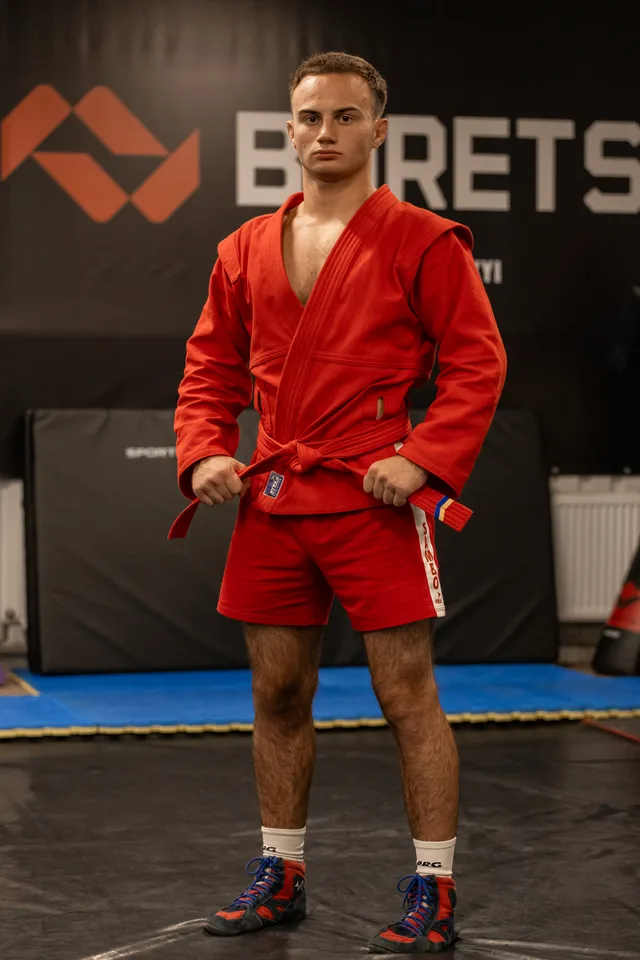
Try the complete uniform before departure, including shoes and any required identification. Pack water, familiar food, a change of clothes and something quiet for waiting. Keep documents together and label the bag. One adult should know who is responsible for the child between check-in, warm-up and the call to the mat.
Enter at the child’s normal weight
Do not use skipped meals, restricted drinking or extra sweating to fit a lower category. The AAP warns against rapid weight manipulation in young athletes, and USA Wrestling’s parent guidance favors natural weight for children. A first sambo event should not become a family experiment in weight cutting.
Check the organizer’s weighing procedure beforehand, including any clothing requirement. If the child’s normal weight no longer fits the registration, address the category with the organizer and coach. Changing the entry or choosing another event is preferable to improvising a last-minute weight-loss plan.
Keep the waiting and the aftermath manageable
Find the team’s meeting place, identify the mat call procedure and let the coach organize the warm-up. Avoid repeatedly announcing that the bout is about to start when the schedule remains uncertain. Give updates you actually know, and keep the child near the agreed adult rather than wandering between unfamiliar mats.
After the bout, first check how the child feels and let them settle. Save detailed technical questions for the appropriate moment with the coach. Record one practical lesson for next time, such as arriving at the warm-up area earlier. Winning or losing does not change the child’s right to calm support and a clear plan for getting home.