 BORETS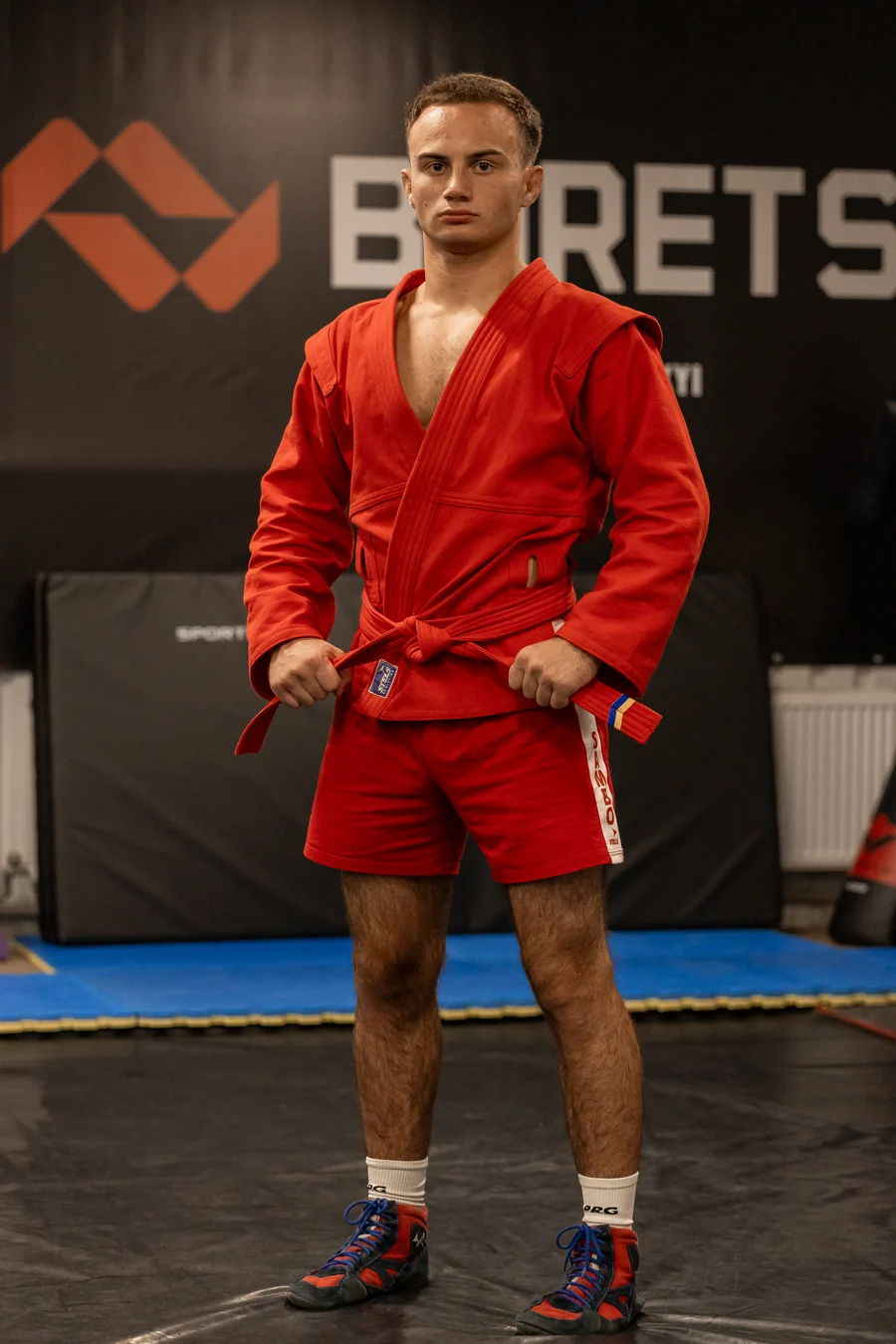
In this guide
The useful first purchase is equipment your child can move in and the club accepts. A matching red or blue set can look correct while the jacket, shorts or shoes fit badly. Before choosing a brand or ordering a larger size “to grow into,” check the current training requirements and test each item through ordinary movements.
Know which items you are buying
The sambo uniform includes a specialized jacket, shorts and sambo shoes, with a belt securing the jacket. FIAS publishes manufacturing specifications for these items. A judo or BJJ gi, ordinary trainers and general sports shorts should not be assumed to be interchangeable with a competition sambo kit.
For an introductory class, the club may allow temporary clothing or have a loan arrangement. Confirm that before purchasing a complete set. Also establish what the child wears underneath and whether any additional item is needed for that group. Combat-sambo protective equipment is a separate subject, not an automatic addition to every young beginner’s bag.
Check the jacket in movement
Have the child raise their arms, reach forward, turn and squat with the jacket secured. It should allow the taught movements without forcing the shoulders up or making the child repeatedly pull the fabric back into place. Check both sides rather than judging only the front view in a mirror.
Too-large sleeves can obscure the hands and create excess fabric for a partner to manage. A jacket that is too tight can restrict movement or make normal grips difficult. Growing room should not overwhelm today’s fit. Use the seller’s actual measurements and return policy; age labels alone are not a reliable size comparison between brands.
Shorts and shoes need their own check
The shorts should stay at the waist while the child steps, squats and kneels. Check that the fastening does not create a hard or dangling obstruction. A comfortable standing fit is not enough if the waistband slides or the fabric restricts the legs during the movements used in class.
Try both shoes and check for toe pressure, heel movement and rough internal seams. FIAS’s specifications describe soft footwear without protruding rough elements. Do not buy a much longer shoe merely to extend its lifespan. Let the child move on a clean suitable surface, then check whether they have been curling the toes or gripping to keep it on.
A training purchase is not tournament clearance
Before a tournament, read that event’s uniform requirements, including color, certification, identification and any division-specific items. A kit accepted at weekly practice may not satisfy the event’s inspection. Likewise, a seller’s “sambo approved” description is not a substitute for the rules of the competition you are entering.
Check these details while an exchange or replacement is still possible. Do not leave the first complete try-on until weigh-in day. If borrowing equipment, test the actual borrowed pieces beforehand rather than assuming that a teammate’s nominal size will fit your child.
Make care part of the purchase
Read the washing and drying instructions before choosing a size; do not promise yourself that washing will correct a bad fit. Clean training clothing after use and dry it fully as directed. Keep footwear out of outdoor dirt and check its condition regularly, especially as the child grows.
A useful purchase solves the current task with reliable fit, acceptable construction and manageable care. It does not need to be the most expensive kit or a brand worn by a champion. Recheck the fit when movements become restricted or the equipment starts shifting, rather than waiting for the next tournament.