 BORETS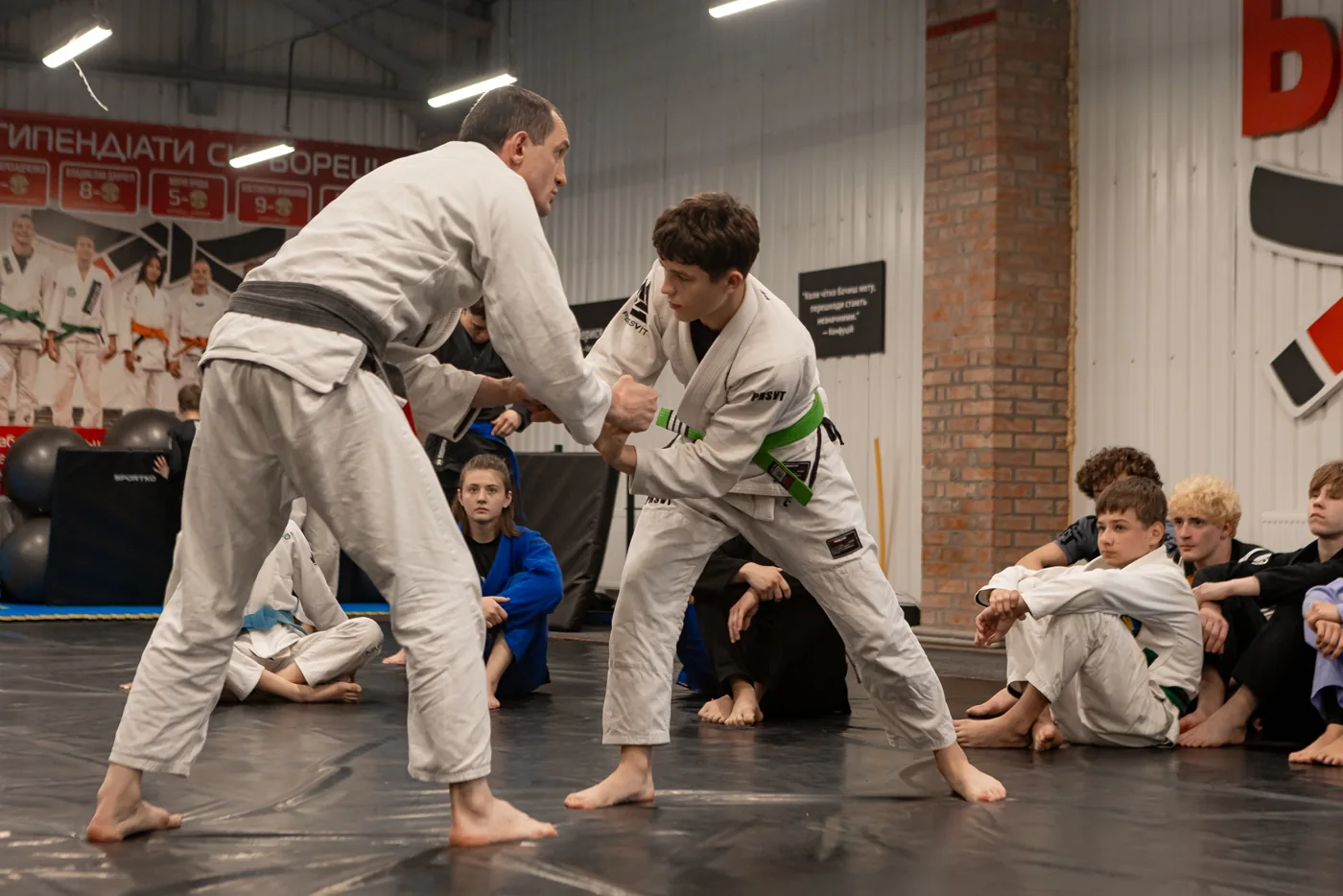
In this guide
- Clothing changes the available grips
- The positions transfer; the route may not
- Do not confuse pace with technical depth
- Clothing and competition rules are separate choices
- Where should a beginner start?
- Can you wear a cup in BJJ?
- Finger tape: useful equipment, not a substitute for changing the grip
- A transfer test, not a format debate
Gi and no-gi BJJ share a large part of their positional language, but the available connections change. In gi, the jacket and trousers can become handles. In no-gi, you cannot build your control around gripping an opponent’s shirt or shorts. The practical question is not which format wins an argument online. It is which skills you want to develop and where you can practise them consistently.
Clothing changes the available grips
In gi, a sleeve grip can maintain a connection after an opponent’s arm moves away. A lapel can connect your hands to the torso without wrapping around it. These options create useful controls and also extra problems to solve when someone grips you. A gi is more than an extra layer of friction.
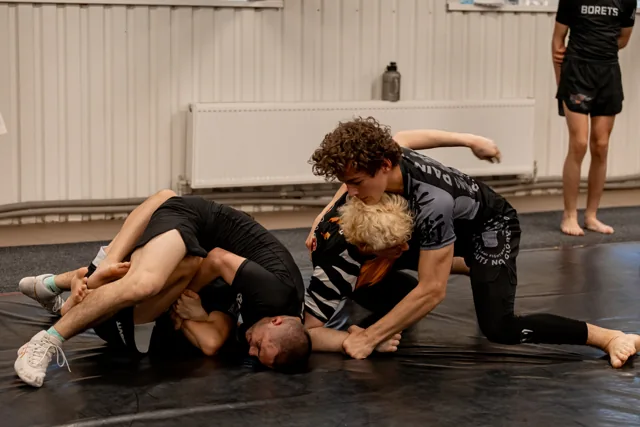
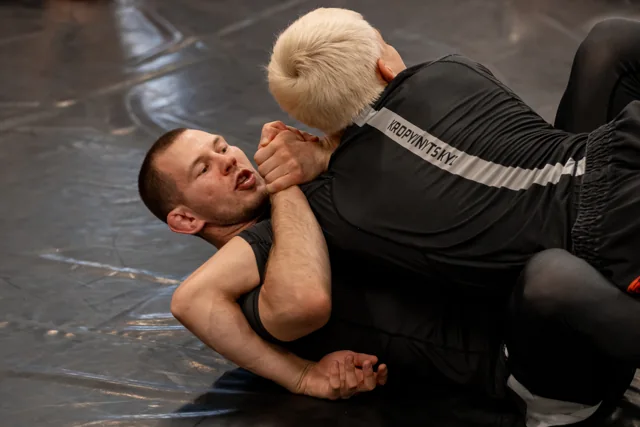
No-gi replaces those cloth connections with controls such as wrist grips, underhooks, overhooks and body locks. The hands often need support from the head, chest or legs. If a wrist slips free, repeating the same squeeze harder may achieve less than understanding which second connection was missing.
The positions transfer; the route may not
Guard, side control, mount and back control remain recognisable in both formats. Managing balance, recovering inside space and connecting an escape to the next position are useful in either. However, a collar-based attack cannot simply keep the same hand placement when the collar disappears.
Take a guard pass as an example. The task of getting past the legs and establishing control remains. A trouser grip that prevents the knee returning may need a different control in no-gi. Study the job that the grip performs before looking for a replacement. Similar-looking movements do not necessarily solve the same problem.
Do not confuse pace with technical depth
No-gi exchanges can feel faster when connections are easier to shed. Gi grips can make a position feel more fixed. Neither observation means that no-gi is only athletic or that gi is automatically more technical. An experienced no-gi athlete may hold you still; an experienced gi athlete may move through positions rapidly.
For your own training, ask a more specific question: can you keep control when the first grip fails? That question exposes a useful problem in either format. Changing clothes does not remove the need for timing, balance or a clear next action.
Clothing and competition rules are separate choices
“No-gi” describes the clothing format, not one universal set of permitted submissions. An IBJJF no-gi division and an ADCC Open division may have different legal techniques. Age, rank or experience category also matters. Look up the exact event and division before using a competition clip as a training reference.
Uniform requirements differ too. IBJJF publishes separate gi and no-gi requirements; ADCC Opens publish their own rules. Check them before buying an outfit for a tournament. For regular classes, ask your coach about clothing, allowed grips and the submissions included in that session.
Where should a beginner start?
Start with the format offered by a suitable coach at a time you can attend. If your immediate goal is a particular competition, train under its rules. If you have no event planned, a clear beginners’ programme and reliable training partners are more useful selection criteria than a universal claim that one outfit produces better grapplers.
You can train both, but allow yourself enough repetition to recognise what is happening. Constantly changing the format and the position can make every session feel unrelated. Keep one recurring problem, such as recovering guard, while learning how the available connections change.
Can you wear a cup in BJJ?
IBJJF prohibits cups or genital protectors in both gi and no-gi competition. Do not carry the equipment rules of MMA or another combat sport into a BJJ event. Hard protective equipment can also change pressure against a partner, so ask about the academy’s policy before wearing it in class.
For an ordinary session, use clean, well-fitting training clothing that stays in place and meets the coach’s requirements. No-gi clothing should not have exposed fasteners or loose items that can catch a partner. If a particular protective device is needed for a medical reason, discuss the device and activity with the relevant clinician and coach instead of assuming it is competition-approved.
Finger tape: useful equipment, not a substitute for changing the grip
IBJJF’s first-competition checklist includes athletic tape and finger tape. That supports bringing ordinary tape in your kit; it does not establish a universal permission for every brace, bulky wrap or taping method. Show any unusual support to the event’s uniform inspector before relying on it.
In gi training, notice when you keep a sleeve grip after the opponent has already broken its useful angle. Releasing and rebuilding the grip may solve more than adding tape and squeezing harder. In no-gi, the same question applies to a slipping wrist connection: establish a second control rather than trying to make one hand do every job.
For an injured finger or toe, get the problem assessed rather than choosing a taping pattern from a competition photo. Tape does not establish that a joint is ready for full resistance. Stop and remove a wrap that causes numbness, tingling or color change.
A transfer test, not a format debate
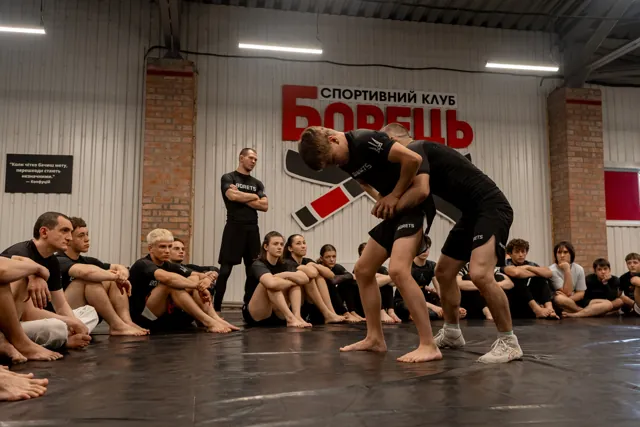
With your coach, choose a familiar position and define the same objective in both formats. First identify which controls depend on cloth. Then test the coach’s replacement controls with manageable resistance. Record where the exchange changes rather than declaring one format easier after a single round.
A useful result sounds like this: “My balance held, but I lost the arm connection when the sleeve grip disappeared.” That gives you something specific to train. BORETS LAB approaches the comparison through that kind of test: identify the function, change the constraint and observe the result.