 BORETS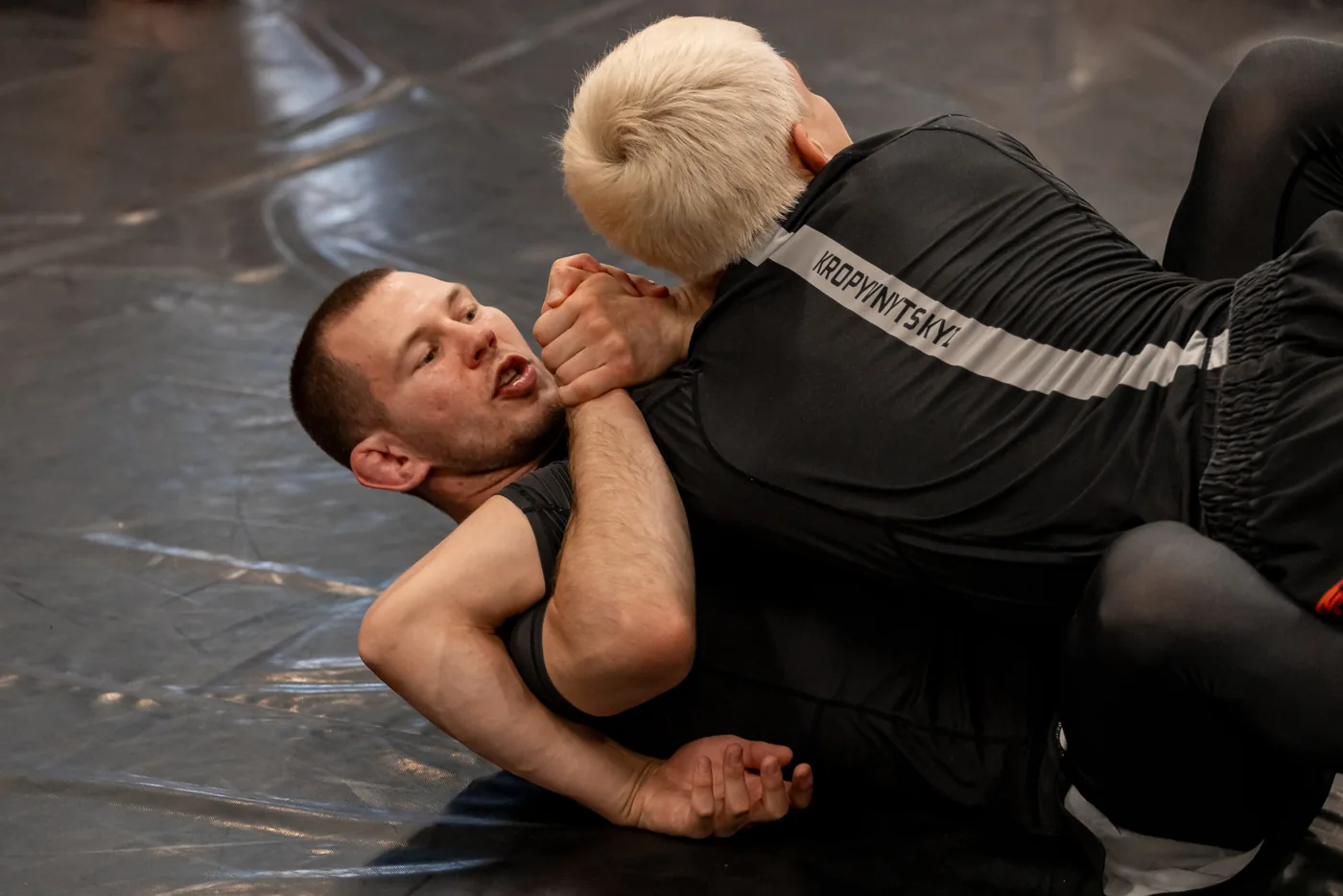
In this guide
Grappling is the part of fighting concerned with grips, balance, takedowns and control of another person, standing or on the ground. In everyday training language, it describes a family of skills. On a competition poster, it may name a particular sport with its own rules. Understanding that distinction makes it easier to choose a class, follow a match and ask useful questions.
Grappling, BJJ, wrestling and sambo
Brazilian jiu-jitsu, wrestling and sambo share many problems: how to establish contact, move someone who is resisting and keep a useful position afterward. They organize those problems differently. BJJ places substantial attention on ground positions and submissions. Olympic wrestling rewards takedowns and exposure and can end with a fall. Sport sambo connects throws, hold-downs and permitted submission holds.
Grappling is therefore broader than BJJ. It is also more precise to name the rules when discussing a competition: an IBJJF event, an ADCC event and a UWW grappling event are different references. A technique’s familiar name does not tell you its score or whether it is permitted in your division.
Read an exchange in three stages
Start with contact. Who can reach a useful grip, and who is having to adjust their stance? Next, watch the transition: does someone lose balance, sit, turn or get taken down? Finally, look at the resulting control. The person who initiated the movement may still have work to do before the position becomes stable.
For example, a takedown can finish with the defender’s legs between the athletes. A beginner may see only who landed on top. A more informative description is: top position was gained, but the legs still prevent a clean route around the hips. That observation gives the next part of the exchange a purpose.
Learn positions as relationships
A position is a relationship between two people, not a pose to copy. In guard, the bottom athlete uses the legs to manage distance or interfere with the top athlete’s movement. In side control, the top athlete has moved beyond that leg barrier and controls from the side. Mount and back control create other relationships, with different routes for maintaining or escaping control.
These names provide a useful map, but they do not describe every grip or guarantee success. When you get lost, answer three smaller questions: who is on top, where are the legs, and which direction can each person still move? Then ask your coach for the position’s name.
Gi, no-gi and the purpose of the round
Gi and no-gi describe equipment formats; they do not, by themselves, identify an entire ruleset. Clothing changes the grips you need to discuss with your coach. The competition or training agreement determines the permitted actions, scoring and stopping conditions. ADCC Opens, for example, use a no-gi format, while IBJJF publishes rules and requirements for its gi and no-gi competitions.
Before a practice round, clarify its task. Are you working from standing, trying to retain guard or testing one escape position? Agree on the starting point, what counts as success and when to reset. A narrowly defined round makes it easier to understand why an attempt worked.
A useful checklist for your first class
Ask which discipline and format the class teaches, whether it welcomes complete beginners and what clothing to bring. Tell the coach about your previous training without assuming that experience in another sport means the same rules apply. Before partner work, learn the room’s stop signals and the task you are expected to perform. Release immediately when your partner signals to stop.
After class, write down one starting position, one reaction you noticed and one unresolved question. For instance: I reached top position, but my partner kept a leg between us; what should I recognize before trying to move past it? This is a useful first entry in a training journal. It turns a confusing session into a specific subject for your next conversation.