 BORETS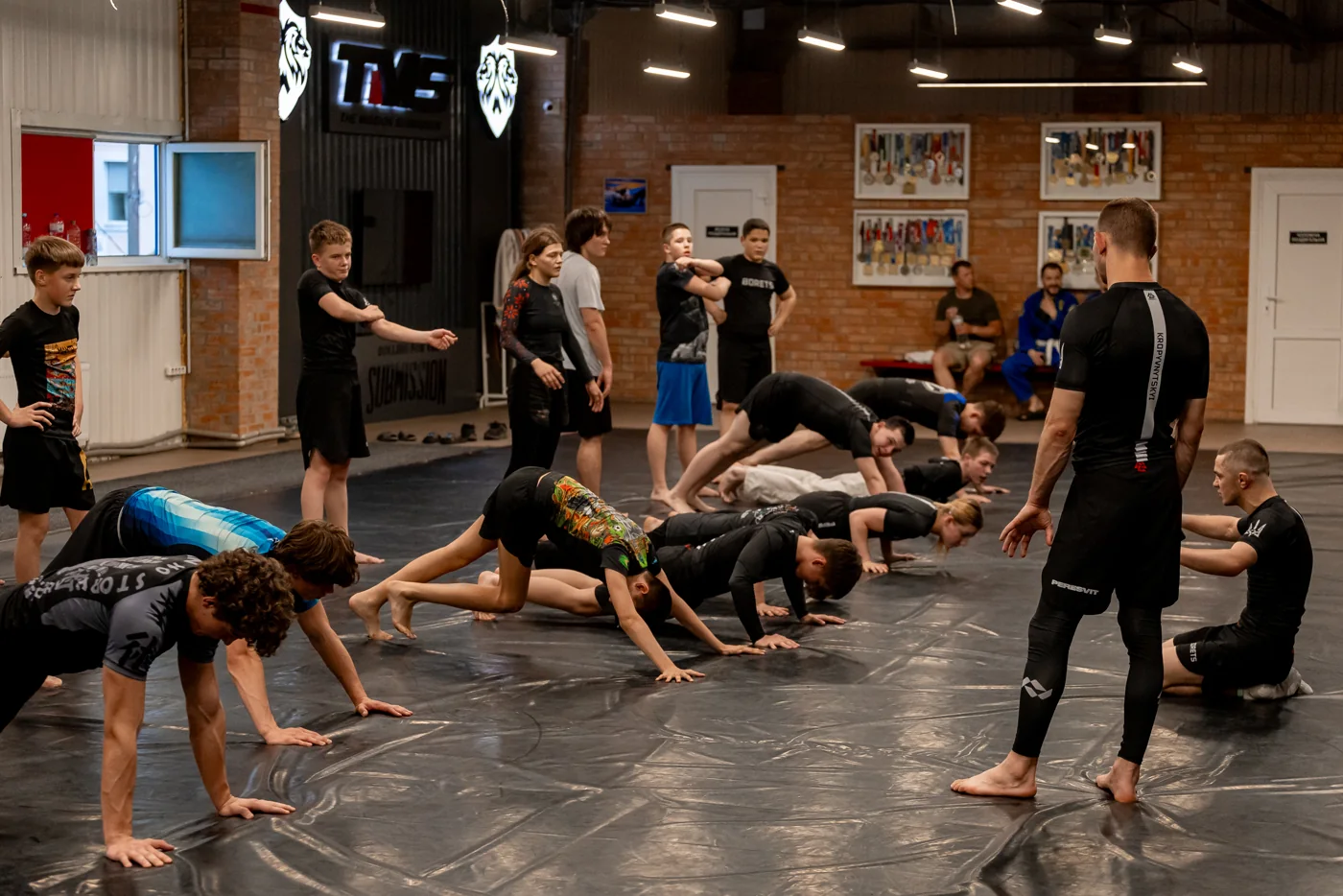
In this guide
A grappling warm-up should raise your temperature, rehearse the movements you need and introduce partner contact without using up the session’s energy. This 12–15-minute example is for adults practising movements they already know. Adjust the time for the room, the planned training and how ready you feel; unfamiliar takedowns and acrobatics belong in coached instruction, not a rushed warm-up.
A warm-up has a job
The sequence moves from easy activity to familiar movement and then to the task of the day. It is preparation, not a fitness test. Finishing breathless after a punishment circuit makes it harder to attend to a demonstration or control your first repetitions.
The clock is a guide. A cold room or a long period sitting may call for more gradual movement. A short technical session may need less. Ask whether you feel warmer, can move through the positions comfortably and are ready to respond to a partner; elapsed minutes alone cannot answer those questions.
Minutes 0 to 3: easy whole-body movement
Use easy jogging, brisk movement around the mat or relaxed footwork. Change direction without colliding with others. Add short periods of side stepping and light stance movement, keeping the pace comfortable enough to speak. The purpose is a gradual increase in activity, not an early sprint.
If impact does not suit you, use a lower-impact option agreed with your coach. Do not jump straight into repeated sprawls or hard penetration steps because those movements look more specific. Specificity becomes useful when the body is ready to perform the movement with control.
Minutes 3 to 6: controlled joint movement
Move through comfortable shoulder, hip and ankle ranges: a few arm reaches, controlled hip rotations, shallow squats and ankle rocks can cover much of the session’s needs. Use a handful of smooth repetitions rather than forcing every joint to its limit. Gentle head turns can prepare orientation without loading the neck.
Choose movements you can control, and omit anything painful. This is not the place for forceful neck circles, partner-assisted stretching or balancing bodyweight on your head. A brief comfortable stretch can fit an individual routine; follow it with active movement rather than treating passive flexibility as the entire warm-up.
Minutes 6 to 10: rehearse familiar grappling patterns
Choose two or three movements relevant to the class and perform two short rounds of four to six controlled repetitions. For groundwork, options include a hip escape, technical stand-up or a bridge supported through the shoulders with the head resting on the mat. Keep enough room between partners to complete the movement.
For wrestling practice, substitute familiar stance changes, entry steps or a controlled sprawl taught by your coach. Quality matters more than travelling several lengths of the room. A beginner who does not yet know a movement should receive instruction rather than copy a fast demonstration from the back of a line.
Minutes 10 to 13: introduce a partner
Use light, agreed contact. One option is a minute of controlled pummelling followed by two minutes of a simple positional task, switching roles halfway. For guard work, the passer might move around the outside while the bottom player follows with their knees, without submissions or explosive passing.
Agree what counts as success and reset promptly. If the warm-up turns into a contest, reduce the resistance. The goal is to practise reading another person’s movement while preserving control, not to establish who wins the first round of the evening.
The final minutes: match the lesson
Practise the first part of the planned technique with a cooperative partner. Before a passing class, rehearse the entry and starting grips. Before takedowns, rehearse a familiar entry without an uncontrolled finish. Contact and speed should increase only as both partners remain comfortable with the task.
People returning after a break, managing a clinician-approved restriction or arriving especially stiff may need a different progression. Tell the coach before the session starts. A general group routine does not establish whether an injured athlete is ready for contact.
Common mistakes and a simple readiness check
Avoid unfamiliar acrobatics, maximal sprints, exhausting burpee sets and aggressive stretching as default preparation. Do not use a warm-up to test a sore joint against resistance. The routine should build toward the class, not introduce a separate hard workout before it.
Before the main work, check three things: you can move comfortably through the starting position, understand the partner task and maintain control at the planned pace. BORETS LAB’s public guides and YouTube channel can help explain those movement patterns. The online school is in preparation; register to follow the launch and check current access on the membership page.