 BORETS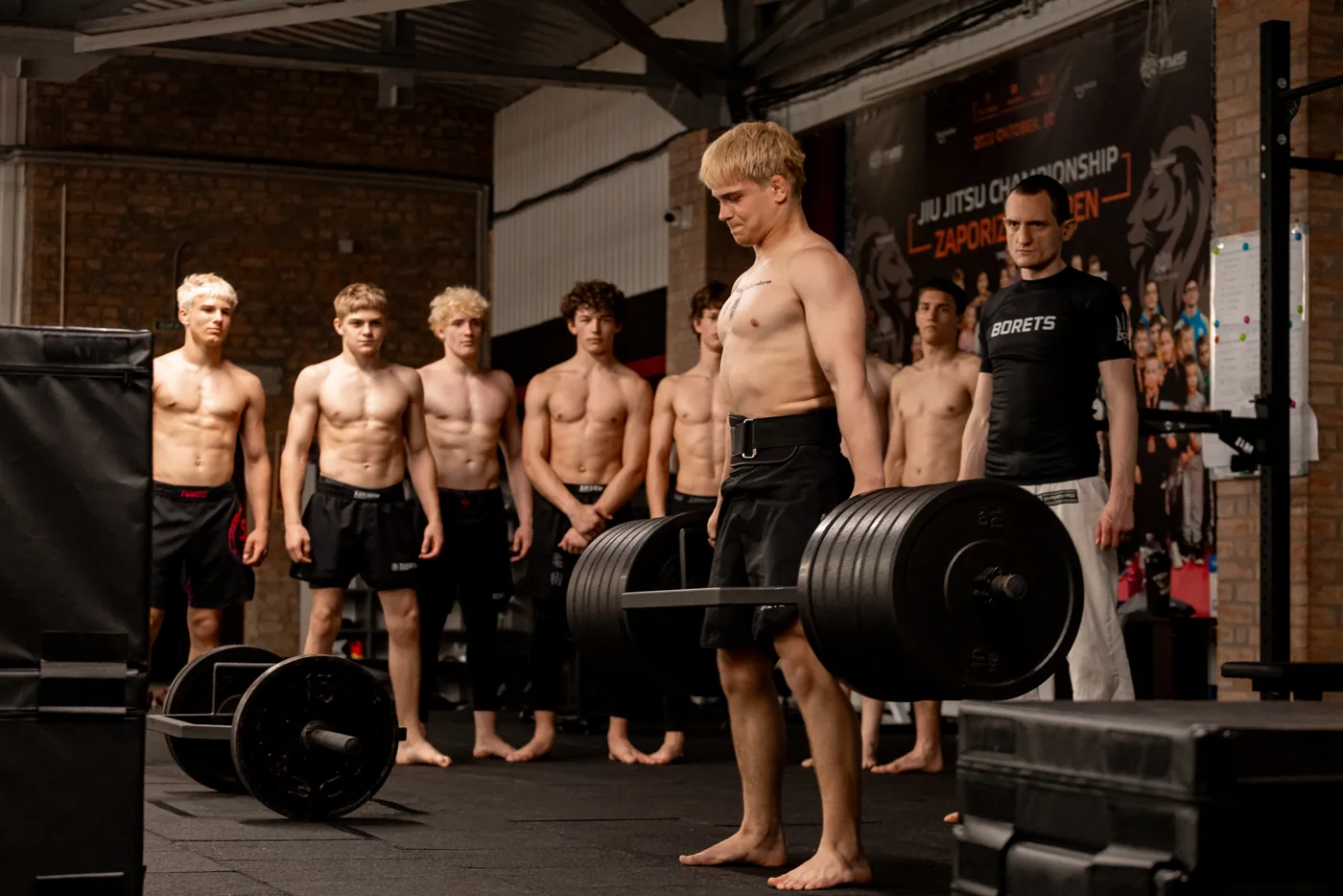
In this guide
Wrestling strength training should support practice: producing force, holding useful positions and recovering well enough to wrestle again. More lifting is not automatically better. The examples below are for healthy adults who already know the exercises. Use loads that leave several controlled repetitions available, and adapt the plan with your coach to the season, experience and total workload.
Train the movements that support wrestling
A balanced programme includes a squat or split-squat pattern, a hip hinge, upper-body pushing and pulling, and trunk control. Grip work can supplement these patterns. Neck work requires its own careful progression; stronger muscles do not make head impacts or forced neck positions safe.
ACSM’s updated adult guidance emphasises regular resistance training of the major muscle groups and individualisation rather than one compulsory method. Choose variations you can perform well and have equipment for. A technically controlled goblet squat can be more useful than a heavier barbell exercise you cannot yet organise.
Off-season example: three nonconsecutive sessions
Day A: goblet squat or a familiar squat variation, three sets of six to eight; row, three sets of eight to ten; push-up or dumbbell press, two sets of eight to twelve; side plank, two comfortable 15–25-second holds per side. Rest about two minutes on the squat and 60–90 seconds between lighter sets.
Day B: a familiar deadlift variation, two sets of five to six; split squat, two sets of six to eight per side; pulldown or assisted pull-up, two sets of six to ten; Pallof press, two sets of eight per side. Keep every repetition controlled and leave two or three more repetitions available.
Day C: step-up, two sets of eight per side; a learned Romanian deadlift, two sets of eight; dumbbell press and row, two sets each of eight to ten; two short carries if space and grip tolerance allow. This is an example for someone already ready for three sessions. Start with fewer sets or two days when building the routine.
In-season example: two shorter sessions
Reduce lifting volume when demanding practice and matches increase. One session could use a squat, row and push-up for two sets each, followed by a short trunk exercise. The second could use a familiar hinge, split squat and pulldown for one or two sets each. Moderate sets of five to ten controlled repetitions are sufficient for this template.
Keep the weights challenging enough to require attention without grinding through failed repetitions. Preserving movement quality matters more than maintaining a particular number on the bar every week. When competition or recovery demands rise, reduce sets, load or exercise selection rather than forcing the whole off-season programme into less time.
Fit lifting around practice and competition
Place the harder lifting where it will not repeatedly spoil your most important technical or match session. For an athlete competing on Saturday, earlier-week sessions may be easier to recover from than a hard new workout on Friday. Use your actual response rather than assuming a fixed number of hours guarantees recovery.
If lifting and wrestling share a day, prioritise the session that matters most and avoid adding exhausting accessory work merely because you are already at the gym. Coordinate with the wrestling coach. A programme designed without seeing the mat workload is missing a large part of the athlete’s training.
Progress through repeatable quality
Choose a repetition range and begin at its lower end. When you can complete the upper end across the planned sets in two sessions, with controlled technique and roughly two repetitions still available, consider the smallest practical increase in load. Return toward the lower end of the range and rebuild.
Progress is not mandatory every workout. If sleep, soreness or practice quality deteriorates, hold the load steady or reduce the work. An easier week can be useful when fatigue accumulates, but the calendar alone does not require everyone to take exactly every fourth week light.
Grip, neck, trunk and home alternatives
Rows and pull-ups already train grip. Add a small amount of carrying or holding only if your hands and elbows tolerate it; do not exhaust your grip before a session that needs precise hand fighting. For the trunk, side planks, controlled anti-rotation work and carries offer options without requiring maximal loads.
Neck strengthening should be introduced individually by a qualified coach or clinician. Avoid loaded head bridges, jerking resistance and training into pain. At home, familiar split squats, push-ups, band rows and side planks can replace a gym session when resistance and support are suitable; choose a difficulty that preserves the same controlled effort.
Youth athletes and useful feedback
Children should not receive this adult plan with the numbers simply scaled down. Qualified supervision, movement skill, maturity and the child’s other sport demands determine appropriate exercises and volume. The NSCA youth framework emphasises development over treating a young athlete as a smaller adult.
Ask for feedback on a few working repetitions and show the context of your wrestling week, not just your heaviest lift. BORETS LAB is preparing its online school; register to follow the launch and check the membership page for current access. The public guides and YouTube channel can support learning while individual coaching remains central to programme choices.