 BORETS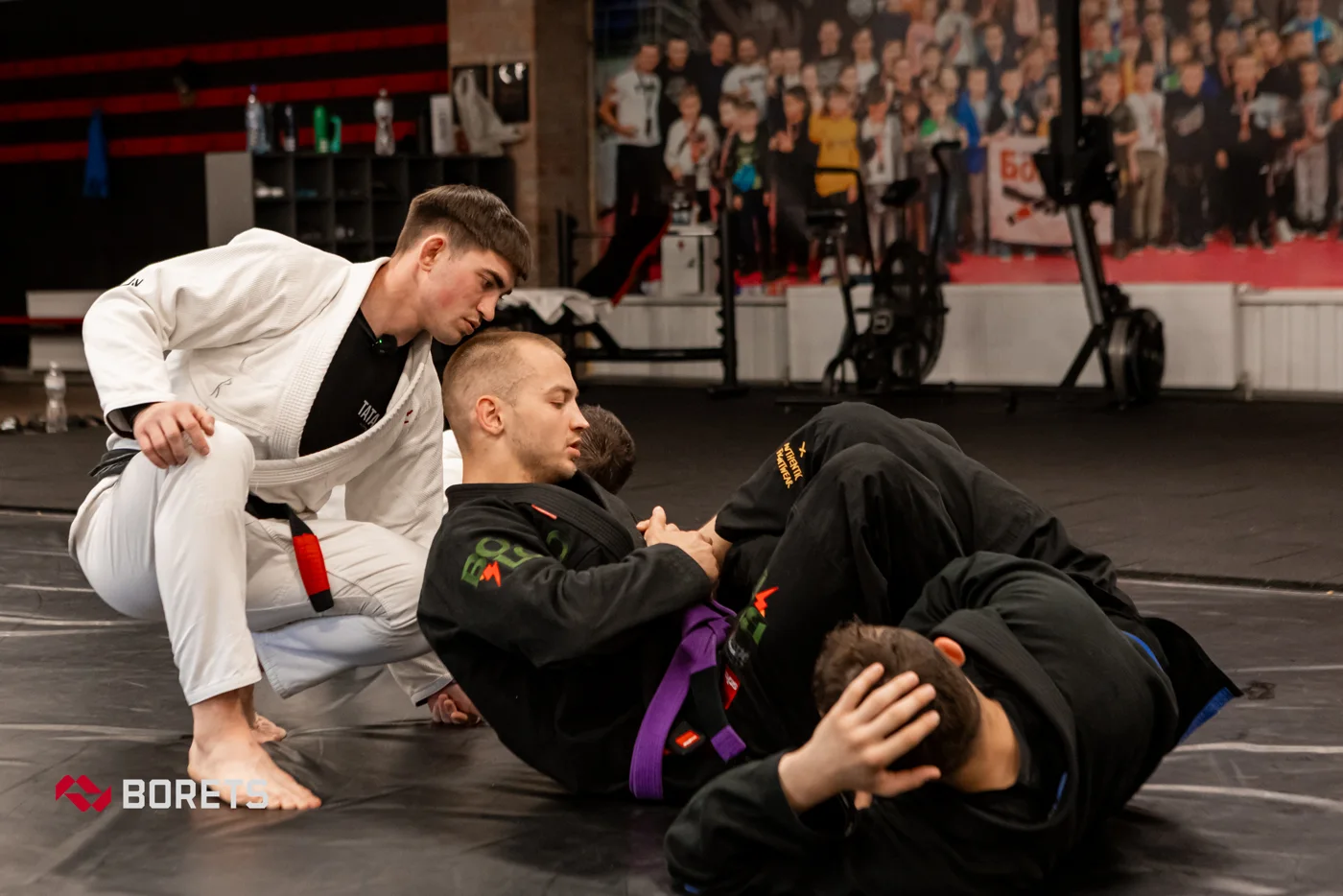
In this guide
Choosing between judo and Brazilian jiu-jitsu becomes easier when you stop asking which art wins an imaginary match. Ask what you want to spend your evenings practicing. Do you want to build a standing game around jacket grips and throws? Does the puzzle of guard, passing and escapes interest you more? Both sports include takedowns and groundwork, but their rules give those skills different jobs. The class available to you matters as much as that broad distinction. In IJF judo, an ippon throw ends the contest; under IBJJF rules, a takedown scores two points and action continues.
What happens after the throw?
Picture two beginners watching the same exchange: one athlete throws the other cleanly onto their back. In judo, a throw meeting the requirements for ippon can finish the contest. In an IBJJF-style BJJ match, a takedown usually leads into the next phase: the athlete on top must establish control, and the athlete underneath can still defend, attack or recover position. A dramatic landing does not settle the match by itself.
That difference helps explain where training attention goes. A judo session may spend substantial time on gripping, movement, entries and receiving throws. A BJJ session may spend longer exploring what happens after someone is already underneath. These are tendencies, not promises about every gym. Ask what a normal beginner week contains, including how often the group starts from standing.
Groundwork has a different purpose
Judo has a ground game, including pins and, where the age division permits them, submissions. BJJ did not invent controlling a person on the mat. The important difference for a newcomer is how much room a training or competition format gives a position to develop. A judo exchange and a BJJ round can move through familiar shapes while rewarding different decisions.
Guard is an obvious example. In BJJ, using the legs to manage an opponent from underneath can form a substantial attacking and defensive game. That does not mean being underneath is automatically desirable, or that judo players never use guard. It means a BJJ beginner should expect to study that situation carefully. If you enjoy solving a position through several connected adjustments, watch how the instructor teaches one guard pass or escape.
Decide what you actually want to learn
Choose judo first if the standing exchange is what keeps drawing your attention: finding a useful grip, moving with an opponent and recognizing when a throw is available. Choose BJJ first if you want sustained work on ground positions, escapes and submission grappling. Neither choice requires you to prove that the other sport has less value.
If your goal is simply to begin a grappling hobby, compare the beginner programs before choosing a label. A welcoming class with clear instruction and a workable schedule is a better starting point than a famous style at a gym you rarely attend. For a child, include their response to the coach and group in the decision. An adult's preference for competition footage does not tell you whether that child wants the same activity.
Check the version of BJJ and the room you will join
Gi BJJ uses a jacket and trousers that can be gripped under its rules. No-gi removes those clothing grips, changing how athletes connect and control distance. If the comparison you have in mind is judo versus no-gi BJJ, say so when arranging a visit. A gi-only beginner class may not match the practice you were imagining.
Also ask whether new students learn breakfalls, when standing sparring begins and how partners are selected. In either sport, a class called fundamentals can mean different things. It might follow a defined introduction, or repeat selected techniques for students of mixed experience. You want to know what help a first-time student receives, not merely whether the timetable includes the word beginner.
Use two trial classes as a decision, not a contest
Visit one suitable class in each sport, if both are accessible. Before you go, write down three things you need: perhaps an evening slot, patient explanations and a clear path into partner practice. Afterward, record what you actually observed. Could you follow the task? Did the coach notice when you were lost? Were you interested enough to return and work on the same problem?
Compare the full commitment, too: membership terms, uniform requirements, travel and whether competition is optional. Avoid deciding from the single partner who happened to be especially strong or friendly. If something important was unclear, ask the instructor directly. A useful trial leaves you with an understanding of the next month, even if you remain very much a beginner.
Before choosing, check that the beginner slot will still be available once the trial ends. If you can attend only one evening, ask whether that session assumes knowledge taught on another day. A workable training week should not depend on repeatedly missing the part where new material is introduced.
Cross-training works better with a specific reason
You can add the second sport later. A BJJ athlete might seek more experience with jacket grips and standing movement; a judoka might want longer rounds devoted to guard recovery or passing. Carry one question into the other room and accept its rules while you are there. Repeating your favorite tactics regardless of the assigned task misses much of the value.