 BORETS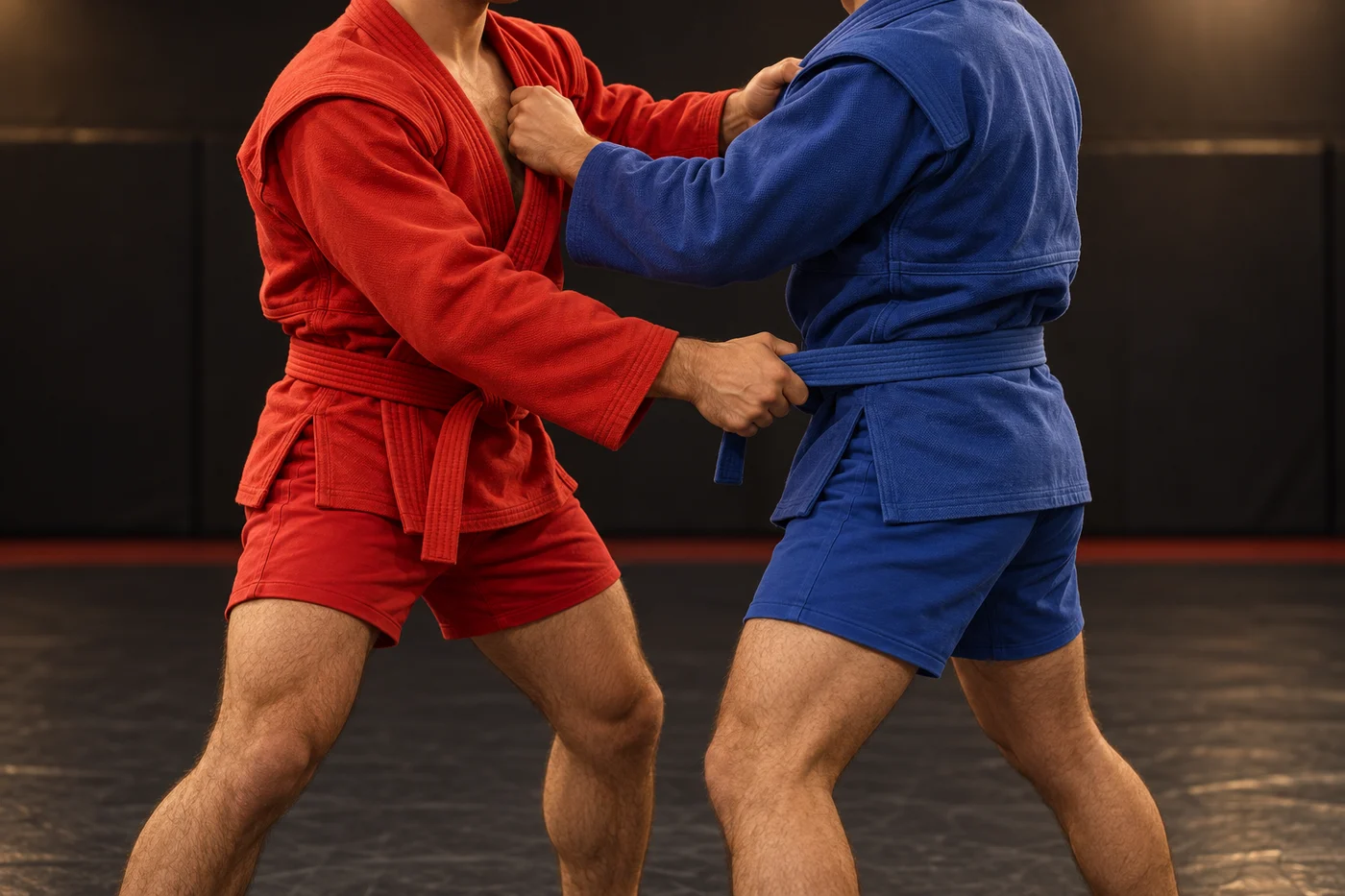
In this guide
Sport sambo and judo share a recognizable problem: use contact, movement and timing to throw a resisting opponent. Their jackets make some exchanges look similar. Their rules make several decisions different. This comparison concerns FIAS sport sambo and contemporary IJF judo; combat sambo adds striking and is a separate comparison. Neither sport is simply the other with a different uniform.
The differences that change a round
Sambo permits standing attacks that grasp the legs. Under the IJF’s August 2026 rules, standing leg grabbing, trouser grips and hand or arm contact below the top of the inner thigh are penalized. Some jacket grips below the belt are permitted, so “nothing below the belt” is an inaccurate shortcut.
On the ground, sport sambo includes permitted arm and leg submissions but excludes chokes. IJF judo includes permitted chokes and elbow locks, not leg locks. A 20-second scoring hold-down gives four points in sport sambo; a qualifying 20-second osaekomi wins by ippon in judo. These are practical differences in what the athlete must protect.
A familiar grip can create a different problem
A sleeve-and-jacket connection can help you move the opponent, feel a step and time a trip in either sport. In sambo, that same exchange can also lead to a leg attack. Test whether your preferred grip leaves you balanced enough to respond when the opponent changes level.
Imagine pulling a partner forward for a hip throw. If the partner withdraws the hips, do you chase the original throw, change direction or reconnect to a leg? The useful comparison is the next decision under the agreed rules, not whether two throws have identical names.
The landing is part of the technique
Do not stop practice when the partner starts falling. Keep control through a safe landing and recognize whether the exchange has ended or continues. In sambo, staying on your feet while producing the required back landing can earn total victory. A throw that looks impressive but gives away position may produce a very different result.
Practice the same entry with two tasks: first, finish balanced; second, follow a permitted continuation into a stable hold. This reveals whether you understand the transition or are relying on the partner to remain still after the throw.
Cross-training starts with a rules agreement
Before a mixed session, state which grips, submissions and restarts are allowed. A judoka should not discover a new leg-lock rule only when a partner has already secured the position. A sambist should not carry a standing leg grab into a judo competition round by habit.
Begin with one bounded exchange: grip fighting into a controlled throw, then reset. Add a ground continuation once both partners can recognize it. Tap early, release immediately and keep unfamiliar submissions under direct coaching; resisting longer is not evidence of better understanding.
Sambo, judo and BJJ: compare the destination after the throw
Add BJJ to the comparison and the same landing can have three different meanings. In IJF judo, a qualifying ippon throw ends the contest. In sport sambo, total victory requires its own throw criteria, including the attacker remaining standing. In IBJJF BJJ, a takedown that meets the rule earns points and the ground exchange continues; the throw does not win merely because it was clean.
On the ground, judo can end through a qualifying pin, permitted choke or elbow lock. Sport sambo scores hold-downs and includes permitted arm and leg locks but no chokes. BJJ rewards specified positional actions and permitted submissions; holding side control alone is not an automatic victory. BJJ’s submission list also changes with age, belt and gi or no-gi format.
Choose the skill you want to develop
Choose judo if your immediate goal is sustained work on jacket throwing under judo’s rules. Choose sport sambo if you want jacket wrestling with standing leg attacks and its ground-submission game. Choose BJJ if you want a program centered on the extended guard, passing, escape and submission exchange. These descriptions identify training emphasis, not a ranking of the athletes or schools.
For cross-training, take one familiar entry into the new room and ask what must change before the grip, at the finish and after landing. A BJJ athlete may need more reliable falling and standing balance; a judoka or sambist may need a plan when the opponent establishes guard and play continues. The best next discipline is the one that supplies teaching and partners for that specific gap.
Choose a room, then evaluate the transfer
For a beginner, a consistent local program with appropriate partners may matter more than an abstract style ranking. Ask how beginners learn falling, how contact increases and whether children train under age-appropriate rules. Competition goals should influence the choice; an internet claim that one style always wins should not.
After cross-training, record one helpful habit and one habit needing adjustment. Perhaps your jacket control transferred immediately, while your reaction to a leg attack did not. That specific observation gives the next session a useful purpose and makes online technique study easier to connect to actual practice.