 BORETS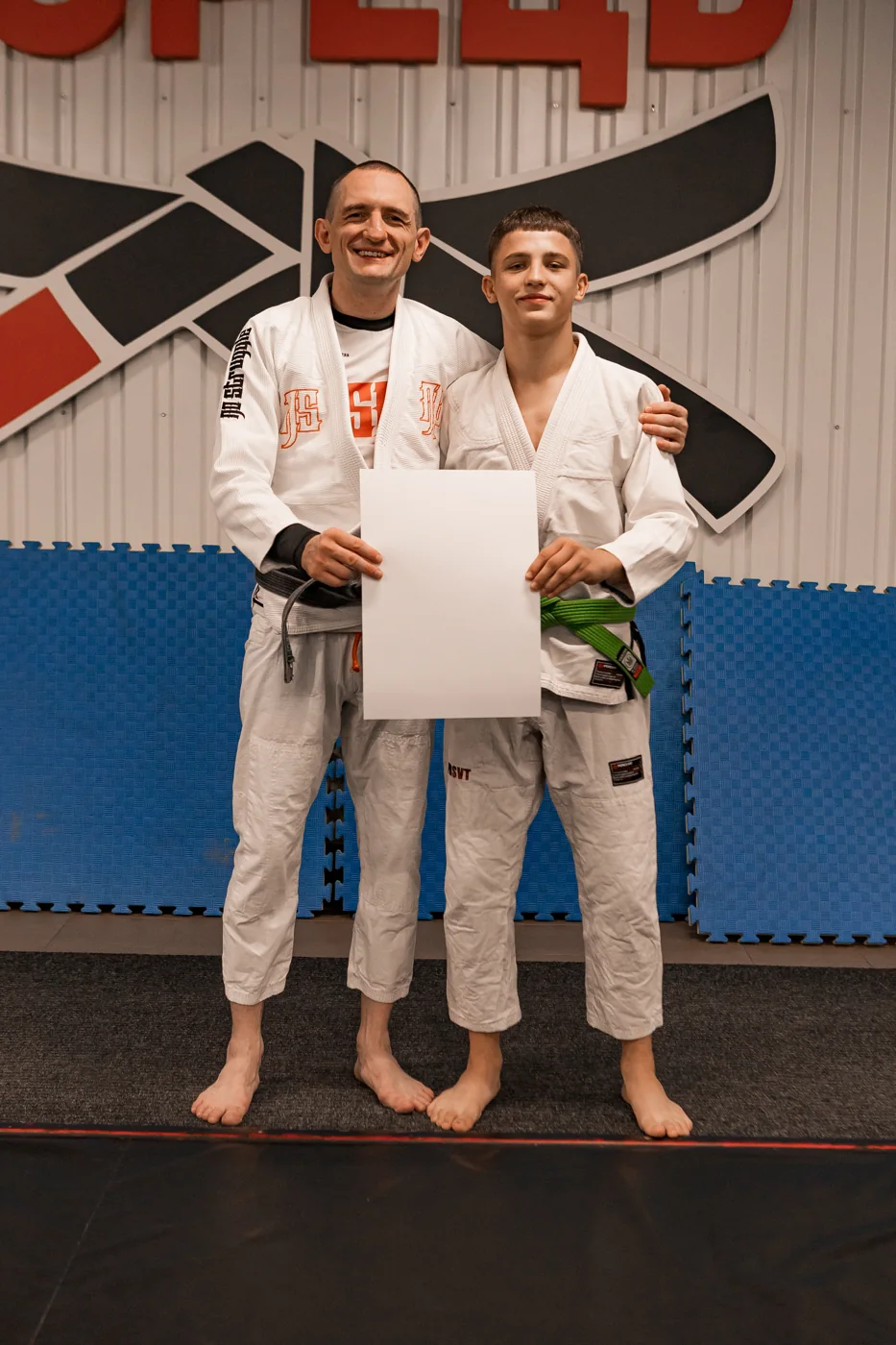
In this guide
A new belt is visible. Learning to control movement, follow a stop signal or recover from a mistake is less obvious. Children need opportunities to notice both. Understanding the belt system helps parents ask useful questions without treating every class as an audition for the next color or comparing children on a promotion timetable.
The children’s color families
IBJJF children’s ranks use white, gray, yellow, orange and green. Colored families include white-striped, solid and black-striped versions. Minimum ages are four for gray, seven for yellow, ten for orange and thirteen for green; the children’s system ends at fifteen. IBJJF calculates age as competition year minus birth year. Its children’s ranks have no mandatory minimum time at each belt.
An age threshold is eligibility, not a promise that a birthday brings a new belt. The club still needs a clear way to explain its own expectations. Ask how it distinguishes the belt itself from smaller progress markers, and how a child will hear what they are working toward before a grading takes place.
Look at decisions, not just remembered moves
A child may reproduce an arm position during a demonstration but forget it when a partner changes direction. That is a normal distinction between remembering a shape and choosing it at the right time. Useful technical progress includes recognizing guard, keeping a helpful frame and adjusting an escape when the first opening closes.
Make observations specific: last month the child pushed continuously; today they paused, turned their hips and found a knee opening. That is evidence worth discussing even if the partner eventually held the position. A short account of one decision is more informative than saying the child knows ten techniques or wins most practice rounds.
Being a reliable partner is a skill
Watch what happens when the roles change. Can your child give a smaller or less experienced partner a useful turn? Can they release immediately after a stop signal and restart from the agreed position? These behaviors make repeated practice possible. They belong in a conversation about development alongside balance, movement and positional understanding.
Do not confuse a quiet personality with poor progress. One child explains a task aloud; another demonstrates understanding through movement. Equally, being enthusiastic does not excuse ignoring boundaries. A useful goal can be very small: listen to the complete instruction, let the partner finish a turn, or ask for clarification instead of improvising contact.
Questions that make a promotion conversation useful
Ask for two or three observable targets, an example of current progress and a sensible time to discuss them again. That creates something a child can work on. Asking only how many classes remain until promotion can turn attendance into a transaction without revealing whether the child understands the material being practiced.
If a classmate advances first, acknowledge disappointment without inventing a verdict about talent. Children may have different attendance histories, starting points or current goals. Bring uncertainty to the instructor privately. Publicly disputing a grading or comparing belts in front of the group makes another child’s achievement part of a disagreement they did not choose.
Celebrate without turning the belt into an identity
At a promotion, name something real: you learned to stop your movement, you kept working on an escape, or you helped a new partner understand the game. A photo and a celebration can mark that work. Avoid saying the new belt means the child must now defeat everyone wearing the previous color.
Keep one ongoing goal after the celebration, chosen in language the child understands. It might be identifying when a knee can return inside or remembering both partners’ roles. The next class remains a place to try, miss and adjust. A belt recognizes a stage of learning; it does not remove the right to make mistakes.