 BORETS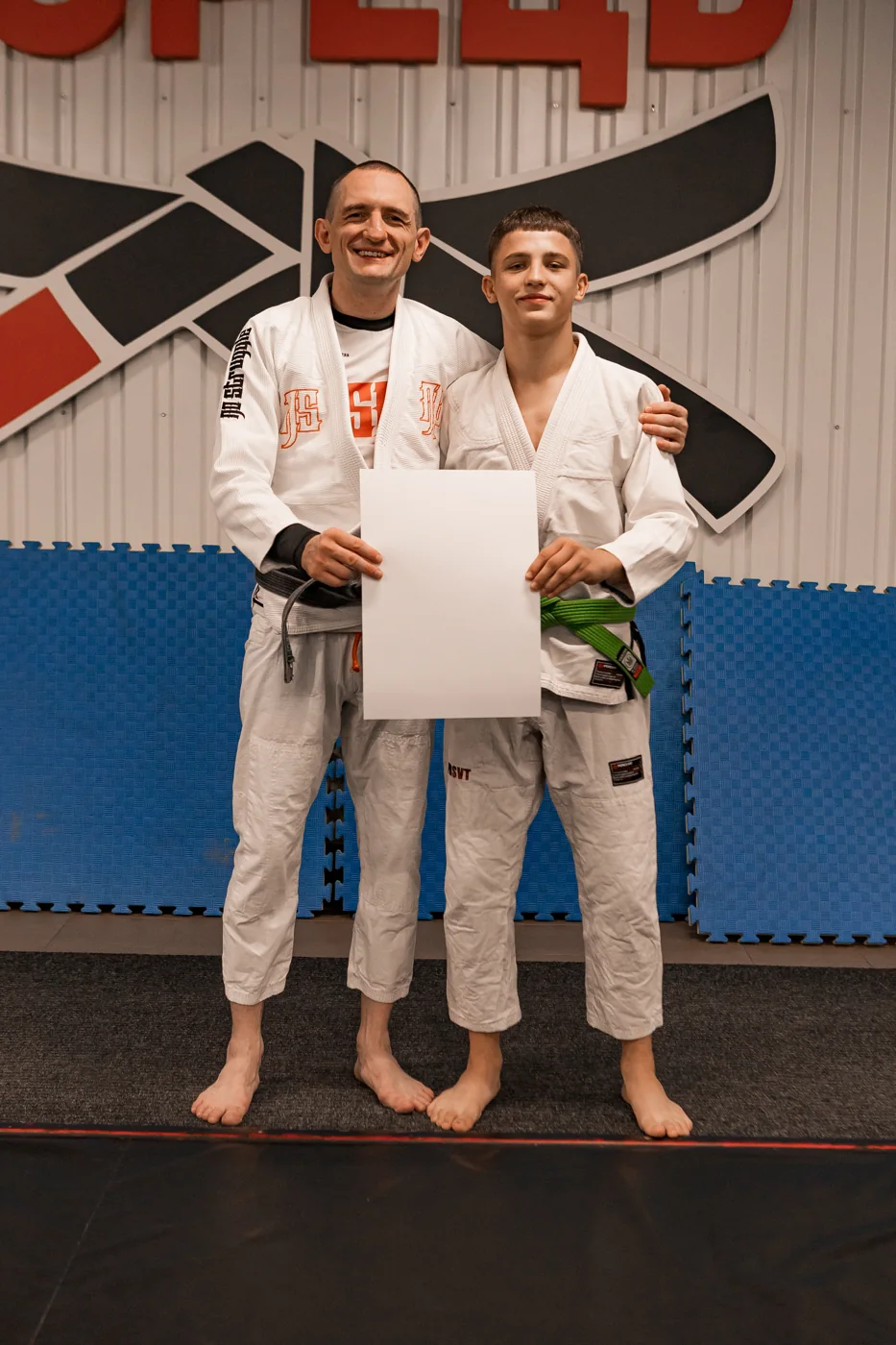
In this guide
- Why belts and medals tell you so little
- Movement quality is the first thing to watch
- Calm in bad positions, and tapping without drama
- Listening, helping partners and simply showing up
- What to watch in one class, and what to ask the coach
- Kids' belts are slow by design
- What long development looks like: Kostya and Sanya
A child's BJJ progress shows up in movement, decision-making, confidence and how they work with partners, as well as belts and competition results. Look for changes over several months: an escape they recognize sooner, a controlled landing, an early tap, or the willingness to try again. Here is a practical way to read those signs, talk with the coach and give results their proper place.
Why belts and medals tell you so little
Belts and medals are meaningful milestones, but neither gives a complete picture. Tournament results depend on the bracket and the day; a promotion reflects the standards and timing of a particular academy. Compare your child with their earlier self: what can they now do without prompting, what decisions do they recognize, and how are they handling practice? A losing streak and a slow promotion deserve a conversation, not an automatic conclusion that training is failing.
Movement quality is the first thing to watch
Before technique, look at how your child moves. Can they shrimp down the mat without stopping to think? Do they roll over a shoulder and come up in a stance instead of flopping? When they stand up from the ground, do they post a hand and rise with balance, or crawl up? These fundamentals are shared by every grappling art, and a good children's programme drills them through games. Movement that gets smoother month by month is real progress even when the belt stays the same colour. Watch for a child who is starting to look like they belong on the mat: relaxed shoulders, bent knees, eyes up.
Calm in bad positions, and tapping without drama
Look for growing comfort with familiar positions, not an expectation that your child must never be upset. Can they recognize side control, make a frame and attempt an escape they know? Do they tap as soon as they need to and trust the partner to stop? Tears, hesitation or frustration call for support and sometimes a break. A child who says a situation feels unsafe is giving the adults important information. The aim is confidence within appropriate, supervised practice, not endurance of distress.
Listening, helping partners and simply showing up
Notice listening, cooperation and consistency. Does your child follow a simple instruction more readily than before? Can they offer a partner useful resistance without turning every drill into a contest? Are they still interested in coming back? These habits make learning easier. Keep a simple monthly note of one improvement and one question for the coach. Attendance helps only when the schedule remains manageable alongside school, sleep and the child's wider life.
What to watch in one class, and what to ask the coach
Once a month, stay for the whole class. Watch whether your child bows in and starts the warm-up without being told, tries the technique of the day on both sides, stays switched on when tired, and thanks their partners. Then ask the coach three plain questions. What does my child do well right now? What is the one thing you want them to improve this month? How do they behave when they lose a round? A coach who answers in specifics rather than belt colours is a coach who is watching your child closely. If you ask about the next promotion, also ask which skills and habits it is meant to recognize.
Kids' belts are slow by design
The IBJJF system has separate children's belt groups: grey, yellow, orange and green, with age eligibility. Blue belt eligibility begins in the year an athlete turns sixteen under IBJJF's competition-age convention. Children do not all progress at the same rate, and the organization offers different stripe schedules rather than one universal promotion clock. Ask your academy how it uses that framework and what your child is working toward next. A belt conversation is useful when it leads to clear learning goals.
What long development looks like: Kostya and Sanya
Our archive shows Kostiantyn Zhyvanov competing in Abu Dhabi at seven. Years later, he reached an adult ADCC Trials final at sixteen. Oleksandr Oliinyk's photographs show another long arc: a child in a blue gi beside Ievgen Skyrda, then a black belt beside the same coach. Both grew within the school and now contribute to the team. These are real examples of sustained development, rather than a timetable another child must match.
Wondering whether your child is progressing? Bring one example to Yaroslav Blazhko, who leads our children's programme: their age, training frequency, what is becoming easier and where they still struggle. BORETS membership connects your family with our Ukrainian team from any country. Choose a coach, ask a specific question in your member area and get a written answer or, when a demonstration helps, a video response. The school is preparing its video programme; register now for launch and follow the team on YouTube in the meantime.