 BORETS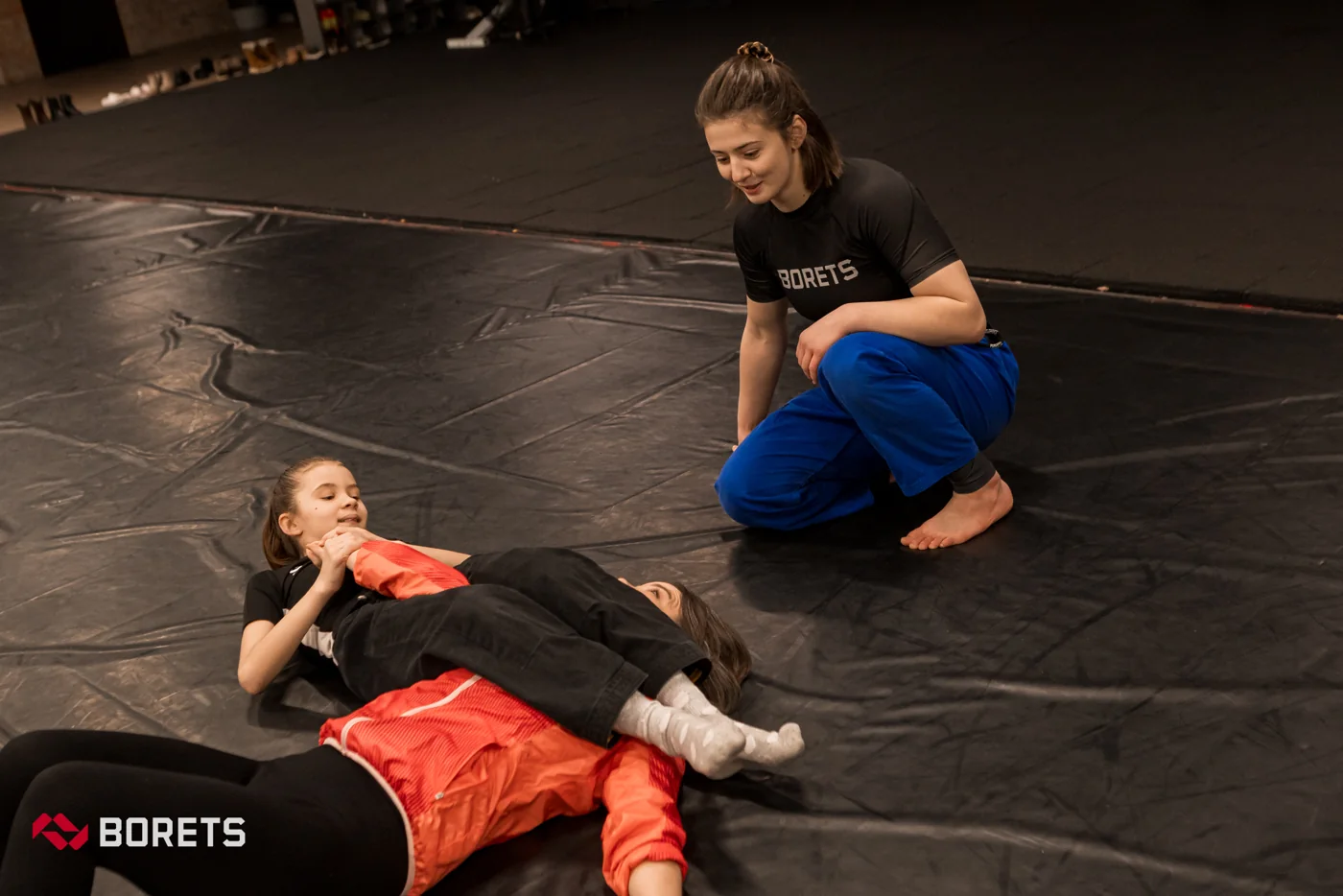
In this guide
A children’s BJJ class can look confusing from the sidelines: one child lies underneath, another circles around, and everyone starts again. Three positions make that activity easier to follow. Guard, side control and mount each give the partners a different problem. Recognizing the problem helps a parent notice learning beyond who appears to be winning.
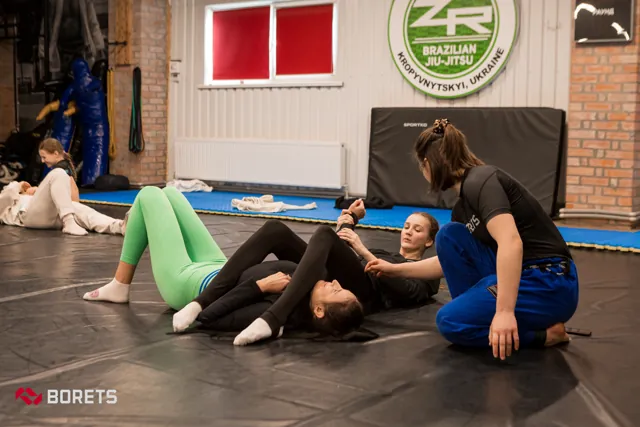
Guard: the legs are part of the defense
In guard, the bottom child keeps their legs between or around the partner, using them to manage distance. Being underneath does not automatically mean being trapped. A useful first task is simply to keep the knees facing the partner while the top child tries to move around them without grabbing the head.
Make the target visible: the top player reaches a marked spot beside the hips; the bottom player turns to keep their legs in the way. Stop when the target is reached, then swap roles. Parents can watch for deliberate turning and distance control rather than interpreting every movement as an attempted submission.
Side control: create space beside the body
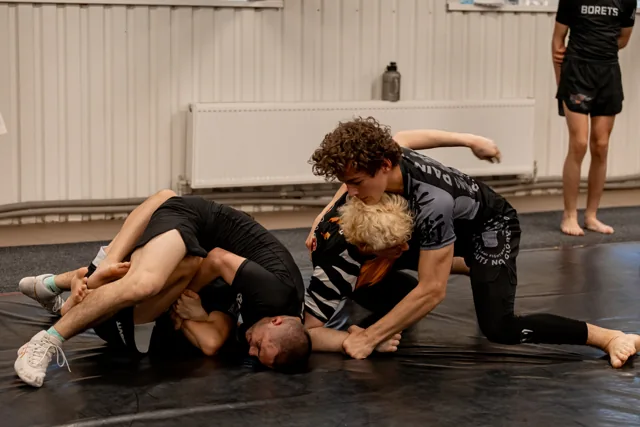
Side control begins when the top player has moved past the legs and is positioned across the partner’s torso. For a beginner, the bottom task is to make space and bring a knee back between the bodies. The top task is to maintain balance while following a small, controlled movement.
An appropriate introduction uses light contact, bent-arm frames near the shoulder and hip, and a clearly agreed stopping point. The child underneath should have enough room to think and move. A smaller movement that restores a knee barrier shows more understanding than frantic pushing with straight arms against the partner’s face.
Mount: balance on top, recover space underneath
In mount, one child sits astride the other’s torso with a knee on either side. The top player learns to follow changes of balance without collapsing forward. The bottom player learns to keep elbows close, turn onto a side and work a knee back into the space near the partner’s leg.
One game can finish as soon as the bottom child gets a knee inside. That clear ending prevents an introductory drill from becoming an unlimited wrestling match. Start again from the same position so both children can compare attempts. Success for the top child includes allowing a controlled return to the starting position.
What meaningful progress looks like
Listen for whether your child can explain their own task: keep the legs between us, find space for a knee, or keep my balance. Watch whether they can perform the task on both sides and with a different suitable partner. These observations reveal more than counting how often another child ends up underneath.
Another sign is adjustment. If circling left no longer works, does the child pause and try the other direction? If a partner says stop, does movement stop immediately? Keeping the same position but changing one task makes improvement observable without asking children to memorize a long chain of techniques.
A parent’s role before and after class
Use the position names as conversation starters: which position did you recognize today, and what were you trying to do there? Let your child demonstrate the shape with cushions rather than reenacting a contest on a sibling. The purpose is recalling an idea, not setting up unsupervised contact practice at home.
Partner drills belong on suitable mats under qualified supervision, with matching that considers size, skill and behavior. No submissions are needed for these introductory games. The AAP describes sports readiness as physical, mental and social, not simply a birthday. A child who needs a simpler task can still participate and learn.