 BORETS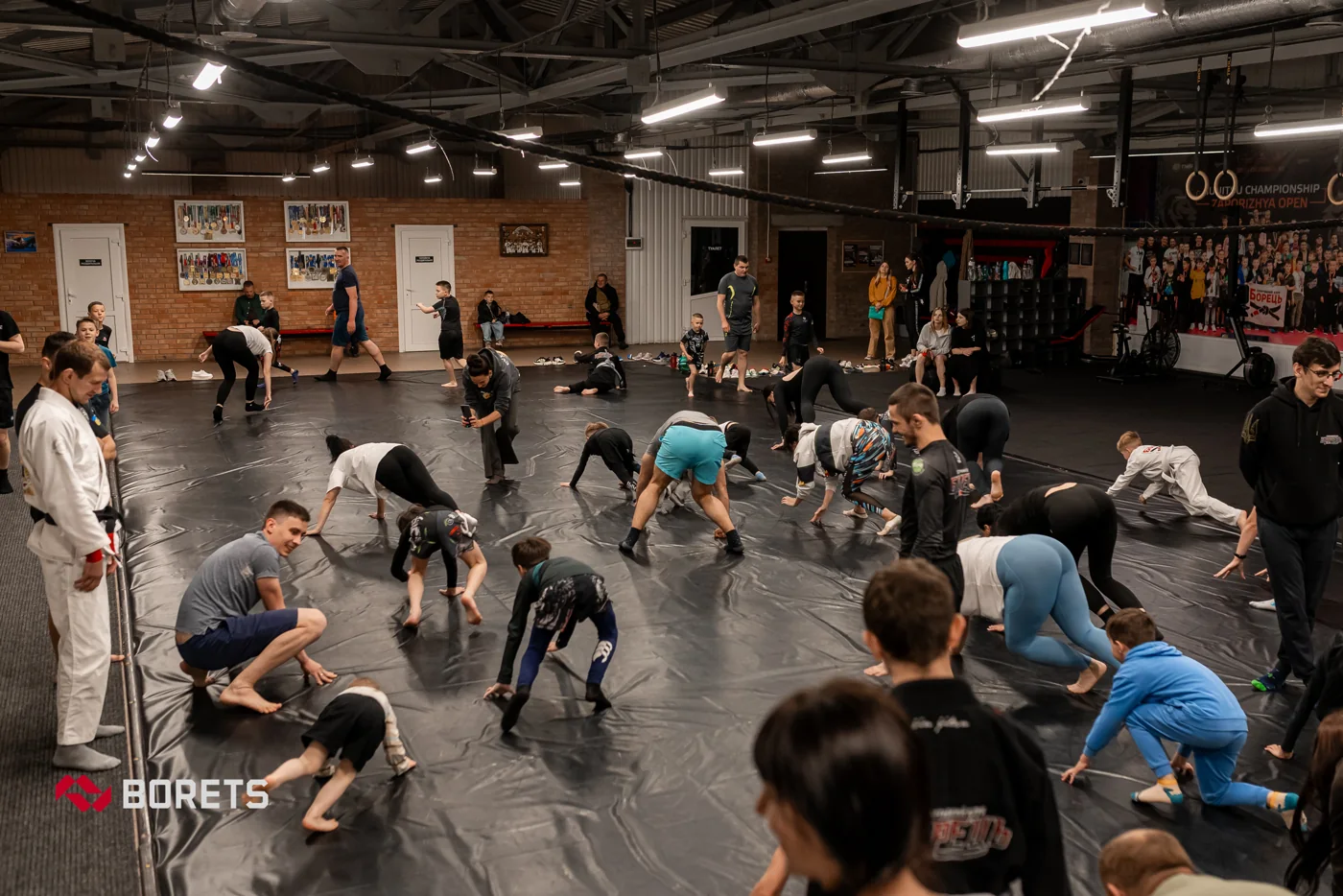
In this guide
Home is for movement, not for technique. That single rule keeps children safe and keeps the coach in charge of the things that need a coach: throws, submissions, chokes, breakfalls and anything else involving a partner's joints or neck. What you can do at home is valuable and fun: mobility, coordination, balance games, animal walks and self-control games that make your child a better learner on the mat. Here is what to do, a 15-minute routine you can run tomorrow, how often to run it, and the moment to stop.
The home rules: what never happens in the living room
No throws, not even onto the bed. No submissions, no chokes, no neck cranks, nothing that bends a joint. No wrestling with a sibling as jiu-jitsu, because there is no coach, no mat and nobody to enforce the tap. No learning technique from videos and trying it on a family member. Technique is learned at the club, under a coach, with a partner who knows how to tap and a mat that forgives. If your child wants to show you a move, ask them to explain it in words or demonstrate it in the air. The parent's job at home is movement, fun and self-control, and that job is big enough.
Mobility that helps a young grappler
Five minutes of gentle mobility, done playfully, is the best gift you can give a child who grapples. Hip circles standing on one leg. A deep squat hold while counting backwards. Cat and cow on hands and knees. Big shoulder circles forward and back. Ankle rocks in the squat. A glute bridge with the feet flat, held for a slow count of five, never a neck bridge. Lunges with a reach to the ceiling. Keep it easy and slow; the child should be able to talk the whole time. If anything hurts rather than stretches, stop that movement and mention it to the coach.
Coordination and balance games
Balance and coordination are built by play, not by lectures. Stand on one leg and count to ten, then try it with eyes closed. Tape a line on the floor and walk it heel to toe, forwards and backwards. Toss a beanbag or a rolled sock from hand to hand while standing on one foot. Play mirror: you move slowly, the child copies exactly, then swap. Clap a rhythm and have them repeat it with their feet. Hop over a rope on the ground, both feet, then one. Keep the games short, add a point score, and let the child win sometimes. A laughing child is a learning child.
Animal walks and simple ground movement
Try short bear crawls, a comfortable crab walk or an inchworm into a plank, choosing movements your child can control. There is no need to force deep positions or count repetitions through fatigue. You can also rehearse solo skills the coach has already taught, such as a hip escape or technical stand-up, on a suitable surface. Keep throws, partner submissions and unfamiliar tumbling for coached practice. Choose two or three movements the child enjoys, and alternate them with a balance game.
Self-control games: freeze, and stop on the word
The most important safety skill in grappling is stopping instantly when a partner taps or a coach shouts. You can train that at home without touching anyone. Play freeze: music or clapping, then silence, and the child holds whatever shape they are in. Play stop on the word: they run, crawl or hop, and the moment you say stop they must be still within one second. Play slow-motion race: last to the wall wins, no stopping allowed. Play statue: they hold a balance pose while you try to make them laugh. Finish with a breathing game, four counts in and four out, three times. A child who can stop on a word is a child every coach wants.
A 15-minute routine
Try this adjustable fifteen-minute game: three minutes of gentle movement; four minutes alternating short crawls and comfortable floor exercises; four minutes of balance and coordination games; three minutes of freeze or stop-on-the-word; one quiet minute to finish. Shorten any part if attention or coordination fades. Use a clear, stable, non-slip space, secure any mat, and move hard furniture out of reach. Avoid sliding rugs or slippery socks. The routine is an example to discuss with your child's coach, not a daily requirement.
How often, and when to stop
Two or three times a week on days without training is plenty. It is play, not a second session. Stop the moment the child is bored, tired, sore or turns the game into a fight, and stop early rather than late; ending while it is still fun is what brings them back. Pain of any kind ends the session, and if it does not go away, speak to the coach and a qualified professional. Never push a child through a home routine to make up for a missed class. The goal is a kid who moves well, listens well and arrives at the club happy.
Ask Yaroslav Blazhko about suitable games for your child's stage, or Ievgen Skyrda about movement and physical preparation. Describe the available space and what your child already practices with their coach. Membership lets you select a coach and receive a written answer or a video response when useful. The school is preparing its video programme; register for launch and watch BORETS on YouTube in the meantime.