 BORETS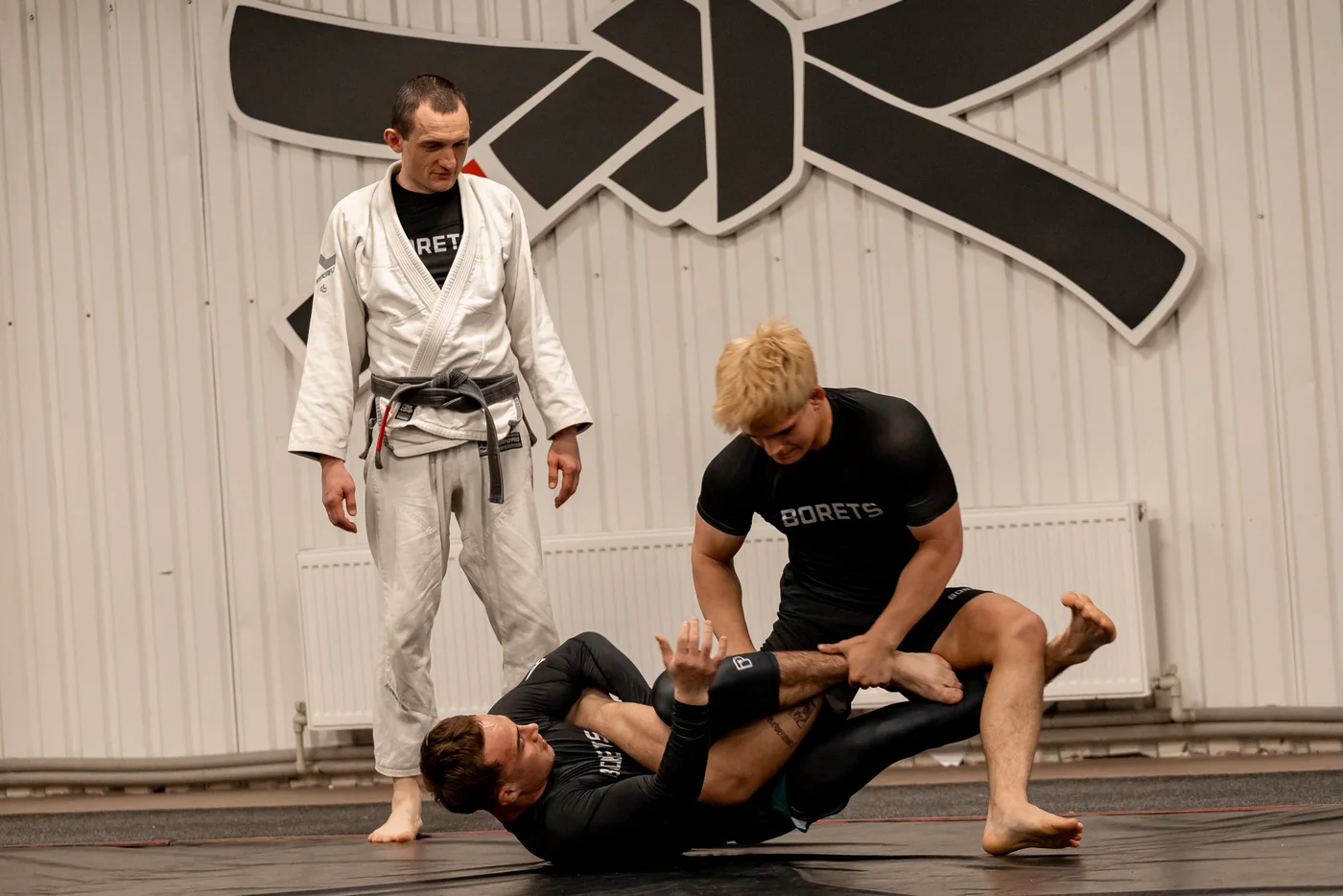
In this guide
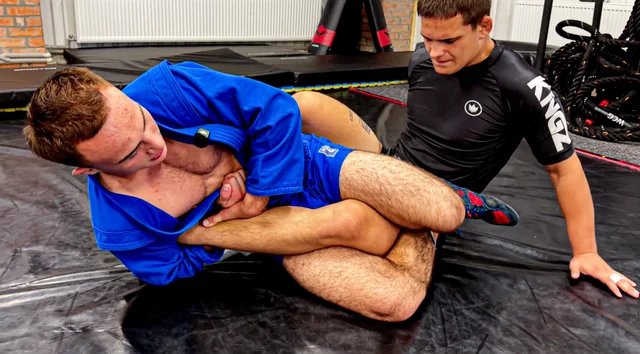
A kneebar attacks the knee through extension while the leg is controlled. The recognizable finishing shape is only the end of the problem. Before reaching it, the attacker must keep the knee inside a useful control position and account for the defender’s hips. Study those connections first: an ankle in your hands does not establish control of the whole leg.
Name the submission and the starting position
FIAS’s technical curriculum includes the knee lever in several entries. The name identifies a submission family, not one mandatory setup. An entry after a leg hook and one from an existing ground entanglement can arrive at a similar finish while requiring different decisions before it.
Choose one version with your coach. Identify which leg is being controlled, where the defender’s hips are and whether the defender can turn or stand. Keep those facts in your notes. A video labeled “kneebar” may begin from a position you have not yet learned to establish.
Three details to check before adding pressure
First, locate the knee relative to the attacker’s thigh-and-hip control. “Keeping the knee line” means retaining the knee within that controlling position rather than letting it slip clear. Second, observe the defender’s hip movement: a captured foot can remain in place while the rest of the leg changes angle.
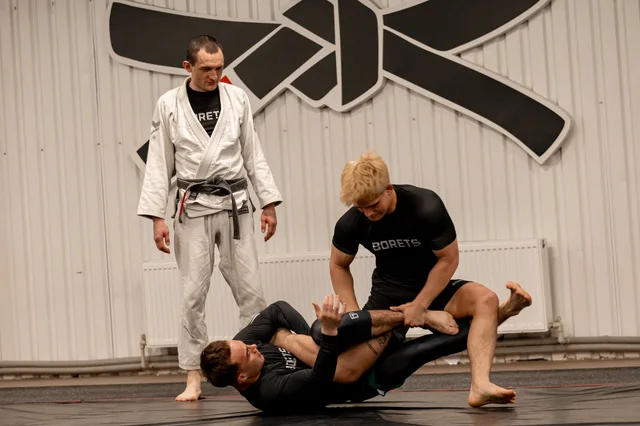
Third, check whether the attacker can maintain the position without dragging on the lower leg. Your coach should be able to pause the demonstration and identify the controlling contacts. If the hold disappears whenever the partner makes a small adjustment, return to positioning before studying the finish.
A turn is information, not an invitation to pull harder
The defender may bend the leg, move the hips or begin to turn. Those reactions can change both the submission and the available escape. Do not chase a rotating partner by forcing the knee in a new direction. Pause and ask whether the original alignment still exists or whether the correct choice is to release and reconnect elsewhere.
A common error is measuring success by whether the foot remains trapped. The more useful question is whether the knee and hips remain controlled together. That distinction also explains why a visually similar kneebar attempt can require a different response after a scramble.
Test retention with a clear reset
A coach can set a positional task in which the defender makes one agreed movement and the attacker retains or safely abandons the connection. Stop before finishing pressure. Reset when the knee clears the control, either partner loses the agreed alignment or anyone signals discomfort. The purpose is to recognize a changing position, not to surprise the defender.
Review the first lost contact. Was it the upper leg moving away, the hips rotating or the attacker trying to hold everything with the hands? Change that detail and repeat the same task. New entries are easier to evaluate after you understand why the initial control failed.
When is a kneebar legal in BJJ?
Under the current IBJJF chart, kneebars are permitted for adult and Masters brown and black belts in both gi and no-gi. They are prohibited at white, blue and purple. Do not confuse this with heel-hook permission, which is narrower: adult brown and black belt no-gi. A Masters brown belt can therefore have permission to use a kneebar without permission to use a heel hook.
Other organizations set different experience and age categories. Check the actual event rather than treating “submission grappling” as one rulebook. Permission to perform a kneebar also does not make every leg-entanglement entry legal; examine the whole sequence with someone who knows your division.
What transfers from sambo to BJJ?
Recognition of the knee line, control of the hips and the decision to abandon a lost alignment all transfer. The surrounding contest changes. In BJJ, entering from a guard or passing exchange can leave you underneath after the opponent frees the leg. Your next guard recovery or route back on top therefore belongs in the lesson alongside the entry.
Use a control-only transfer drill under coaching: begin in an agreed legal position, establish the intended leg connection without finishing pressure, then let the defender make one controlled escape response. If the knee clears, release and continue to a defined guard or top-position reset. Record where you end up. This tests whether the attack belongs in your BJJ game without turning a study of position into a race to extend the knee.
Check the competition format
The current FIAS sport-sambo rules restrict how painful holds may begin and when a leg attack must stop as the defender stands. They also prohibit taking the knee outside its natural bending plane. Other grappling events have their own age and rank restrictions. Confirm your division with a coach or referee before practicing a competition sequence.
For younger athletes, the instructor must select an appropriate task rather than borrowing an adult submission exercise unchanged. Immediate release on a stop signal is part of the skill. A controlled position and a clear decision to disengage are worthwhile outcomes even when nobody taps.