 BORETS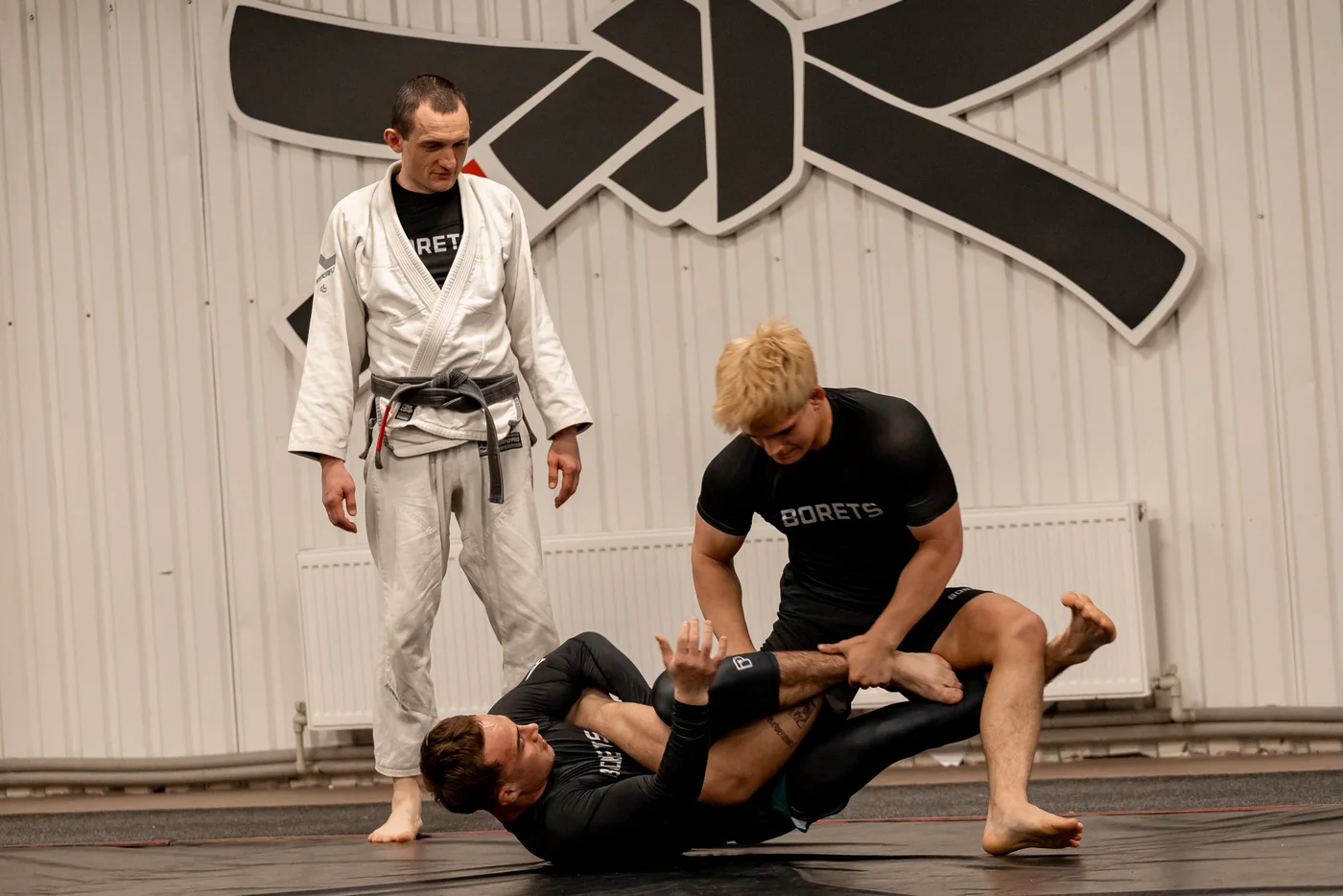
In this guide
A throw does not guarantee a leg lock. The landing may expose a leg, close the space around it or leave the attacker without useful control. A reliable transition starts by recognizing which of those positions actually occurred. Study the throw, the landing and the leg entanglement as connected decisions, rather than one move that must finish the same way every time.
Keep the throw and the joint lock distinct
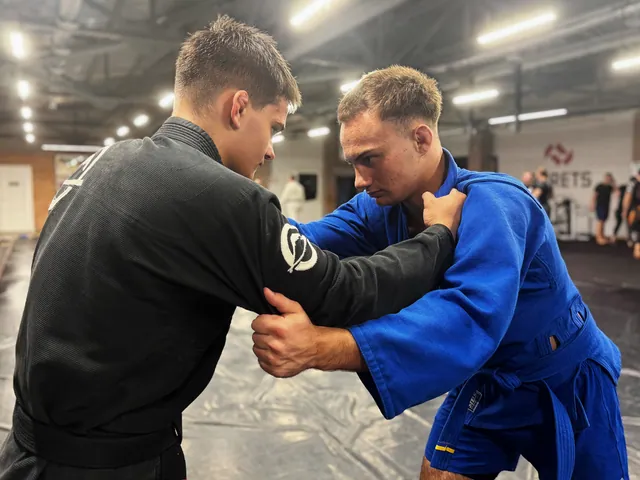
FIAS sport sambo rules allow a painful hold to begin only when the defender is on the ground. They also prohibit throwing while using a painful-hold grip. A throw-to-leg-lock study should therefore show a controlled throwing phase and a legal ground entry, not a falling body used to apply submission pressure.
Confirm the relevant rules before choosing the sequence. A total-victory throw ends a sport sambo bout, so there is no reason to continue an attack after the referee’s stop. In training, the partners can study separate phases, but should clearly agree where the throw ends and where the next task begins.
Describe the landing before naming the finish
Pause a controlled demonstration immediately after the landing. Which athlete is on top? Where are the defender’s knees and hips? Which grips remain useful? An ankle visible near a hand is not enough information. The defender may already be turning away, bringing the knee back or establishing another support.
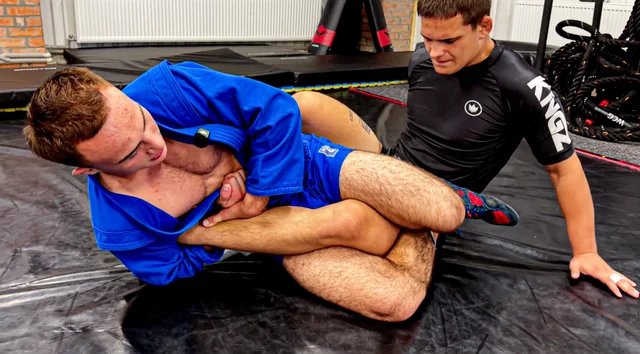
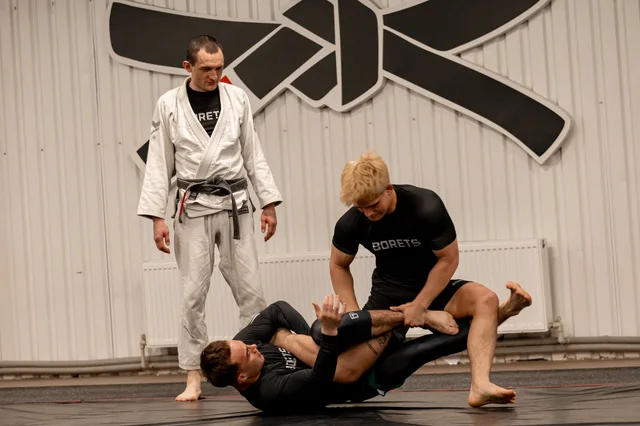
Choose a ground entry appropriate to that actual picture with the coach. Do not label every exposed leg as a straight ankle lock or every extended leg as a kneebar. Those submissions need different control positions. A clear lesson names one entry and shows the conditions that make it available.
An available leg is not yet a controlled leg
The transition must account for the defender’s hips and the path by which the knee can escape. Holding the foot while the rest of the body moves freely can encourage the attacker to compensate with pressure. Instead, separate obtaining the control position from applying any finishing action.
Use a catch-and-release checkpoint: establish the coach-approved position, pause without joint pressure and reset. The observer checks whether the attacker has control or is simply chasing a foot. If the knee slips clear or the position starts rotating unexpectedly, release and restart rather than testing how much force keeps the hold attached.
Keep top position when the entry disappears
The defender may land with the legs protected and a useful top-control opportunity still available. Sitting back to hunt a leg can give up that advantage. A transition lesson should include this branch: recognize the closed entry and keep an appropriate control rather than abandoning position to complete a planned sequence.
For a practical test, start from the same agreed landing position. Let the defender make one permitted recovery chosen by the coach. The attacker selects between a controlled leg entry and retaining top control, with no submission finish. Score the decision and stability of the resulting position, not the number of times an ankle is caught.
Apply the stop conditions to the whole sequence
Under FIAS sport sambo rules, a leg painful hold stops when the defender stands. Other grappling formats can differ, including which locks are permitted for a particular age or experience division. Carry the rules into the transition drill rather than remembering them only after the final grip is established.
A verbal stop or tap ends the training action immediately, even when the sequence is incomplete. Keep completion pressure out of the transition test. Once the entry and decision are dependable, a qualified coach can teach the specific permitted finish separately. The useful result is a controlled path from standing to ground, including a clear exit when the leg attack is unavailable.