 BORETS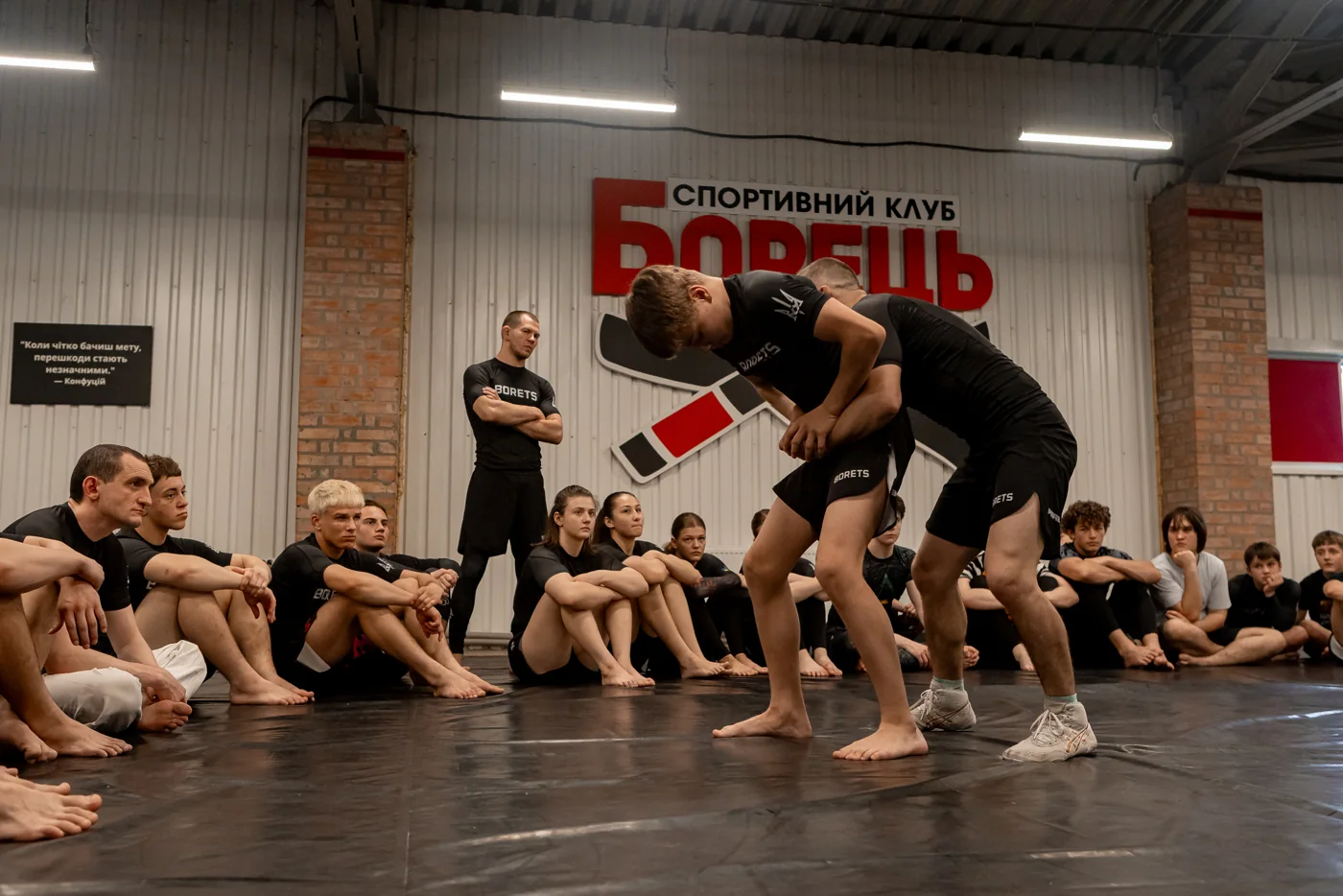
In this guide
You do not need a school wrestling background to ask about learning as an adult. The practical obstacle is finding a room that actually teaches adults who are new to contact and takedowns. A club name or an open-mat listing does not answer that question. Start by finding the right program, then work out the training schedule and equipment.
Search for adult instruction, not just a wrestling address
In the United States, the USA Wrestling club directory is a useful starting list. Contact the club to confirm the current age group, whether complete beginners are accepted and which sessions include instruction. Many programs serve school-age athletes or experienced competitors. Do not assume a school or college team practice is open to the public.
A concise message works: I am an adult beginner with no wrestling experience; do you offer coached sessions and suitable partners? Add the days you can attend. Ask whether membership, insurance arrangements or other requirements apply before a trial. A directory listing helps you make contact; it does not certify that a particular session fits your needs.
Know which kind of wrestling the room teaches
Ask whether the program focuses on freestyle, Greco-Roman, folkstyle or wrestling adapted to BJJ or MMA. The answer changes the rules, positions and purpose of drills. A submission-grappling gym may offer valuable wrestling instruction, but an ordinary rolling session is not the same as a class that teaches stance, entries and controlled finishes.
Explain your goal without insisting on a complete career plan. You may want stand-up skills for BJJ, a new sport or eventually a wrestling competition. For a beginner, the immediate priority is a teachable progression and regular access to suitable partners. Competition details can be added once the daily practice arrangement is clear.
Look for a progression before live rounds
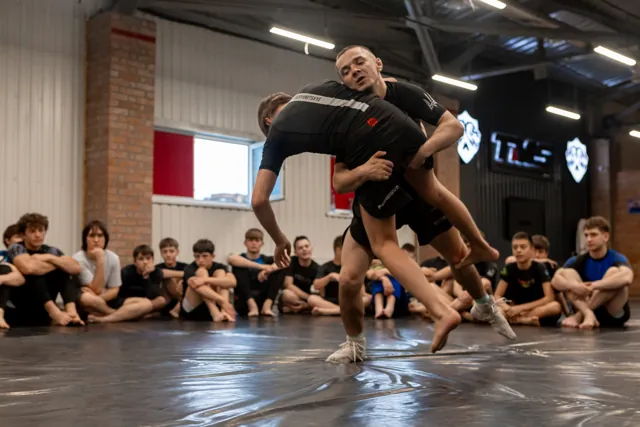
A first session can teach stance and motion, a level change, an entry without a finish and a controlled partner task. Those pieces show how instruction is organized. Ask when live wrestling begins and whether rounds can be limited to a position. Being sent straight into unrestricted takedowns does not show how a new adult will learn the missing skills.
Partner suitability includes size, experience and willingness to control intensity. Tell the instructor if you need a particular adjustment or prefer a different pairing. You should be able to agree on the task and stop it clearly. Equipment, mat space and receiving a takedown also need instruction; these are not details to discover during a surprise exchange.
Make the commitment sustainable
Check the total cost, required shoes or clothing, travel time and cancellation terms before committing. Ask which classes an adult beginner should actually attend; not every slot on the timetable may be appropriate. Fit the plan around work and other training instead of copying the schedule of a school team with different obligations.
Women starting wrestling: assess the coaching and the room
A woman can begin in a mixed adult class or a women’s session if the program actually teaches beginners. Ask who attends regularly, how partners are assigned and whether the coach can match size, experience and control. The existence of a women’s class is useful information, but the quality of instruction and suitable repeat partners still decide what you can practice.
You can request a different partner, agree on lighter resistance or decline a drill. Those choices should be handled plainly, without a test of toughness. In a mixed room, an experienced larger partner may be able to teach a controlled task well; another complete beginner may not. The coach should manage that difference rather than treating body weight or sex as the only pairing criterion.
If competition interests you, ask which rules and adult events the program prepares women for. The style taught in class and the divisions available at a particular event are separate questions. Get a concrete answer before choosing a long-term competition plan.
A manageable first week
Monday: attend one coached beginner session. Concentrate on stance, motion, changing level and one entry without an uncontrolled finish. Learn how the partner receives the technique and how both of you stop the drill. Leave able to describe one movement, not exhausted from trying to win.
Tuesday: take a walk and, if comfortable, spend five minutes repeating stance and footwork in clear space. Wednesday: rest from wrestling. Thursday: return to class, review Monday’s entry and add the coach’s controlled partner response. Limited positional work can come later when the coach sees that you can maintain the agreed intensity.
Friday and the weekend: keep ordinary easy activity and review what you learned. If strength training is already familiar and you have recovered, keep one short usual session; this is not the week to add a new hard lifting program. For week two, repeat the two coached classes before adding frequency.
A useful first-week record is simple: the starting stance, the entry you practiced and the reaction that confused you. Bring that question to the next class. Regular learning beats a first week so demanding that you miss the second.
Measure the first stage by understanding
Look for specific changes: you can move without crossing your feet, arrive closer on an entry or explain the starting position of a drill. Wins against training partners are a poor first measure. Existing medical restrictions or symptoms need individual advice; age alone neither guarantees readiness nor rules out learning. Build the next step around your actual response to practice.