 BORETS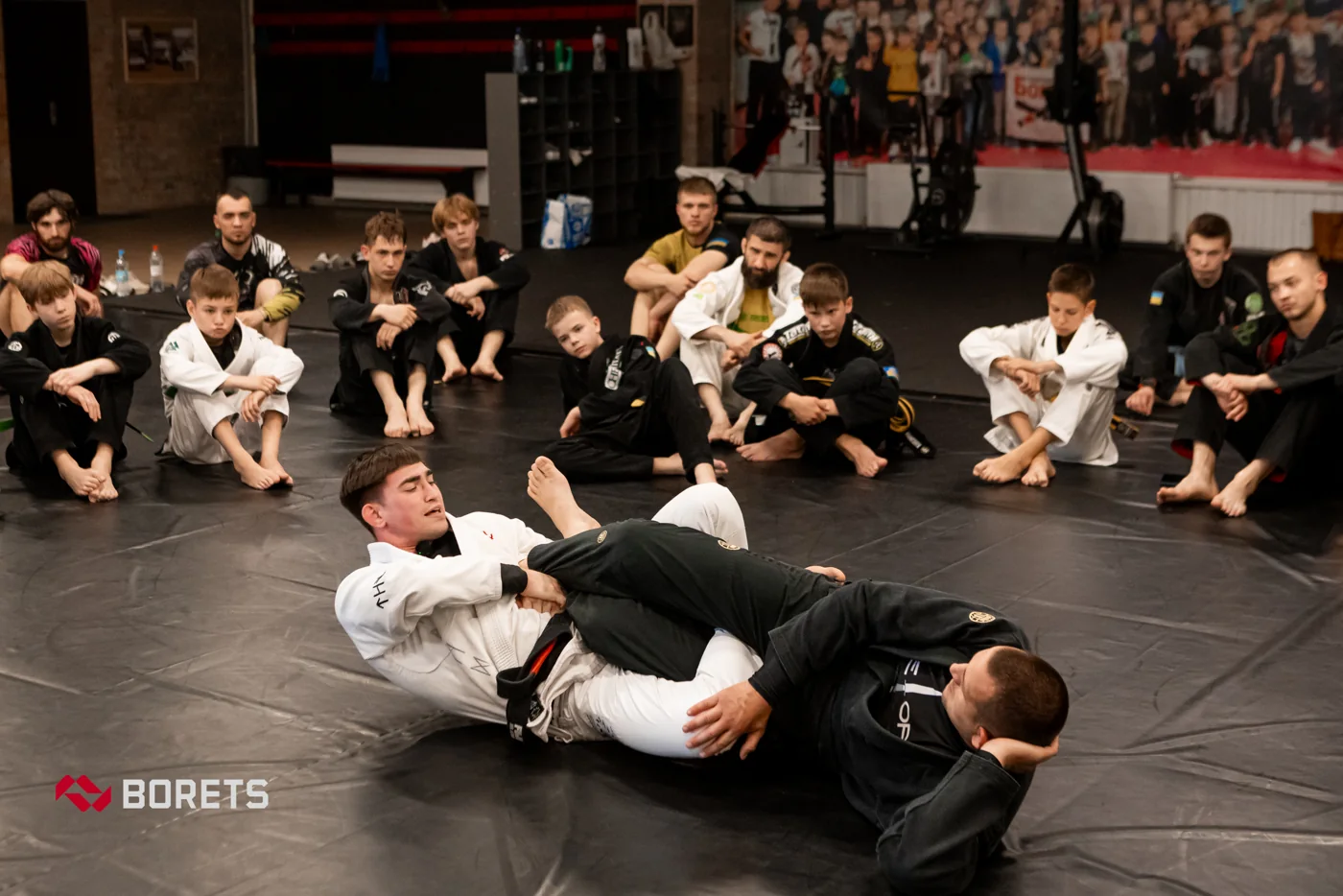
In this guide
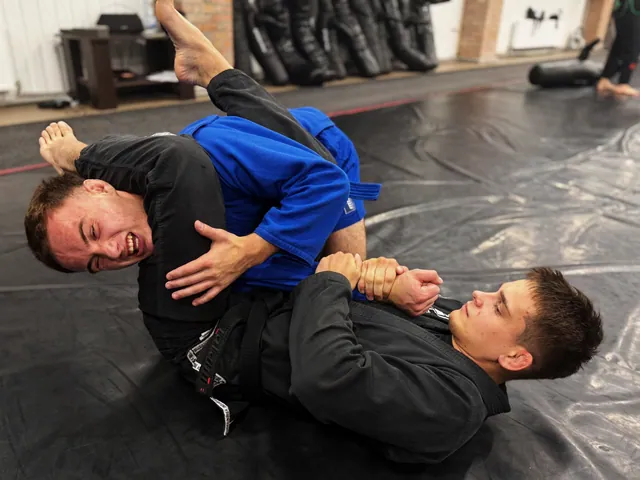
The triangle choke is a guard attack built around a relationship between your legs and the opponent’s upper body. For a learner, the first task is recognizing a usable entry while maintaining guard control. A leg configuration that resembles a triangle is only a snapshot; the partner’s posture and movement determine whether you can actually hold the position.
One arm inside creates the opening
The familiar triangle from guard surrounds the opponent’s neck and one shoulder, with one arm inside the leg configuration and the other outside. The trapped shoulder is part of the closing structure. With both arms inside, there is usually too much upper-body space; with both outside, you are looking at a different configuration.
A common entry controls one wrist while moving the other arm away from the path of the rising leg. The leg passes over the shoulder on the exposed side. Keep the opponent’s posture connected as the legs move higher. Throwing the legs up while letting the opponent sit upright often leaves the hips too far away to form a useful triangle.
Change the angle before tightening the leg figure
If your hips remain square beneath the opponent, your legs may be trying to surround too much shoulder and upper-back width. Turning toward a more perpendicular angle lets the leg across the back of the neck sit in a more useful line. The other foot can briefly support the hip or mat while you make that adjustment.
Once the angle fits, the ankle of the crossing leg sits in the bend behind the opposite knee. The locking leg contains the ankle; it should not bend the foot sideways to compensate for poor distance. Keep hold of the shin while adjusting rather than pulling your own toes. Body proportions vary, so judge the available space and alignment instead of chasing one exact visual angle.
The shoulder must stay inside the structure
The inside arm’s position affects where its shoulder sits. In a conventional front triangle, bringing that arm across the opponent’s center helps organize the trapped shoulder within the space closed by your legs. If the arm stays wide and the elbow pushes into your hip, it can create a gap and interfere with your angle.
Do not confuse crossing the arm with yanking it. Maintain posture and leg connection while the arm changes position. If the opponent withdraws the arm entirely, the original triangle structure has disappeared. If they regain a tall posture before your hips turn, improve the connection before closing the legs harder. These are alignment and control problems, not evidence that you need stronger squeezing legs.
Test recognition with limited choices
Build a short positional exercise with two outcomes: reach the agreed checkpoint or restore a usable guard. The defender may protect the arm configuration or move away, using the level of resistance selected by the coach. There is no need to include choking pressure in this recognition test.
After each exchange, identify which action happened first. Did you start moving before the opening existed? Did you notice the arm leaving but continue anyway? Did you regain a guard when the attack disappeared? Those answers help you improve the decision itself. Add further reactions only when both partners can repeat the basic task with control.
A concise troubleshooting test
Check three landmarks in order: one arm inside, a useful hip angle and the trapped shoulder contained by the leg structure. If the entry fails, identify which landmark disappeared first. A partner may withdraw the arm, restore posture or begin to pass; each reaction changes your next decision. Recover guard when the structure is lost.
Practice with supervision, gradual pressure, early tapping and immediate release; never test choke tolerance or force the neck into position. Check IBJJF restrictions for the exact variation and division. A useful question for the next session is specific: “My angle stayed square because the inside elbow blocked my hip—what contact should change first?”