 BORETS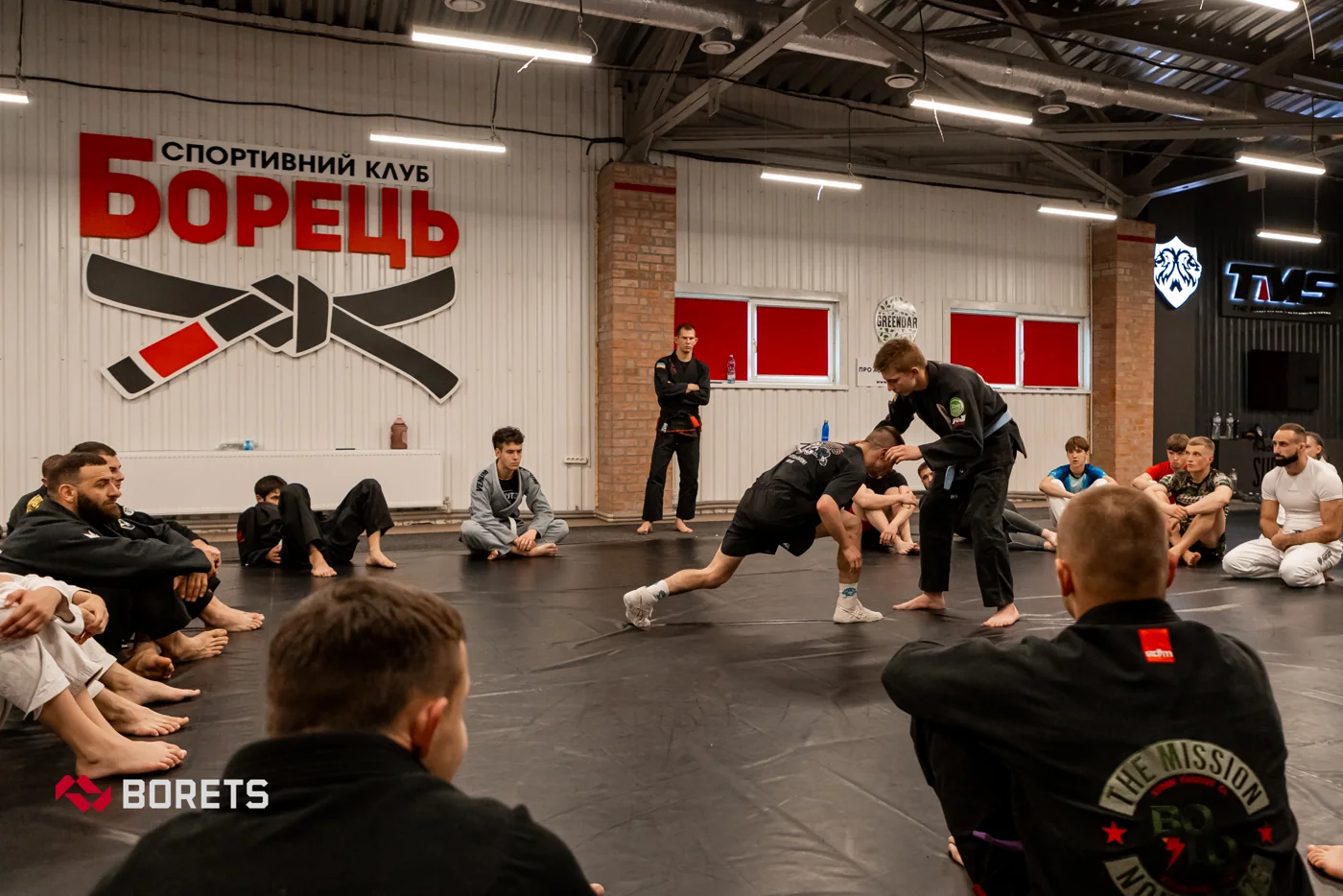
In this guide
An arm drag moves an opponent’s arm across your body while your feet carry you toward the space outside their shoulder. The opening comes from the relationship between their elbow and your angle. A hard pull with stationary feet often leaves both wrestlers facing each other. Study the drag as a way to improve position, then connect that position to a leg attack or a controlled go-behind.
Establish useful contact on the arm
Begin in a stance that allows a short step to either side. For one common version, control the wrist with one hand and connect the other hand above the elbow on the upper arm. Keep the grip broad and comfortable; do not twist the wrist or pull on isolated fingers. Ask your coach to check the relationship between your hands before adding movement. The wrist hand helps organise the opening, while the upper-arm connection gives information about the shoulder and the opponent’s response.
Move yourself as you move the arm
Guide the arm across as you step to the outside of that shoulder. Keep enough posture to see and follow the opponent’s hips. Your torso should not remain at the original meeting point while your arms do all the work. Equally, do not cross your feet into an unstable position in pursuit of a large angle. A small, well-timed step can be enough to get beyond the elbow. Freeze there during early repetitions and check whether you have actually changed the facing relationship.
Connect the opening to the hips
Once outside the arm, move into a connection that prevents the opponent simply turning back toward you. Depending on the position, that may be a near-leg attack or a controlled connection around the waist from the side. Select one continuation first. Continuing to pull the wrist after the elbow has cleared can keep you occupied with the arm while the hips escape. The next grip should serve the next task. Keep the finish low and let the coach set the receiving position.
Use the reaction rather than repeat the pull
The opponent may retract the arm, step around to face you or press forward through the contact. A retracted arm can remove the original drag but change the hand-fighting position. A circling opponent may require your feet to follow before you can connect to the hips. Do not assume every response should end in the same takedown. In a decision drill, let the defender choose between retracting and circling. The attacker’s first goal is to recognise the difference and maintain balance.
Find where the drag loses its purpose
Common mistakes include pulling directly backward, leaning far away from the partner and chasing the wrist after the shoulder has recovered. Another is treating a fast hand movement as success when the feet have not improved the angle. Watch the opponent’s elbow relative to your torso at the end of the action. Then look at the hips. If both athletes still face each other squarely, decide whether the missing piece was the direction of the drag, your step or the timing of the follow-up.
Practise an angle before practising a takedown
Start with contact, one step and a pause. Add a waist connection without taking the partner down. Then introduce a coach-selected, controlled finish and one defensive choice. This gives children and new wrestlers a meaningful game: reach the side while the partner tries to face you, without yanking an arm or colliding. Note whether the opening came from moving the opponent, moving yourself or combining both. That answer helps turn the arm drag into repeatable hand fighting rather than an isolated trick.