
Record the point where your round changes
After a normal session, note the starting position, the pace you intended and the moment your actions became less useful. A short note such as ‘I held a failed collar grip until I could not regrip’ is more informative than ‘My cardio is terrible.’ Record the number of rounds and rest you actually took, without turning the session into an extra fitness test.
Bring the observation to your coach. They can look for decisions that are adding effort without helping the position, alongside the demands of your existing training. Physical preparation and technical learning belong in the same conversation.
Separate grip fatigue, pacing and repeated efforts
BJJ requires a mix of strength, power and endurance, and conditioning plans should reflect those demands. NSCA's BJJ coaching material addresses these qualities together. That does not mean every tired athlete needs more work in every category.
Use the examples below to frame a question. They suggest what to observe, not a diagnosis or a ready-made workout. A coach may find that more than one issue contributes to the same difficult round.
| What you notice | What to review with your coach |
|---|---|
| Forearms fade during long grip exchanges | Which grips are useful, when you release them and how much grip work the week already contains. |
| A frantic first minute followed by little activity | Opening pace, choice of attacks and whether you recognize a position where you can reorganize. |
| You can attack once but struggle to repeat it | The technical recovery between attempts and the conditioning demands of repeated efforts. |
| Every session feels worse late in the week | Total mat and gym workload, available recovery and recent changes in the schedule. |
Fit conditioning around the sessions you want to improve
Show your coach the whole week: BJJ, sambo or wrestling sessions, lifting, other sports and the time you can reliably train. Adding intervals after every class changes that workload even if each addition looks short. Decide which session has priority before adding more fatigue around it.
A useful first adjustment may be the structure of a supervised positional round, the pacing of an existing conditioning session or a change in where gym work sits in the week. Agree on one change and a review point. Keep enough of the schedule stable to notice whether your mat work actually improves.
Adapt the question for children, teens and adults
Children need age-appropriate coaching, movement practice and tasks they understand. Do not copy an adult's exhausting circuit because a child looked tired in a tournament. Teenagers also need an individual plan that accounts for their development and other sport commitments, rather than an automatic increase in workload each year.
An adult beginner may need time to learn how to distribute effort during rolling. An experienced competitor may need a more specific conditioning block. Both should tell the coach about recent breaks and changes in their normal week. New or unusual breathlessness, chest pain or fainting belongs with medical care, not an online conditioning adjustment.
Judge progress by useful work on the mat
Choose a repeatable observation: can you keep making the intended decisions later in a comparable round, recover your position between attacks, or complete the planned session without abandoning its purpose? Compare similar situations and include your coach's observation. Sweating more is not a measure of better grappling.
BORETS brings physical-preparation lessons into the same school as sambo, BJJ and freestyle wrestling. Members can ask a coach about a published exercise or share a match clip showing where their pace changes. Include your weekly schedule so the question has context.
Explore the video library
Published lessons in this training category, ready for your next session. Watch them all with your school membership.
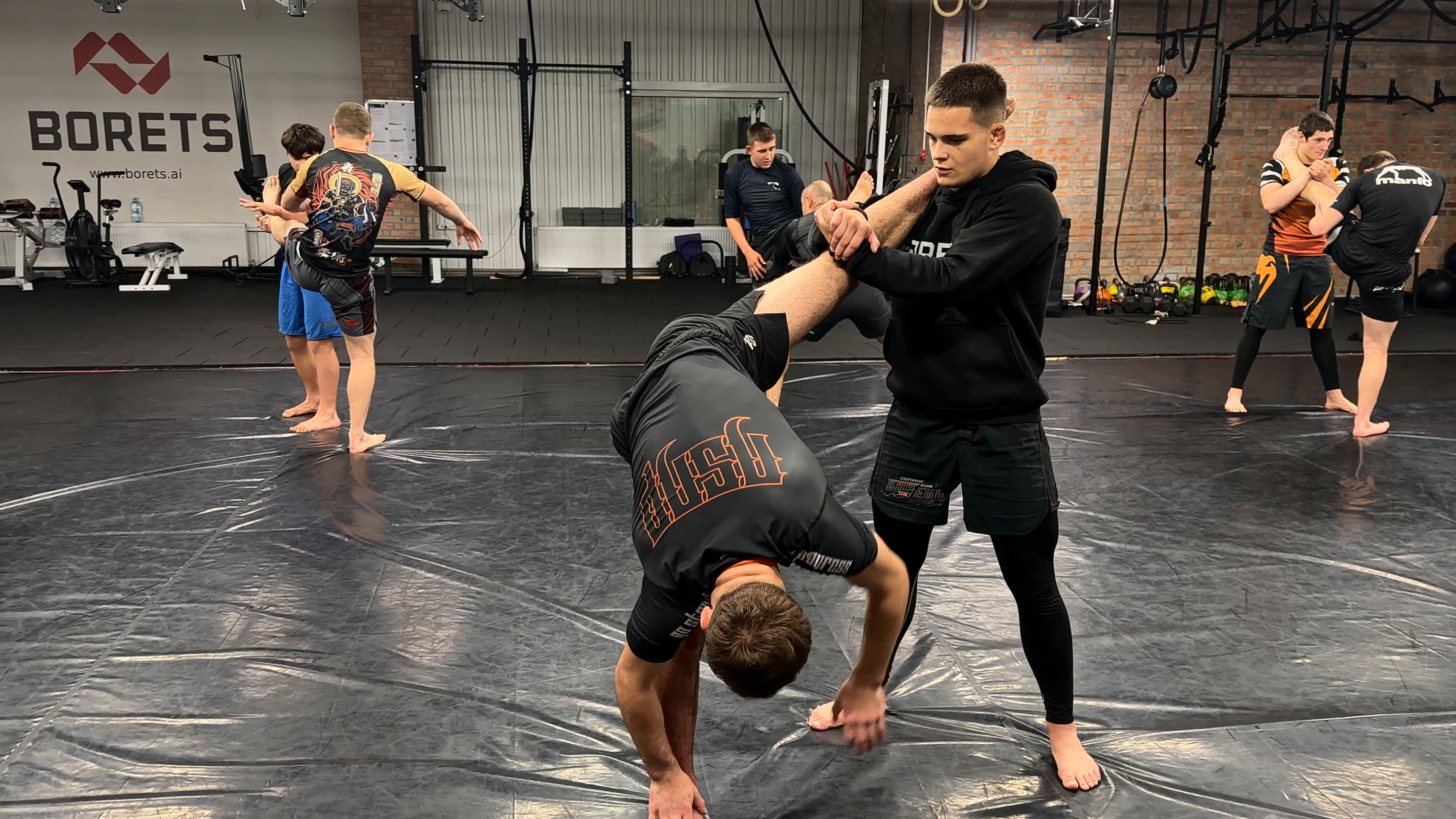 Partner-Assisted Leg StretchMykola Chaban
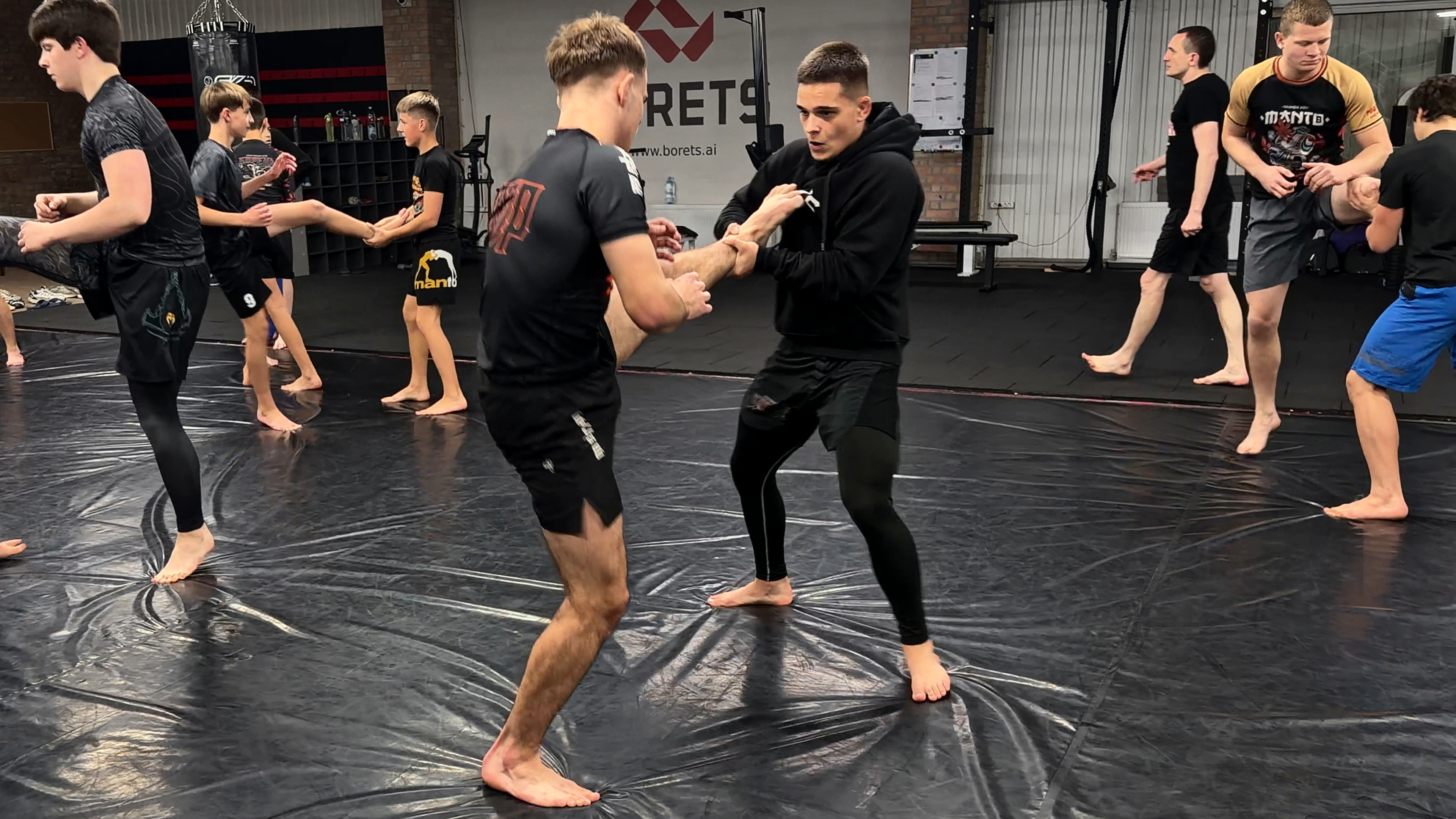 Partner Single-Leg Balance DrillMykola Chaban
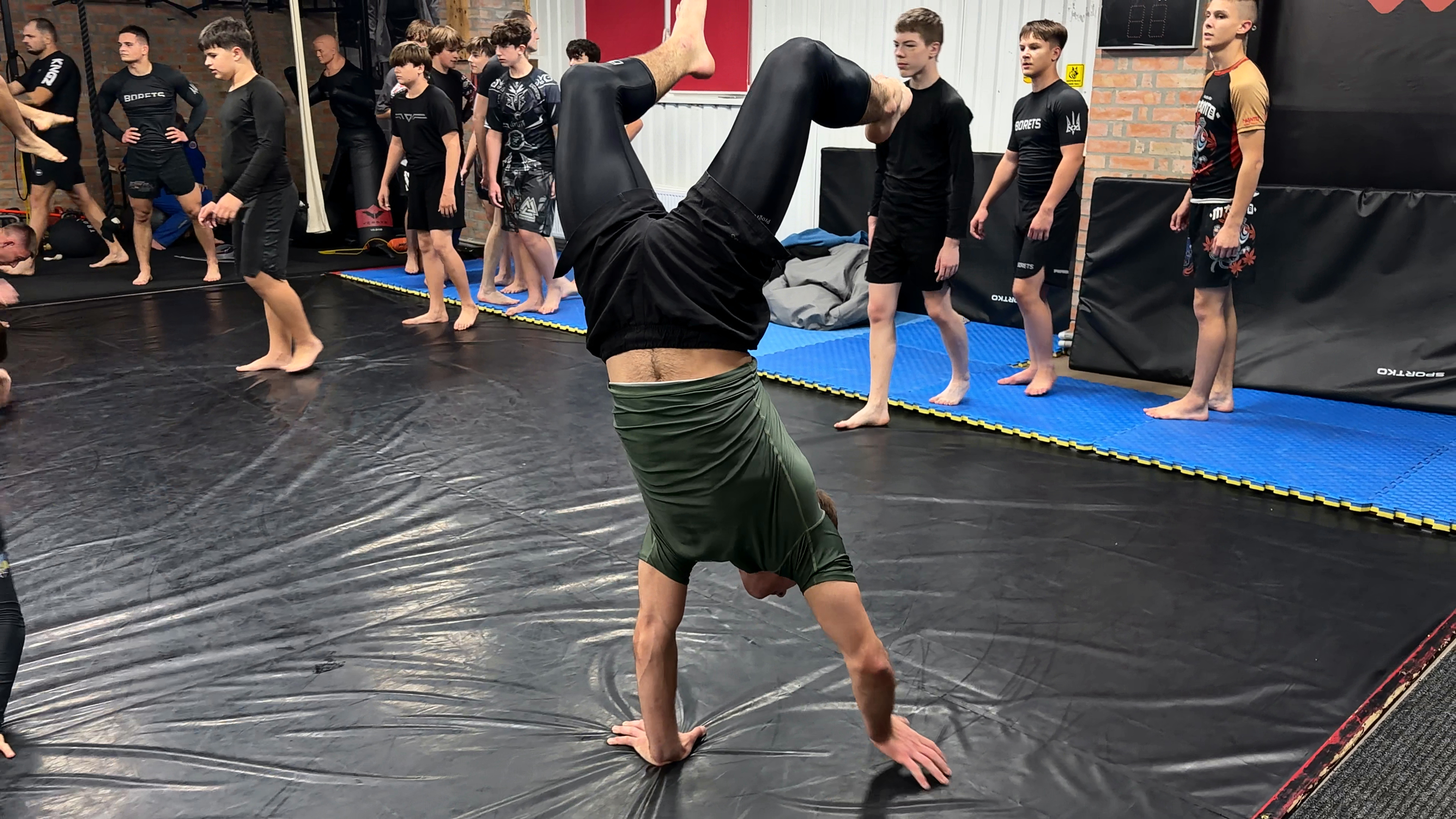 Headsprings & Handstand WalkingIevgen Skyrda
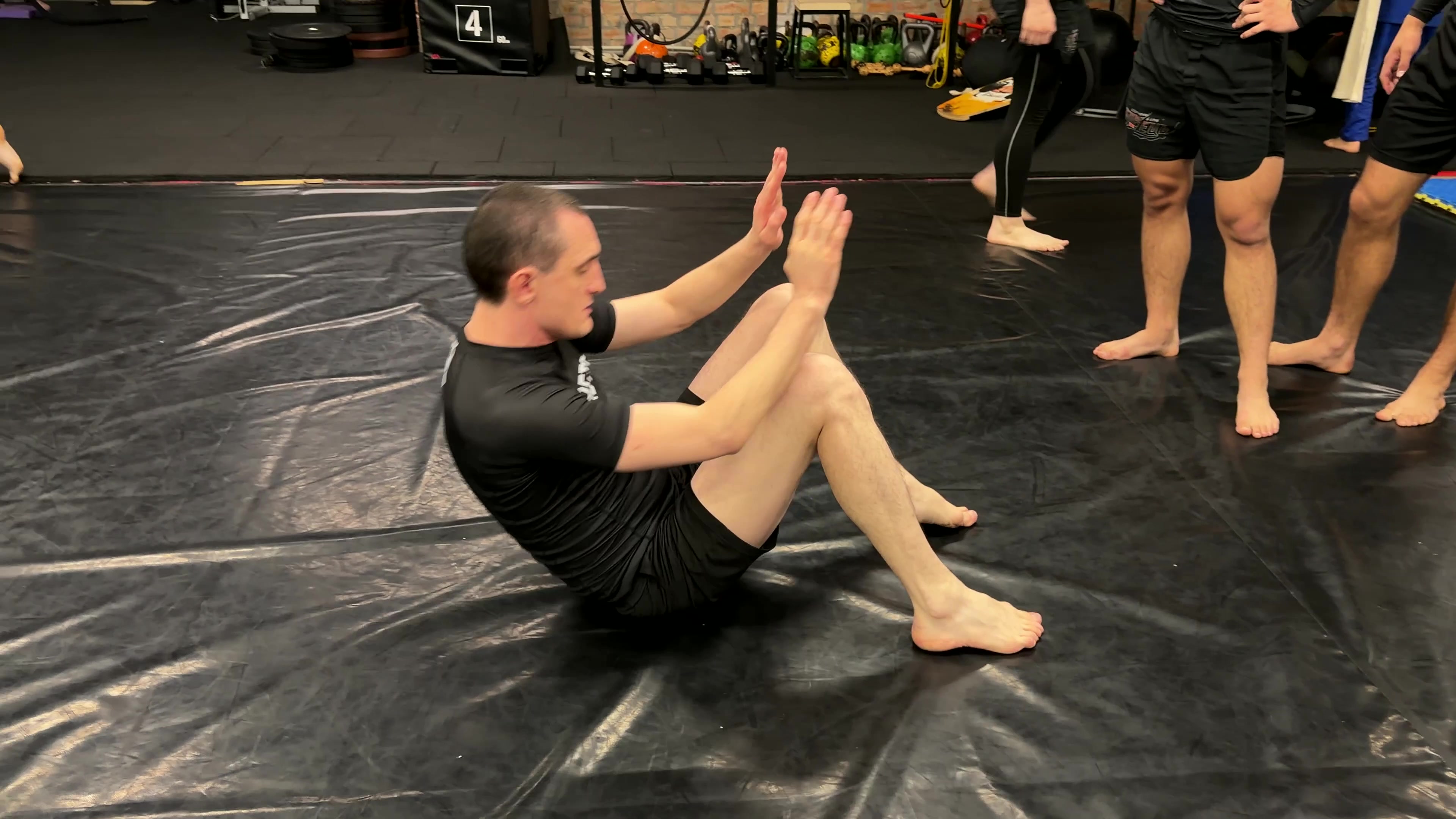 Side Rolls & Forward Rolls from KneelingIevgen Skyrda
Common questions
Is running enough to improve BJJ cardio?
Running can be one part of a conditioning plan, but it does not teach grip decisions, positional movement or pacing against a partner. Discuss how general conditioning fits your mat training and the specific difficulty you are trying to improve.
Should I roll more whenever I feel out of shape?
Not automatically. First review how much you already train, what the rounds contain and how you recover between sessions. Extra rounds may add useful practice or simply add fatigue; their purpose matters.
Build a more complete grappling game.
Learn from the team that developed homegrown black belts and an adult ADCC Trials finalist at 16.
One membership unlocks every published lesson in sambo, BJJ, freestyle wrestling, strength and conditioning, and mental preparation. Pick your focus, study the details and take them into your next session.
1,340 UAH / month · 13,400 UAH / year
Payments are charged in Ukrainian hryvnia (UAH). Your bank determines the conversion to your currency.
Continue reading
- Wrestling Conditioning: Build Endurance for Repeated AttacksPlan wrestling conditioning around repeatable mat tasks, pacing and recovery. Track attack quality and output instead of measuring a workout by exhaustion.
- BJJ Strength and Conditioning: A Two-Day Strength PlanAn adaptable two-day strength plan for BJJ, with exercise patterns, sets, recovery and ways to fit gym work around your most important jiu-jitsu sessions.
- Repeat-Effort Conditioning: Keep the Next Grappling Effort UsefulA practical introduction to short conditioning intervals, with a bike option, controlled wrestling tasks and clear rules for changing work and rest.
- Returning to BJJ, Sambo or Wrestling After a Training BreakPlan your return to grappling after time off: explain your starting point, rebuild a workable schedule and review training load with your coach.