 BORETS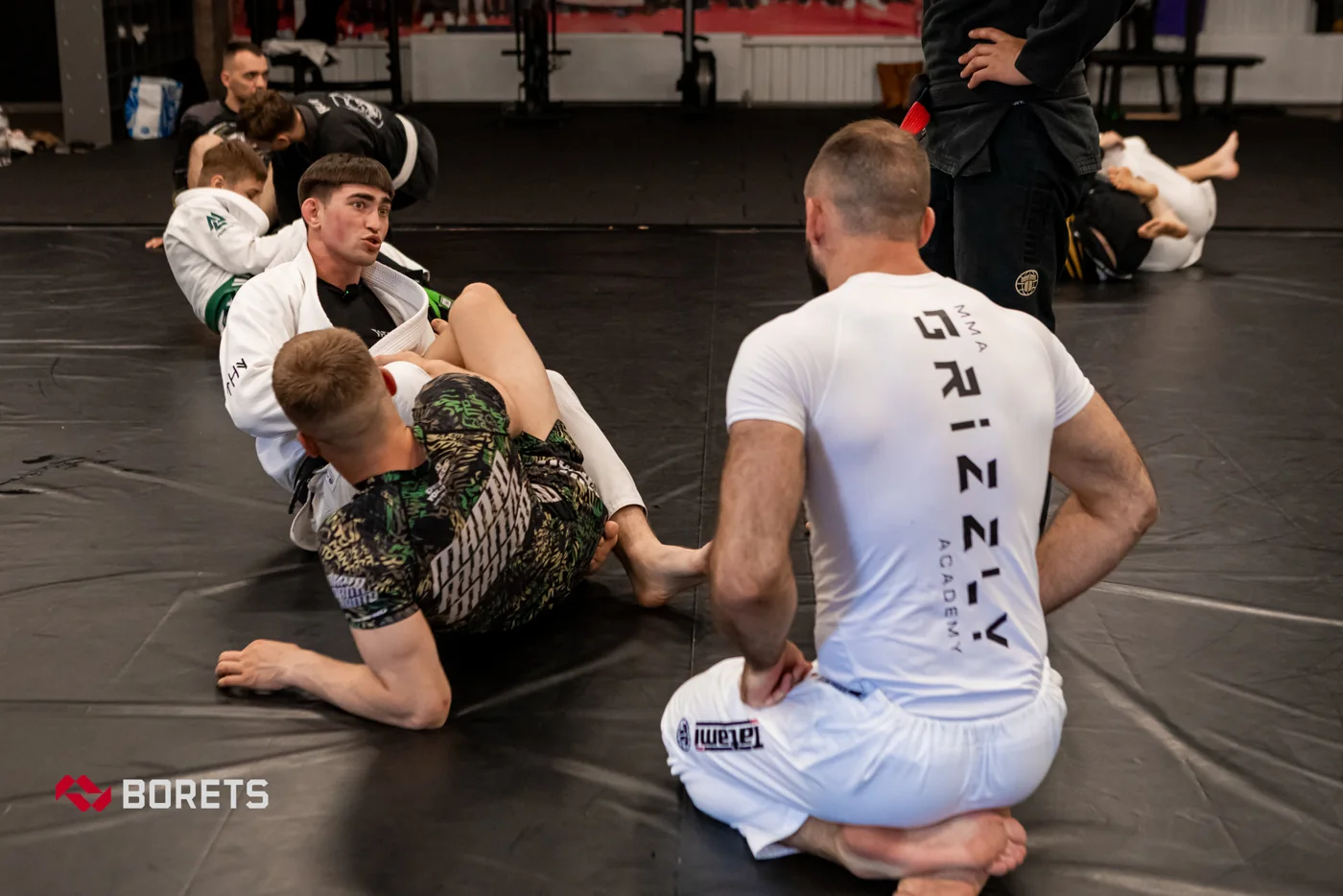
In this guide
A BJJ private lesson is most useful when you bring a problem that ordinary classes have not resolved: an escape that keeps failing, a competition sequence or a position you cannot explain. Individual attention can also help a beginner who needs a slower introduction. The value is a clear correction and a way to practise it afterward, not the number of techniques demonstrated in an hour.
When a private is worth it and when class is better
Consider a private when you can name the situation. “I lose my underhook when the passer changes direction” gives a coach something to examine. “Make me better at jiu-jitsu” needs narrowing before the session starts. A useful first step is asking your regular instructor whether the issue can be addressed during class or a short supervised drill.
Group classes provide partners, repeated exposure and practice against different reactions. A private can clarify what to work on, but it cannot supply that repetition by itself. Beginners may benefit from individual instruction for confidence, accessibility or scheduling; there is no belt or minimum number of months you must reach before it becomes worthwhile.
How to choose the coach
Look for experience with your actual problem and audience. A coach who teaches adult beginners every week may be a better fit for your first escape than an accomplished competitor whose teaching focuses on advanced leg entanglements. Watch how the coach explains, observes a student trying and changes the explanation when it does not land.
Ask what a session includes, whether you need a partner and whether the coach works with your competition rules. The IBJJF academy directory can help check an affiliation; registration alone does not assess teaching quality. Clear communication and a suitable learning environment matter alongside credentials.
How to prepare your task
Send a short description if the coach accepts material in advance: your experience, the position, what you tried and what happened. A brief clip showing the lead-up to the mistake is more useful than an isolated finish. Obtain permission from anyone identifiable before sharing training footage.
Bring two questions at most. For example: “Where should my near-side elbow be before I bridge?” and “What changes when the opponent switches their hips?” Tell the coach about movement restrictions that affect the session. Agree whether filming a demonstration or taking notes is allowed; neither is automatically included.
What a good private looks like
A productive session might begin with you reproducing the problem, followed by one correction, cooperative practice and a modest increase in resistance. The coach should see you perform the movement rather than only perform it for you. If the original explanation still fails, the session should adjust to that evidence.
Leave with a small practice assignment: starting position, partner’s job, your objective and a sign that you are improving. For a side-control escape, that might be recovering a frame before attempting the escape. The test is not whether you memorised a sequence; it is whether you recognise and solve the original situation more reliably.
How to evaluate the cost without a price list
Compare the complete offer: session length, shared or individual instruction, partner arrangements, cancellation terms and any agreed follow-up. An expensive hour without a chance to practise afterward can be poor value. A session that clarifies a recurring problem may give you several weeks of focused class work.
Buy the smallest useful commitment first. Afterward, test the correction in ordinary training and record where it holds up or breaks down. That gives you a reason for another appointment. A weekly private is not a requirement for progress, and a monthly subscription to general classes may be the better use of a limited budget.
What a remote consultation can and cannot replace
A coach reviewing video can identify visible timing, posture and decision errors, and suggest a drill to take back to your room. They cannot feel pressure through a recording, see what the camera missed or supervise a partner’s reaction in real time. Injury assessment belongs with an appropriate health professional.
For remote feedback, include the sequence before the failure and your specific question. A stable, unobstructed view is more useful than dramatic editing. Test the suggested correction with a suitable partner and your local coach, especially when it involves takedowns or unfamiliar submissions.
Quick answers
How often should you book? When you have a defined question and time to practise the answer. Is a famous competitor necessary? No; relevance and teaching ability matter more than celebrity. Can two people share? Often, if the coach offers it and both want to work on the same position; agree the arrangement and price beforehand.
BORETS LAB is preparing its online school. Register to follow the launch and check the membership page for current access and pricing. Meanwhile, use the public guides and BORETS YouTube channel to identify a precise question to bring to your own training.