 BORETS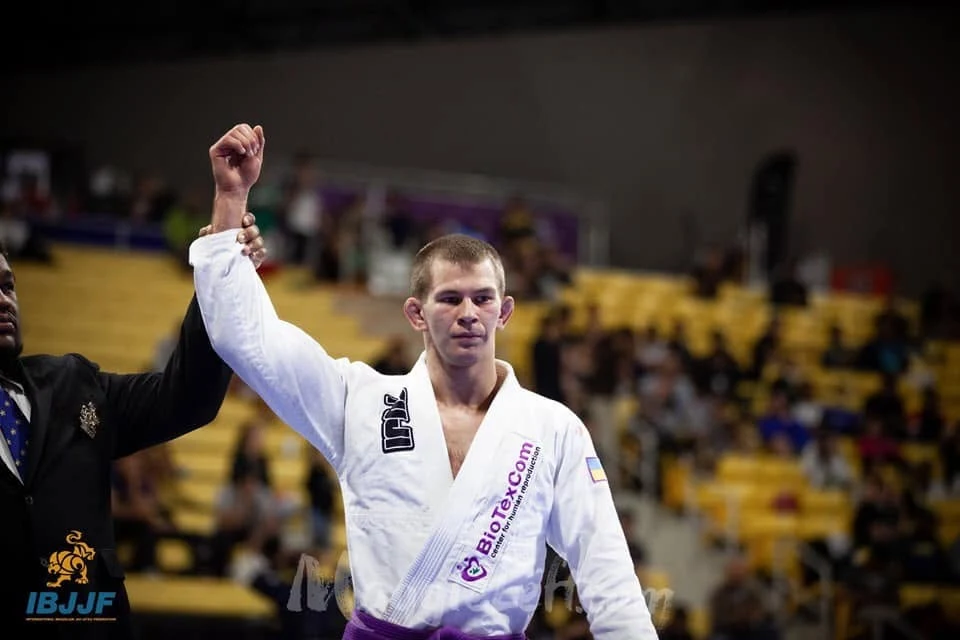
In this guide
You do not need a childhood in wrestling to start Brazilian jiu-jitsu as an adult. You need a suitable room, patient instruction and a schedule you can repeat. This guide covers how to choose a school, what to expect in the first class and how to judge progress without comparing your first month with somebody else’s tenth year.
The room matters more than the sport
You are not choosing jiu-jitsu; you are choosing a coach, a group of training partners and a culture, and that choice decides whether you are still training in a year. Visit two or three schools before you sign anything. Watch a fundamentals class and note three things: how the coach talks to the newest person on the mat, whether experienced athletes roll with beginners carefully or use them as practice dummies, and whether people are smiling at the end.
Ask direct questions: is there a beginner programme, how soon do beginners roll, what happens if I get hurt? A coach who answers clearly has built a school around those questions; a coach who bristles has told you what you need to know. Then the practical filters: distance, class times that fit your real week and a price you can sustain.
Your first class, minute by minute
Arrive fifteen minutes early, say you are new and let the coach or a senior student walk you through the etiquette. Most schools lend or sell a gi; wear a rash guard underneath, remove jewellery, cut your nails. The warm-up will include movements you have never done, shrimping, bridging, rolling; do them slowly and badly, like everyone did.
The technique will be shown several times and you will drill it with a partner who is not resisting; you will forget the details as soon as you stand up, and that is normal. Positional sparring will feel like being caught in a wave. Your only job is elbows close, breathe, tap early. Come back within three days, before the body's memory fades and the nerves rebuild.
Age and fitness: what actually changes
There is no single training prescription for an age. A fit beginner in their forties and a tired twenty-two-year-old may need very different starting loads. Choose controlled partners, build session frequency gradually and adjust for recovery, existing injuries and the other demands in your week.
You do not need to reach a fitness target before visiting a beginner class. Tell the coach what activity you currently do and begin at a manageable pace. If a health condition or injury affects participation, discuss the activity with a qualified clinician and make sure the coach understands any limits.
Yaroslav: nineteen, no wrestling, now leading the club
In our own school, the athlete who now leads the club and its children's programme did not start young. Yaroslav Blazhko first stepped onto the mat at nineteen with no grappling background at all, nothing to lean on except the willingness to keep coming back. He trained under our founder, Ievgen Skyrda, in the same connected system of sambo, jiu-jitsu and wrestling the school has always taught.
Years of that work made him the first black belt the school developed from a beginner, took him onto international mats and eventually put him in charge of the club and its children’s programme. We tell adults his story because it dismantles the idea that jiu-jitsu belongs to people who started as children. The useful lesson in Yaroslav’s story is the value of a room, a coach and consistent work over time. Those three things are available to a thirty-five-year-old too.
A realistic schedule for a working adult
Two classes a week is enough to progress and sustainable for almost anyone; three is the sweet spot for a hobbyist who wants real improvement within months; four or more is not necessary. The person who trains twice a week for five years has trained far more than the person who trained five times a week for six months and quit.
Keep hard sessions apart, Monday and Thursday or Tuesday and Saturday, make a fundamentals class one of your two, and add ten minutes of solo shrimping and bridging on off days if you want to accelerate. Expect life to interrupt. The skill that matters most for adults is coming back after a gap without deciding you have lost everything. You have not.
What progress looks like over the first year
Month one: survival. You learn to tap, to breathe and to keep your elbows in; everything else is chaos, and that is correct. Months two and three: recognition. You start to know where you are in a roll and why it went wrong, even if you cannot fix it yet. This is where most people either commit or quit. Commit, because the next stage is the reward.
Months four to six: the first real tools, one escape from side control, one sweep from closed guard, a guard you can hold. Later in the first year, you may start connecting a few trusted actions into a game. Stripes and promotion schedules vary between schools. Belts move slowly and many IBJJF promotions have minimum periods, with no minimum time at white belt, so judge progress by rounds, not cloth: fewer taps to the same partner, more time surviving on the bottom, more rounds you can describe afterwards.
The doubts that stop adults, and a team behind you
Will I get hurt? Grappling has injury risks. Controlled partners, gradual progression, early tapping and an attentive coach are practical precautions. Will I feel awkward? Probably: the movements are unfamiliar, and that is part of being a beginner. How long until I am good? Start with a smaller question: can I recognise the position and make one better decision than last week?
If you would like people who have taken beginners all the way to black belt watching your first year, BORETS membership gives you consultations with Ievgen Skyrda, Oleksandr Oliinyk, Kostiantyn Zhyvanov, Yaroslav Blazhko and Mykola Chaban and the option to request a video breakdown of your own sticking point. It does not replace your coach or your training partners; it adds a second team. The video school is still being prepared, so registering now is the first step, and the BORETS YouTube channel already shows the room this guide comes from.