 BORETS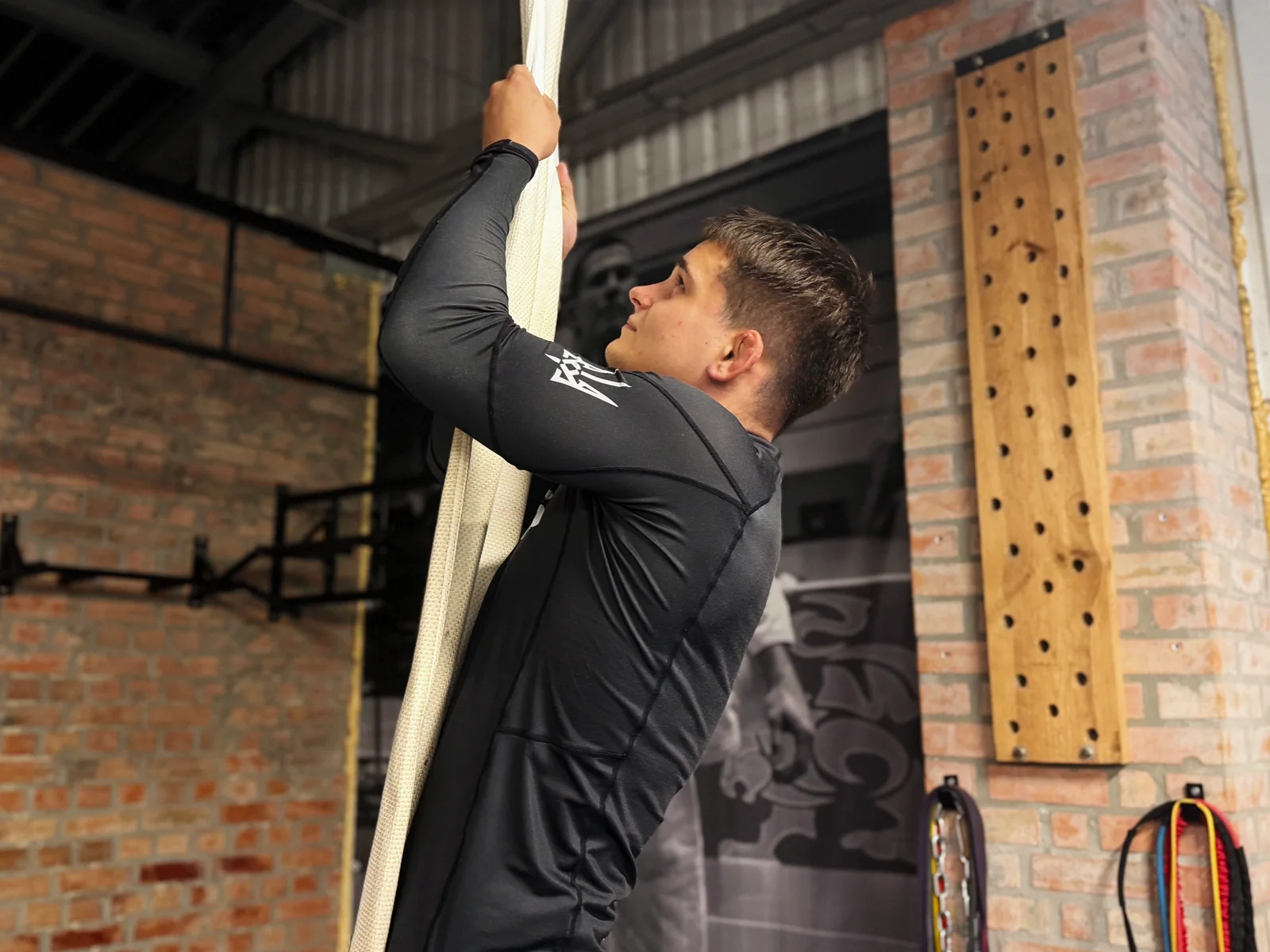
In this guide
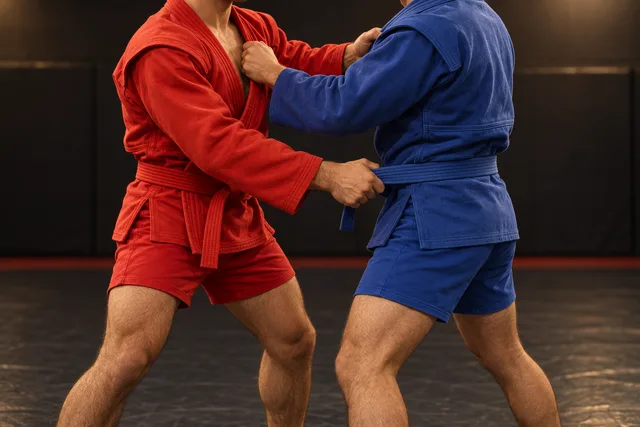
A useful grip stays available when the position changes. In sambo and gi jiu-jitsu that may mean holding fabric while the elbow moves; in no gi it may mean keeping a wrist connection and then releasing to a better control. General grip strength supports those tasks, but it does not replace their timing. Start by identifying what fails: the fingers open, the wrist folds, or the whole pulling position collapses. Each points to a different training choice. More hanging time is not always the missing ingredient.
Choose one specific hold and one general exercise
For fabric work, use a sound towel or a purpose-made gi attachment on a secure support. Keep both feet on the floor and lean back slightly, holding the fabric without wrapping it tightly around individual fingers. Adjust the lean to control the load. For general support grip, stand with a dumbbell in each hand or walk slowly along a clear lane. Keep the wrists comfortable and shoulders controlled. These options let a beginner adjust resistance instead of immediately accepting full bodyweight in a hang.
Try a small, repeatable session
For a healthy adult already comfortable with these movements, an introductory example is two fabric holds of 15–20 seconds, then two carries of 20–30 seconds. Rest about 60–90 seconds between efforts, longer if the next hold is noticeably worse. Choose resistance that leaves several seconds in reserve. This is a starting example, not a target everyone must reach. Someone new to loading the hands can use lighter carries and 10-second holds. Finish with easy opening and closing of the hands, not another maximal squeeze.
Count the gripping already in your week
A hard jacket session, climbing workout, rows and pull-ups all contribute hand and forearm work. Add the grip block after a strength session once weekly at first, rather than before a class where learning depends on fresh hands. An adult training on the mat Monday, Wednesday and Saturday might place it after Tuesday strength, then check Wednesday’s response. If normal grip fighting feels unusually weak or the fingers remain sore, reduce the next block or remove it. Do not add volume simply because the exercises look small.
Progress one variable at a time
When the same hold remains controlled across two sessions and does not disrupt practice, add a little resistance or a few seconds. Do not increase both and add a set simultaneously. Record the implement, load, duration and whether the final seconds changed your wrist position. A towel hold and a thick-bar hold are different tests, so keep the setup consistent when comparing sessions. Grip-specific research and NSCA resources support treating grip as trainable; they do not make one improvised test a ranking of grappling ability.
Keep the transfer honest
Use a technical drill to ask whether your improved capacity is useful: hold a legal sleeve grip while a cooperative partner steps, then release and regrip without freezing the shoulders. In no gi, practise moving from wrist control to an arm connection. The strength exercise develops capacity; the partner task develops its use. Stop loaded gripping if there is sharp finger or elbow pain. Children need appropriately sized, supervised tasks, not the adult hold times or weighted hanging challenges.