 BORETS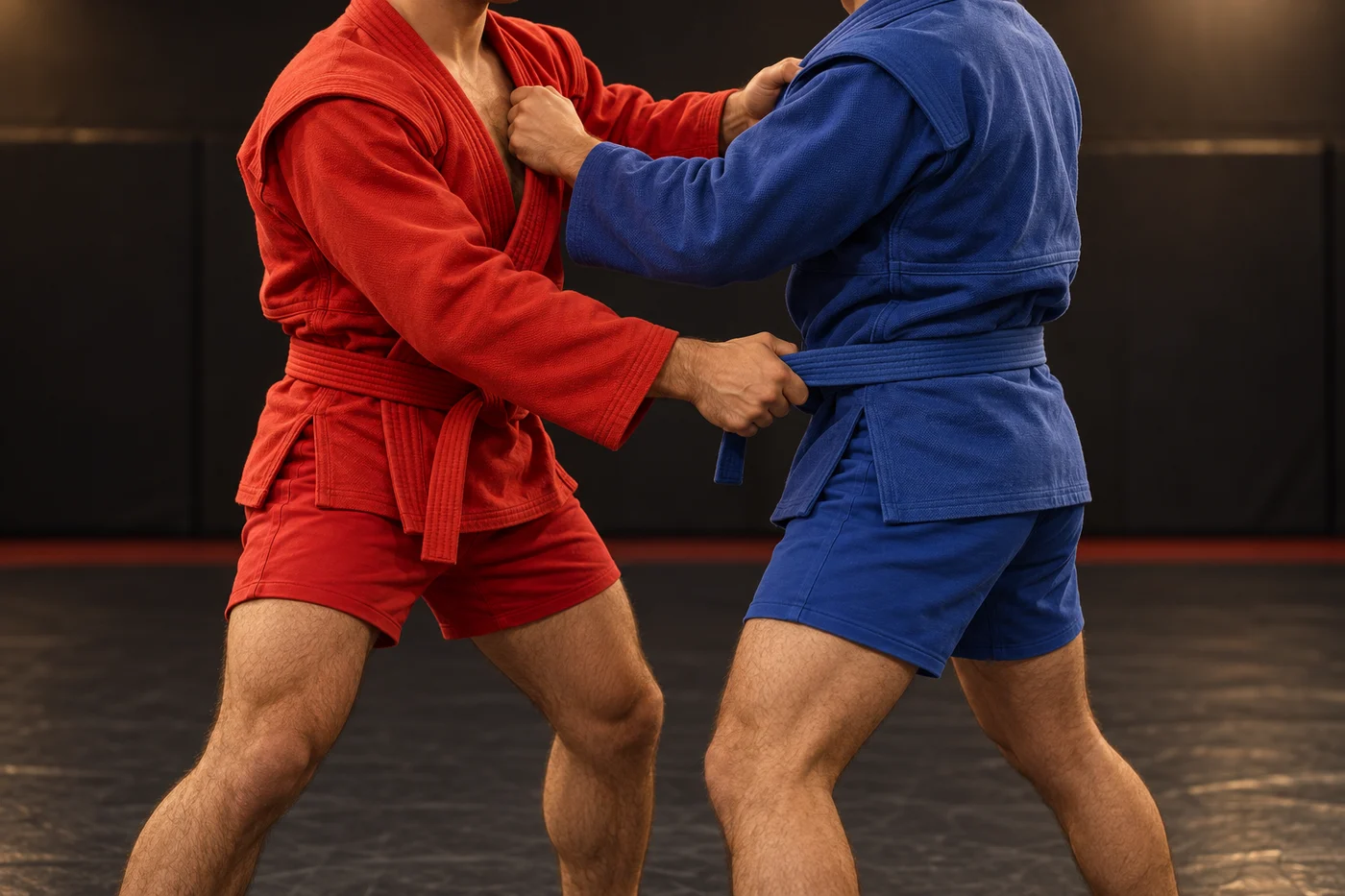
In this guide
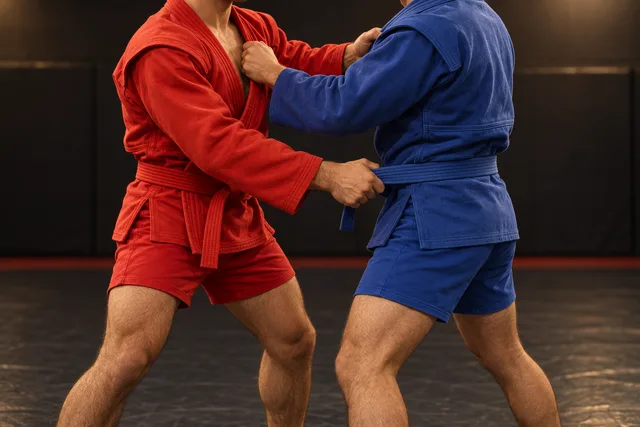
A belt grip gives a sambo athlete a direct connection to the jacket around the opponent’s waist. It can support several throws, but reaching the belt and controlling the position are different achievements. The important questions are where your body ends up, what your other hand controls and which movement the opponent can still make.
A grip family, not one throw
FIAS’s technical curriculum includes a hip throw with an arm grip and a rear belt grip. The IJF description of tsuri-goshi also illustrates how a belt connection can be part of a hip-throw variation. These examples establish a recognizable use; they do not mean that every belt grip requires a hip throw.
Name the location and route of the grip when taking notes: rear or side of the belt, over the shoulder or under an arm, and the accompanying second-hand control. “Get the belt” leaves too much unspecified. Two athletes can both hold the belt while occupying very different distances and head positions.
Check the price of reaching
A deep grip can be attractive enough that the athlete bends and reaches while the hips remain far away. The hand arrives, but the posture no longer supports useful movement. The opponent may stay upright, control the reaching arm or move around the disconnected body. Depth alone does not make the grip strong.
Compare your posture immediately before and after taking the grip. Can you still step without crossing or scrambling your feet? Does the opponent’s movement move your whole body unexpectedly? A coach can adjust the entry route or distance before adding the throw. Treat those adjustments as part of the grip, not a separate preliminary.
The other hand determines what is missing
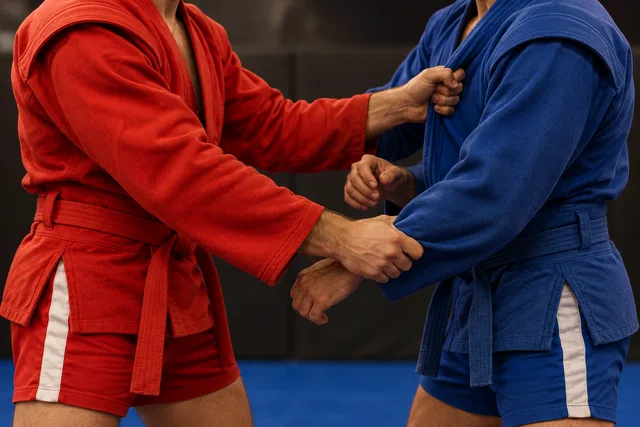
A belt grip connects one region of the body; it does not immobilize the shoulders, every step and both arms. Watch what the other hand contributes. Sleeve control, an arm connection and another jacket grip create different opportunities. The correct comparison is between complete positions, not isolated photographs of the gripping hand.
For example, keep the belt location unchanged while the coach demonstrates two second-hand controls. Observe which way the partner can turn and which step is easier to recover. Do not force a preferred throw into both versions. First explain why the available movement changes, then select an appropriate continuation.
Test connection before throwing
Use a task with no completed throws: the defender makes agreed small steps or turns, and the attacker maintains a usable grip without collapsing posture. Stop when either partner loses balance or the grip no longer controls the intended movement. This is a test of the connection, not a contest to hold fabric at any cost.
Then add one coach-selected entry from the same position. Notice whether the belt grip improves the entry or merely remains attached while the bodies separate. If the grip breaks, release cleanly rather than catching fingers in moving fabric. Reset and identify the point at which the useful connection was lost.
What transfers to no-gi grappling?
The belt itself disappears. Understanding distance, balance and how upper-body control affects a partner’s steps remains useful, but a body lock or another contact needs its own practice. Calling it the same throw without the jacket can conceal a weaker grip, a different entry and a different way for the defender to escape.
Build the jacket version clearly first: starting grips, the movement it produces and the position after the landing. Then compare one no-gi adaptation under its own rules. A useful comparison explains what each grip makes possible and what it costs, rather than claiming that a single preferred hold works everywhere.