 BORETS
In this guide
The gut wrench is a par terre turnover built around a connection at the opponent’s waist. The useful question is not how tightly you can squeeze. It is whether your grip, torso and lower body can move the defender as one connected shape. In freestyle, exposure and a fall are different scoring outcomes under UWW rules; a turnover does not need to become a pin to matter. Learning the movement begins with a controlled route through the turn, not with repeated rolls at full speed.
Establish the starting connection
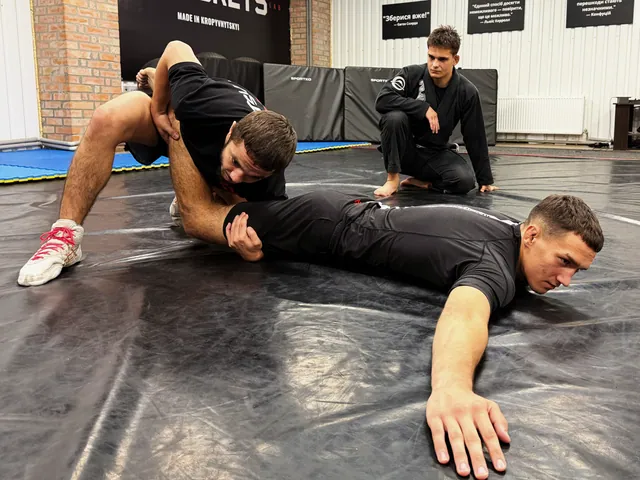
The coach first sets the defender’s starting position and the height of the waist grip for the variation being taught. Bring your torso close enough that your arms are not doing all the work across a large gap. Check that your clasp does not trap individual fingers and that the receiver can signal an immediate stop. A good first repetition is simply connecting, maintaining position while the partner makes a small movement, and releasing cleanly. That reveals whether you have a usable hold before adding rotation.
Create a direction with the lower body
Your feet, knees and hips organise the direction of the turn. They should support the chosen route rather than remain behind while your shoulders pull sideways. Pause after the setup and ask what would move first if you continued. If only your own upper body would roll, reconnect before proceeding. The exact leg position varies between gut-wrench versions; copying one visible foot placement without its grip and body angle often produces a different movement. Learn one complete version before mixing details.
Turn together instead of pulling one segment
A cooperative receiver should know the intended direction and finish before the repetition starts. Follow the coach’s route so the defender’s torso and hips travel together, rather than forcing the shoulders against stationary hips. Do not turn a blocked attempt into a neck bridge, a head-first drive or a harder abdominal squeeze. Beginners and children can practise the connection and a small assisted rotation without completing an adult rolling variation. A full turn belongs later, when both partners can follow its path comfortably.
Give the defender one clear task
Start with a single agreed defensive response: prevent the hands from joining, or keep the hips heavy once the grip is established. These are different problems. The first asks the attacker to improve access to the waist; the second asks whether their connection and direction can move the base. Combining every defence immediately makes it difficult to identify the failure. Switch roles and compare what each person felt. If the attacker loses connection, reset instead of chasing the roll with an isolated arm pull.
Diagnose the failed turn
Three common failures look similar from far away: the grip separates before movement, the attacker rotates while the defender remains planted, or both bodies start turning but the connection opens midway. Film from an angle that includes both athletes’ hips and feet, with their permission. Locate the first visible gap, not just the final unsuccessful position. Change one variable in the next repetition. Moving closer, adjusting the setup angle or choosing a simpler starting position is usually more informative than merely trying harder.
Build repeatable practice
Use a short sequence: waist connection and release, setup with a pause, assisted partial turn, then one complete controlled turn. Progress only when the previous stage stays organised for both people. Add the agreed defence afterwards. Log the variation, starting position and point where control was lost; those details make the next session specific. Exposure scoring should be learned separately from the current rules and a referee’s explanation. A training partner’s discomfort is never a measure of a successful gut wrench.