 BORETS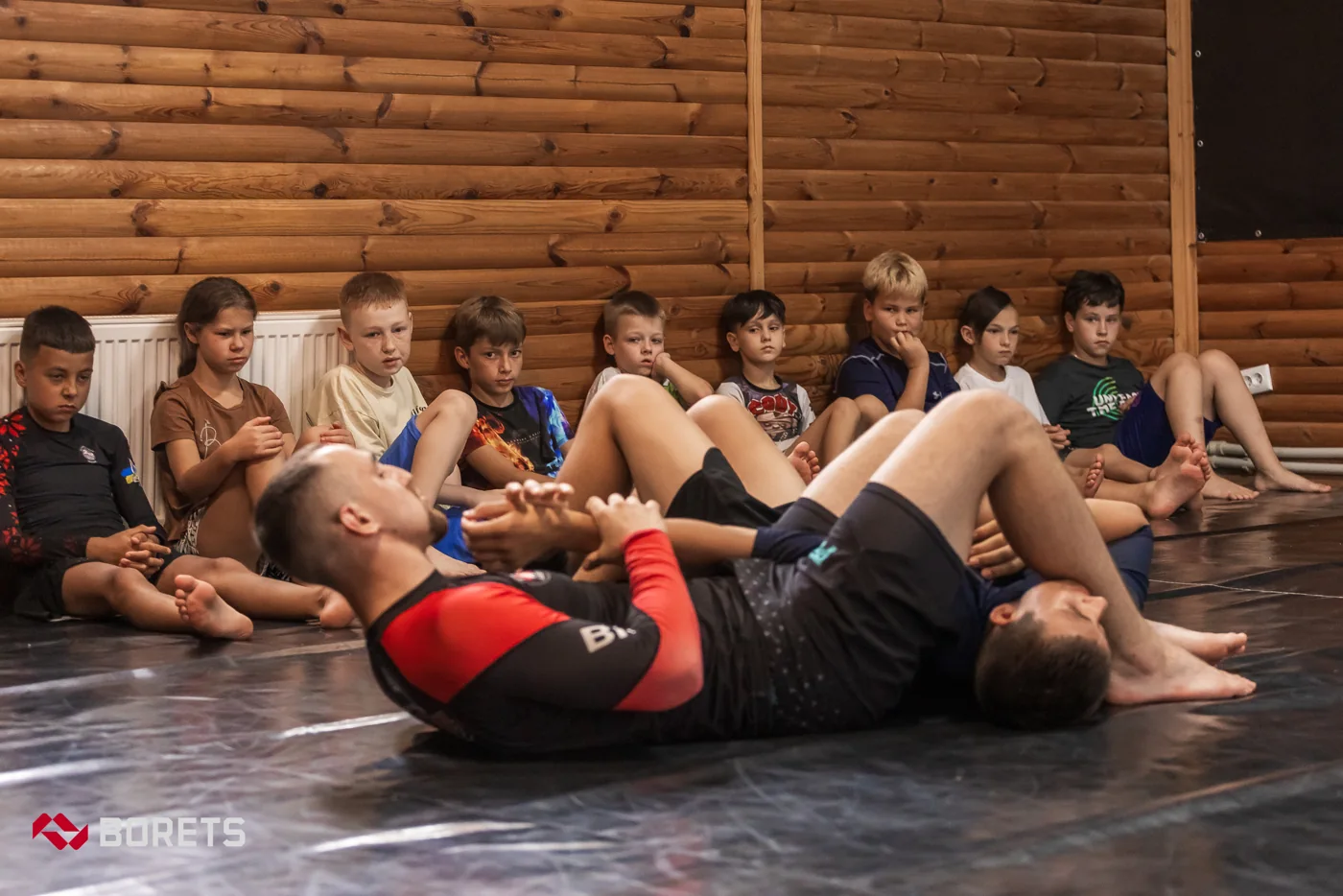
In this guide
- What wrestling adds: stance, motion and takedowns
- What sambo adds: jacket throws and breakfalls
- What conditioning adds: movement and strength
- How the BORETS system combines them from childhood
- How to build a manageable training week
- Other sports are welcome
- Warning signs of overload
- Build the whole grappler, wherever you live
Wrestling can add takedown confidence to a child's BJJ; sambo adds jacket-grip exchanges and landing skills; physical preparation supports the movement underneath both. Combining them works best when the coaches coordinate the overall load. Here is how to think about the mix, choose a manageable week and spot when more training is becoming too much.
What wrestling adds: stance, motion and takedowns
A child who only trains jiu-jitsu often learns to sit down and pull guard because standing is scary. Wrestling removes the fear. Stance, level change, hand fighting, the sprawl, the double leg and the single leg give a child confidence on their feet and a say in where the match happens. Wrestling also brings pace: short, intense goes that teach a young body to keep moving when tired. For children it is taught as games, not as a grind, and United World Wrestling publishes age categories and rules for younger wrestlers because a ten-year-old is not a small adult.
What sambo adds: jacket throws and breakfalls
Sambo introduces jacket grips, standing balance and throws alongside groundwork. Landing skills are taught progressively on suitable mats before children practice throws with partners. Use sport-sambo activities and rules appropriate to the child's age; adult combat-sambo rules are not a children's class plan. For a young grappler, the useful connection is learning to move safely between standing exchanges and the ground, then recognizing what changes under a different competition ruleset.
What conditioning adds: movement and strength
Physical preparation includes balance, climbing, controlled jumping and landing, carrying and appropriately coached strength work. Readiness matters more than a fixed birthday: can the child understand instructions and perform the movement with control? The NSCA's long-term development resources support progressive, supervised preparation as children grow. Choose exercises and loads for the individual, and count that work as part of the week's total training rather than an invisible extra.
How the BORETS system combines them from childhood
Ievgen Skyrda brought roughly fifteen years of judo and sambo experience into his BJJ development. The school he built with his team connects disciplines instead of treating every transition as a separate subject. Today Yaroslav Blazhko leads the children's programme, Mykola Chaban contributes freestyle wrestling, Kostiantyn Zhyvanov works with sambo, Oleksandr Oliinyk with BJJ, and Ievgen with the system and physical preparation. That gives a family several perspectives on the same development question.
How to build a manageable training week
Build from the child's present routine. For a younger beginner, two coached sessions with plenty of free play may be enough. An experienced older child might add a third session with a different emphasis; a teenager preparing for competition may need a more detailed plan combining mat work and strength training. These are examples, not age-based quotas. Record all organized sport, including school teams, and leave genuine recovery time. Add one change at a time and review sleep, enthusiasm and comfort before adding another.
Other sports are welcome
Other sports can add movement experiences that grappling does not provide in the same way. Swimming, ball games, climbing or gymnastics may appeal to different children. Ask what the child enjoys and how the activity fits the week. Variety can be useful, but stacking several organized programmes with no recovery defeats the purpose. The goal is a child who develops a broad movement base and still wants to train.
Warning signs of overload
Watch for persistent soreness, disrupted sleep, irritability, declining enthusiasm or repeated difficulties at school alongside a rising training load. You do not need to wait for several signs to appear before checking in. Discuss changes with the coach and reduce or adjust training as appropriate. Persistent pain, unusual fatigue or other health concerns need assessment by a qualified health professional. A useful schedule serves the child; it is not a target to complete regardless of how they feel.
Build the whole grappler, wherever you live
You do not have to work out the mix alone. BORETS members can ask Yaroslav Blazhko about children's development, Mykola Chaban about freestyle wrestling, Kostiantyn Zhyvanov about sambo, Oleksandr Oliinyk about BJJ, or Ievgen Skyrda about the whole system and physical preparation. Send the child's current week and one question; the team replies and can record a video when a demonstration is useful. Register for the video school's launch from any country, and explore our public YouTube channel now.