 BORETS
In this guide
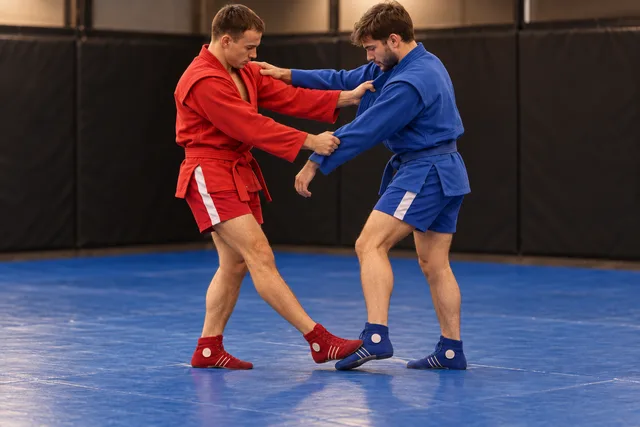
Yes, FIAS has a formal qualification system associated with colored markings on the belt. The red or blue competition uniform does not tell you an athlete’s technical level. Confusion arises when people treat uniform color, local grading, sporting titles and the FIAS qualification framework as if they were the same thing. Start by separating those questions.
What changed in June 2026
On June 11, 2026, FIAS announced its dedicated Belt System website. The platform presents practical video lessons and illustrated theory connected to qualification requirements. This was a website launch, not proof that qualification regulations had never existed before; the federation’s certification document contains an earlier development history.
The announcement described ten levels: Beginner, six Student levels and three Master-track levels. It also stated which materials were initially available. For today’s content availability, use the platform itself rather than assuming that the launch-day description remains a complete catalog. A listed level and fully released learning materials are different things.
Read the qualification markings in order
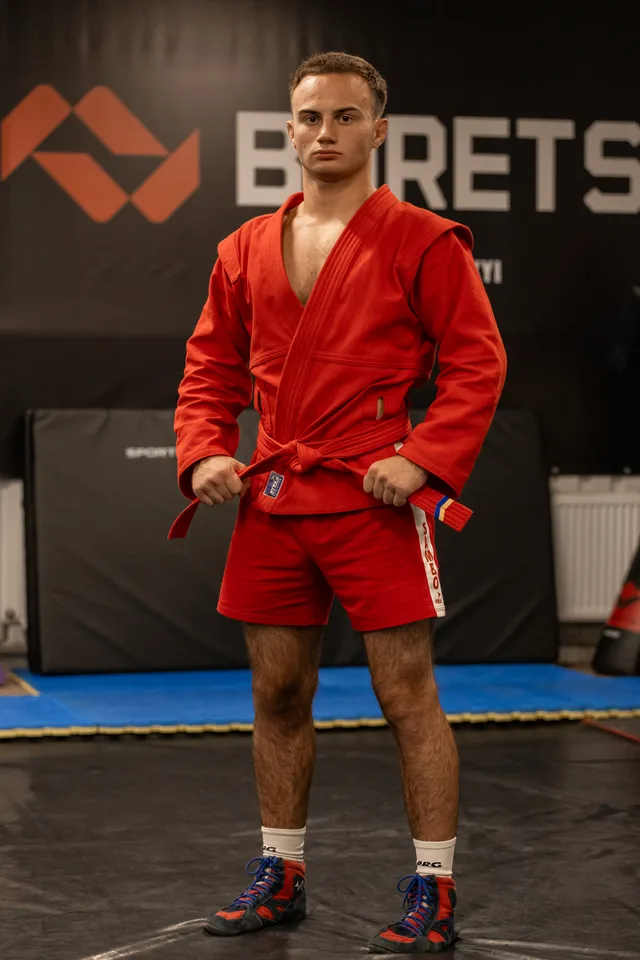
The published framework begins with Beginner, without a marking. Student Levels 1–6 use white, yellow, orange, green, blue and purple patches respectively. The Master track continues with Candidate Master in brown, Master in black and Grandmaster in maroon. These are qualification markings; the competition jacket can still be red or blue.
When reading a photograph, look for the relevant marking rather than interpreting the whole belt’s color through BJJ or judo conventions. A plain competition belt does not provide a full account of someone’s credentials. Likewise, a black qualification patch does not establish an equivalence to a black belt in another sport.
Separate study from certification
Watching a lesson, practicing a technique and being awarded a qualification are separate events. The FIAS regulations define certification procedures and assessment. Before preparing for an examination, establish which qualification is being assessed, who is authorized to conduct it and how the result is recorded.
Do not infer a qualification from a course purchase or completion badge. If a school advertises a grading, the useful questions are concrete: which framework, which requirements, which examiner and which documentation? This allows a local learning milestone to be described honestly without confusing it with a federation-awarded credential.
Sporting titles and coaching credentials need context
A national sporting title such as Master of Sport should be read within the system that awarded it. Do not automatically translate it into a FIAS belt-system level. The same words can appear in different qualification structures while referring to different requirements and different issuing bodies.
An athlete’s technical qualification also should not be treated as a complete description of their teaching preparation. FIAS publishes separate coaching-certification provisions. When choosing instruction, combine the stated credential with evidence of how the coach explains, adapts tasks and supervises partner work. A rank label cannot show that by itself.
Use the framework to make learning visible
A useful study plan links a requirement to something observable: demonstrate the position, explain its conditions and identify the permitted response. Keep a record of the part that still needs feedback. This is more informative than collecting technique names or predicting a promotion date from time spent watching videos.
Use the official FIAS platform and regulations as the reference for that qualification pathway. Use a school’s lessons for the learning they actually provide. Studying sambo through BORETS LAB does not by itself award a FIAS qualification; formal recognition requires the relevant assessment process.