 BORETS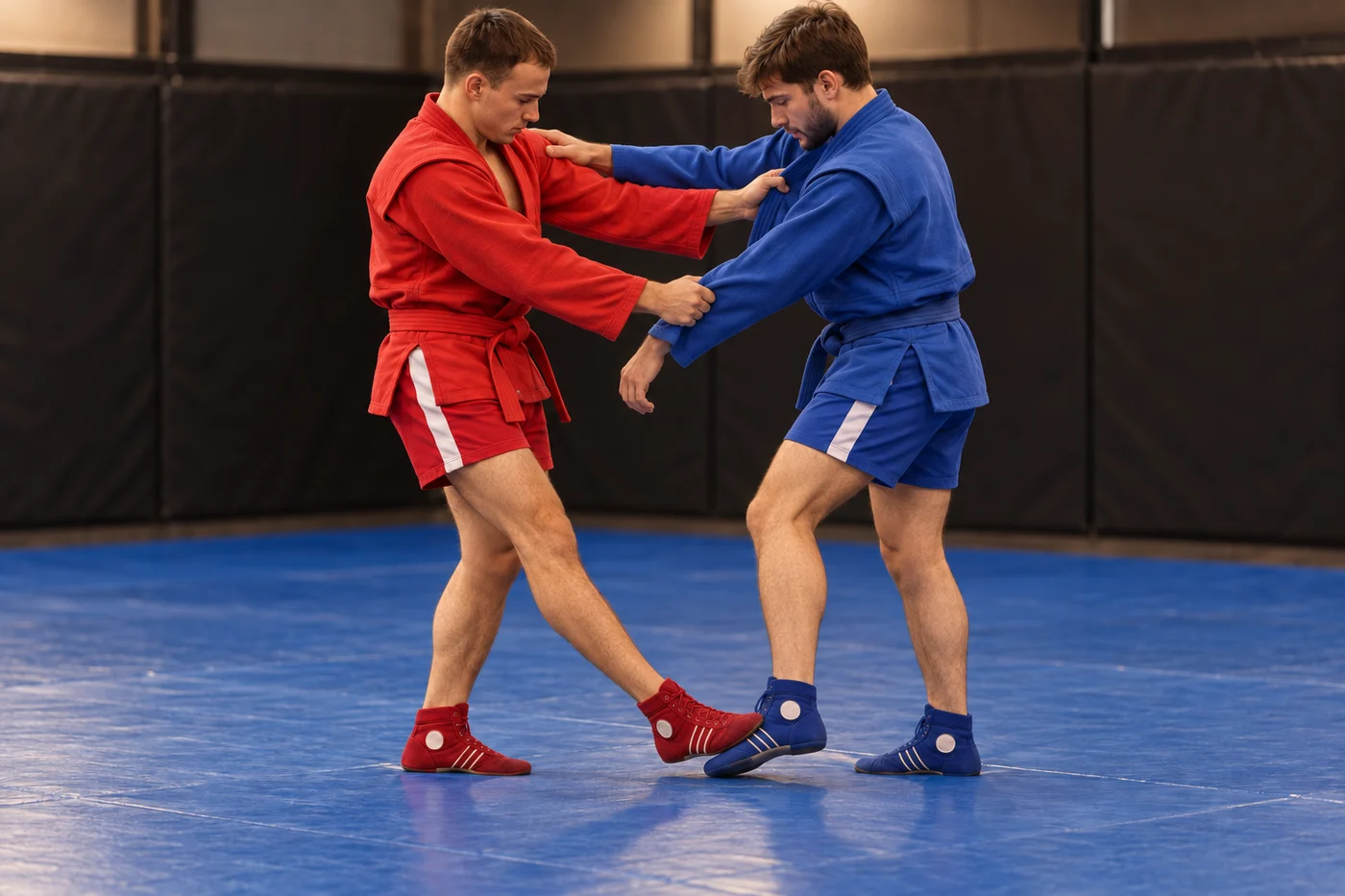
In this guide
Your first sambo goal does not need to be a large collection of throws. A useful foundation connects a few tasks: move without losing balance, receive the movement being practiced, establish a grip and understand the position after a landing. The following checkpoints describe a learning sequence, not a promise that every adult completes it within a fixed number of weeks.
Arrive with the right starting information
Tell the instructor whether you are new to all grappling or bringing experience from another sport. A BJJ practitioner may understand ground positions but be unfamiliar with jacket throws and shoes. A wrestler may enter takedowns confidently while needing a different approach to legal submissions. Previous experience is useful information, not permission to skip the introduction.
Confirm the class format and trial clothing before buying equipment. If you have an injury or a health issue relevant to contact training, discuss participation with an appropriate healthcare professional and communicate the practical restrictions to the instructor. Starting as an adult means choosing a suitable entry point, not proving you can immediately match the most experienced partner.
Checkpoint one: receive and reset
Learn the receiving skills required for the selected practice before completing throws with a partner. The instructor should be able to identify what you are learning at the current height, direction and speed. The ability to stand up after a fall does not, by itself, show that you received it as intended.
Also learn the room’s verbal and tapping signals. Practice releasing and returning to the agreed starting position without needing an argument about who was winning. A reliable reset makes later resistance useful: both partners can test a task without an unsuccessful repetition turning into an uncontrolled continuation.
Checkpoint two: connect stance, grip and a step
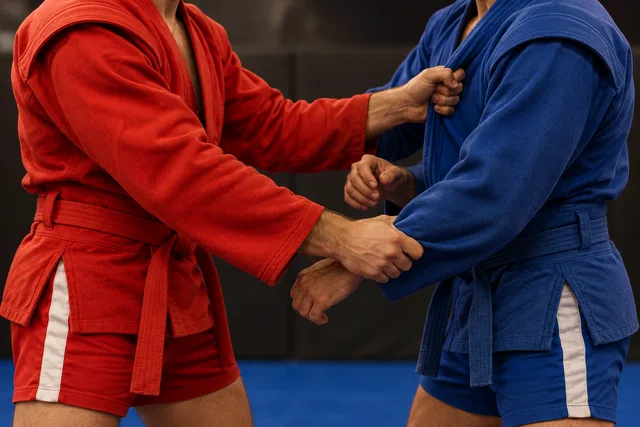
Choose one permitted jacket grip and one movement task with the instructor. For example, maintain a usable connection while the partner makes an agreed step. Notice whether your feet restore balance or your arms simply become stiffer. The task should make the relationship between grip and movement visible.
Do not add a second grip, a new direction and full resistance simultaneously. Change one condition and compare the result. Your notes can be precise: “The connection disappeared when the partner turned left.” That gives the next lesson a question to answer instead of leaving you with “I need to be stronger.”
Checkpoint three: one throw, including its failure
A coach-selected throw should have a named starting position, a preparation and a controlled landing. Learn the version you are actually practicing rather than merging details from several videos. Include the moment when the entry is no longer available and the appropriate way to reset.
Once the cooperative version is dependable, the partner can introduce a limited, known response under supervision. The test is whether you recognize the available action, not whether you can force the planned throw from any position. A correct decision to stop can be a better result than a completed but uncontrolled fall.
Checkpoint four: understand what follows the landing
Study a manageable hold-down or positional-control task before treating every ground exchange as a race to submit. Identify the top and bottom roles, the permitted escape and the reset condition. Sambo’s ground rules matter here; a familiar response from another sport may have a different consequence.
At the end of the first cycle, you should be able to explain a short chain and the points where it can fail. You may still need substantial practice. That is a useful foundation: you know what to repeat, what needs correction and which question to bring to the next supervised session.