 BORETS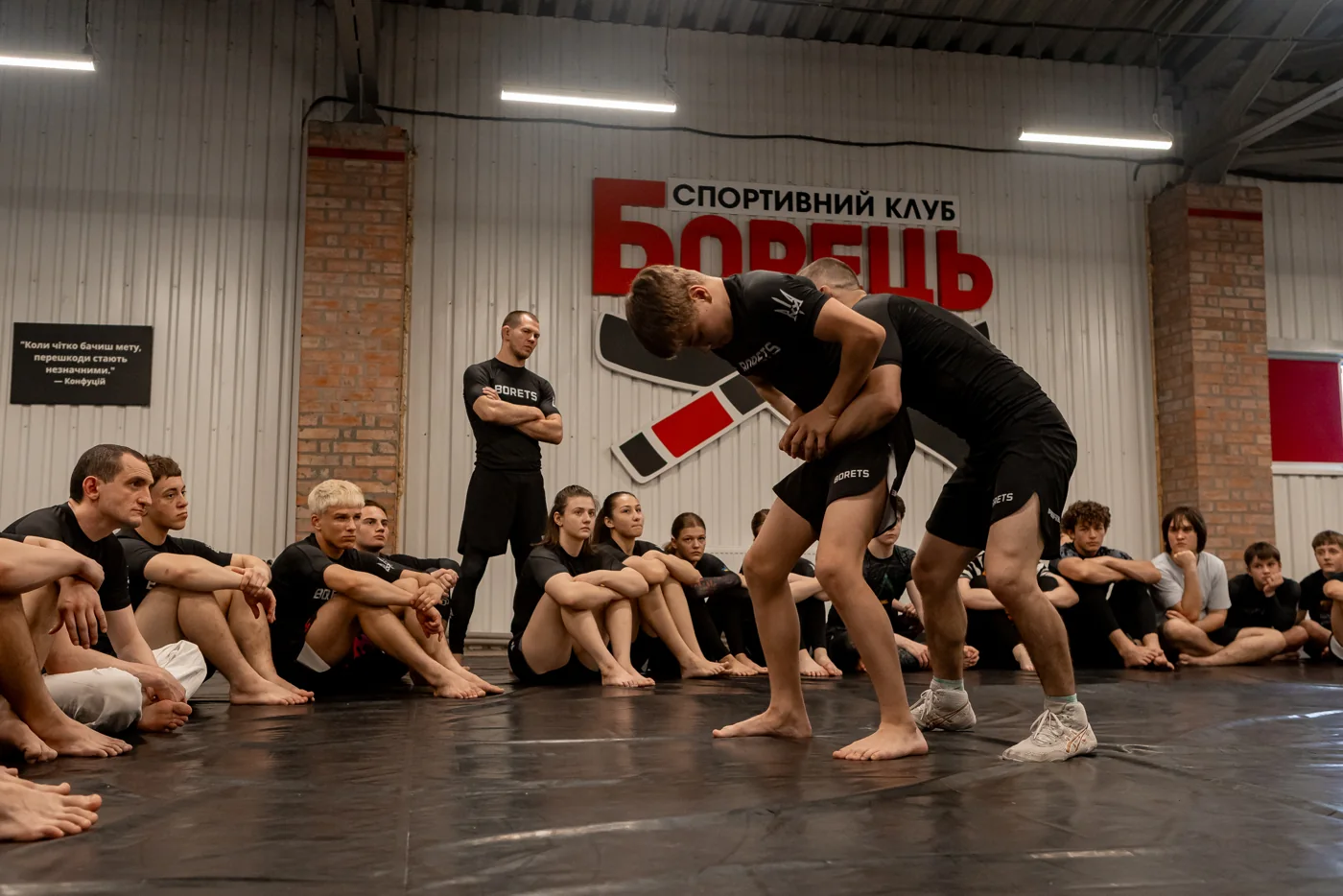
In this guide
Sambo can give an MMA athlete useful experience connecting standing attacks, ground control and submissions. Transfer is not automatic. Remove the jacket, change the scoring and add the threat of strikes, and a familiar exchange becomes a different problem. The productive question is which part of your sambo skill survives those changes, and how your MMA coach wants you to test it.
Keep the function of a grip, not its appearance
In sambo, jacket grips can help control distance and connect your movement to your partner’s body. Standard MMA competition does not supply those same handles. Replacing a sleeve grip with an arbitrary wrist hold does not necessarily preserve the original control. Ask what the jacket grip prevented and what connection could perform that job in the new setting.
A useful comparison begins before the throw. Can you establish the starting contact while respecting the opponent’s striking threat? Can you maintain your own balance if that contact disappears? If either answer changes, study the entry with your MMA coach before treating the finishing movement as a transferable technique.
Treat the landing as a transition
A successful sambo throw can be valuable because of its competition score or because it immediately ends the bout under the total-throw rule. In MMA, the same shape of throw does not carry that sambo result with it. You still need to account for where both athletes land, what offense is available and whether the opponent can immediately return to standing.
Compare two attempts that both reach the mat. In one, the attacker stays balanced and connected; in the other, both athletes scramble and the defender gets up. Calling both simply “successful takedowns” hides the information you need for training. Review the position after the landing and the first decision that follows it.
The published ABC scoring clarification emphasizes the effect of offensive actions rather than awarding a separate tally for time spent holding a position. This is a competition assessment, not an instruction to injure a training partner. Practice can use controlled positional goals while the coach explains how those skills connect to the demands of a bout.
Reassess ground control and leg attacks
A pin that feels secure during grappling may demand adjustments when strikes are possible. Consider what the opponent can do with the limbs you are not controlling and whether your own posture depends on a grip that has vanished. The task is to keep useful control while recognizing a different set of reactions, rather than merely hold the old position harder.
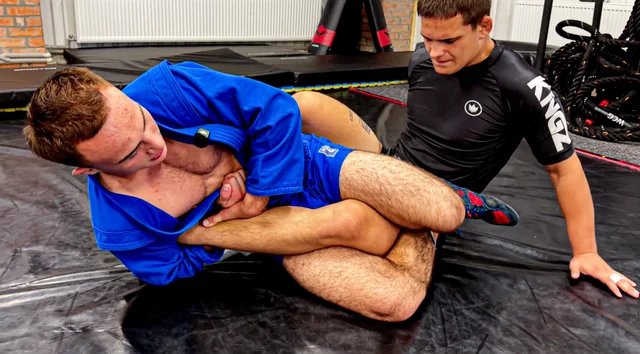
Leg-lock experience can improve recognition of a trapped limb, a changing angle and the moment an attack has lost control. In MMA, committing both hands and your attention to a leg also changes what you can defend. Ask whether the attempt preserves a workable position, allows a safe exit and fits the event’s permitted submissions.
Do not turn that question into a speed contest for the tap. Under supervision, partners can agree to stop when the relevant position is established or lost. The observation is whether the attack remains connected to control. Finishing pressure is not necessary to answer every positional question, especially while learning a new transition.
Add the boundary and the correct rulebook
An open sambo mat and a cage produce different movement problems. A partner near the fence cannot always retreat in the same direction as one in the center. The barrier can change balance, escape options and how a takedown develops. Wall practice requires a suitable facility and coaching; a household wall is not a substitute for a padded training area.
Combat sambo and MMA also have different permissions. Under the ABC Unified Rules, gripping the opponent’s shorts or gloves and grabbing the fence are fouls. Do not transfer a clothing grip because it was useful in sambo. Confirm amateur or professional restrictions and the version adopted by the commission for your event.
Publication and implementation are separate. The ABC’s currently published rule document includes amendments with a future requested implementation date. A link labeled “latest” therefore does not prove that every provision governs your next bout. Ask the organizer and your coach to resolve any difference before building tactics around it.
Combat sambo and MMA have different ways to win
Combat sambo combines striking and grappling, but it remains its own sport. FIAS adult and junior bouts run for five minutes. A qualifying total throw, submission, knockout, two knockdowns or an eight-point lead can end the bout early. Throws and hold-downs also contribute to its action-based score.
Professional MMA under the Unified Rules uses five-minute rounds, usually within a multi-round contest, and a ten-point-must judging system. A sambo scoring throw or eight-point-style sequence has no automatic equivalent result. Judges assess effective offense in the round rather than adding sambo’s technical-action points. The local commission and event rules determine the provisions actually in force.
The equipment changes the practice you need
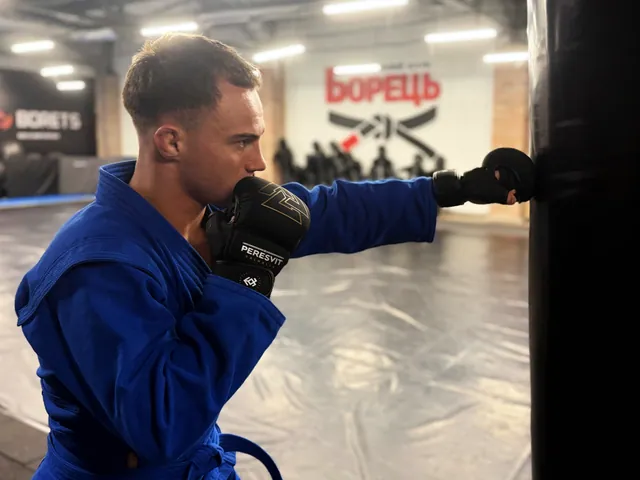
FIAS combat sambo uses a jacket, shoes and specified protective equipment, including a helmet, gloves and shin protection. Standard MMA has no sambo jacket and no wrestling shoes. Those differences change the available grips and foot contact before a technique even begins. Headgear also does not make hard head contact a harmless way to learn.
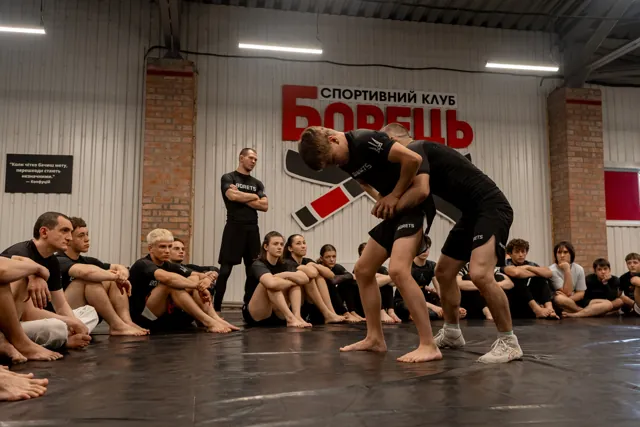
An athlete moving toward MMA needs specific practice connecting striking distance, legal body controls, takedowns and the first action after landing. Keep early drills bounded: establish the contact, finish to a controlled position, then reset. Add the MMA coach’s next task only when that transition is reliable. Combat-sambo experience can supply valuable skills; it does not remove the need to learn the new environment.
Evaluate one transfer at a time
Choose one familiar sambo situation and name the changed condition: no jacket, a boundary, a permitted strike or a different continuation. Let the coach set the task and contact level. Record whether you could establish the entry, stay balanced and reach the agreed position. Changing every condition at once makes it difficult to identify the missing skill.
Sambo can contribute to MMA without becoming a complete MMA program by itself. BORETS LAB studies the connections between sambo, wrestling and jiu-jitsu; use those connections as questions for your training team. The useful result is a skill whose limits you understand and whose adaptation you have actually practiced.