 BORETS
In this guide
Home practice can help you remember and organize sambo skills, but it cannot supply a partner’s balance, timing or resistance. The useful aim is to arrive at the next class with a clearer movement or question. Build a small session around what you have already been taught, rather than trying to reproduce every part of a full-contact lesson alone.
Choose one task before choosing a workout
Write down a narrow question from class: did I keep my stance during the step, where did my hand begin, or which direction did the demonstration use? Choose a solo component the instructor has already shown. This prevents the session from becoming a collection of unrelated movements copied from different videos.
FIAS has published remote training materials and now provides an official belt-system learning platform. Such resources can support study, but their existence does not mean every demonstrated task is designed for an untrained person alone at home. Identify whether the material requires a partner, special surface or instructor feedback before practicing.
Prepare a space that fits the task
For simple standing movement, clear the floor of furniture edges, loose rugs, cables and anything that can move underfoot. Choose a surface and footwear that give predictable contact. Do not turn a cramped space into a throwing area simply because a small mat fits between two pieces of furniture.
Home practice does not require improvised resistance anchors. A door handle, radiator or unstable chair is not a training partner. If a task needs equipment, use equipment intended for that purpose and an established setup you understand. Otherwise choose the unresisted movement component or use the time for observation and notes.
A useful solo block: start, step, stop
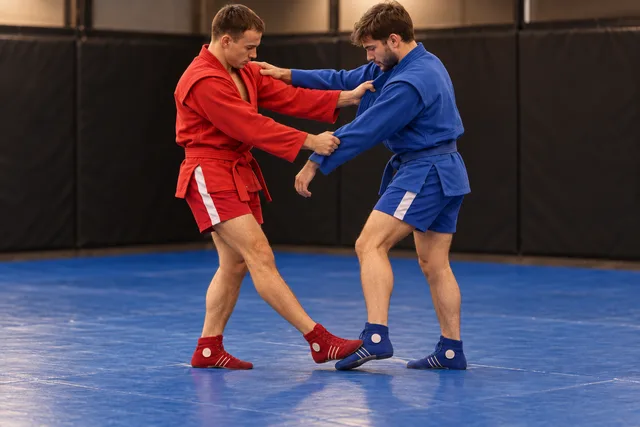
Use the stance and short step already taught in class. Begin from a recognizable position, move in the selected direction and stop where you can check your balance. Repeat slowly enough to notice whether the feet cross unintentionally or the upper body reaches ahead of the support.
The purpose is consistency, not exhaustion. If the movement becomes less controlled as you repeat it, pause rather than adding speed. Compare both directions only if both have been taught. This practice can make your own movement more familiar; it does not prove that the same entry will work against a resisting opponent.
Use video to compare one visible detail
A short recording can show whether your starting position and direction match what you intended. Frame the whole body when reviewing footwork, rather than only the hands. Compare the same task across a few attempts; changing the camera, movement and pace each time makes the comparison much less useful.
Record a question beside the clip: “My feet become narrow at the finish—is that the intended position?” Bring that to the next supervised session. A visual resemblance is not a complete technical assessment. The instructor still needs to see how the movement connects to a partner and to the task’s actual purpose.
Know what must return to partner practice
A dummy does not reproduce an opponent’s decisions or tell you when a joint is under unsafe pressure. A cooperative family member is not automatically prepared to receive throws. Leave new falling skills, completed throws and submission-pressure testing for appropriate supervised practice. Do not use furniture or improvised partners to fill those gaps.
End the home session with a small record: the task, the detail that improved and the point you could not verify alone. At the next class, test the relevant question with the instructor and an appropriate partner. Home work is valuable when it strengthens that connection to practice, rather than pretending to replace it.