 BORETS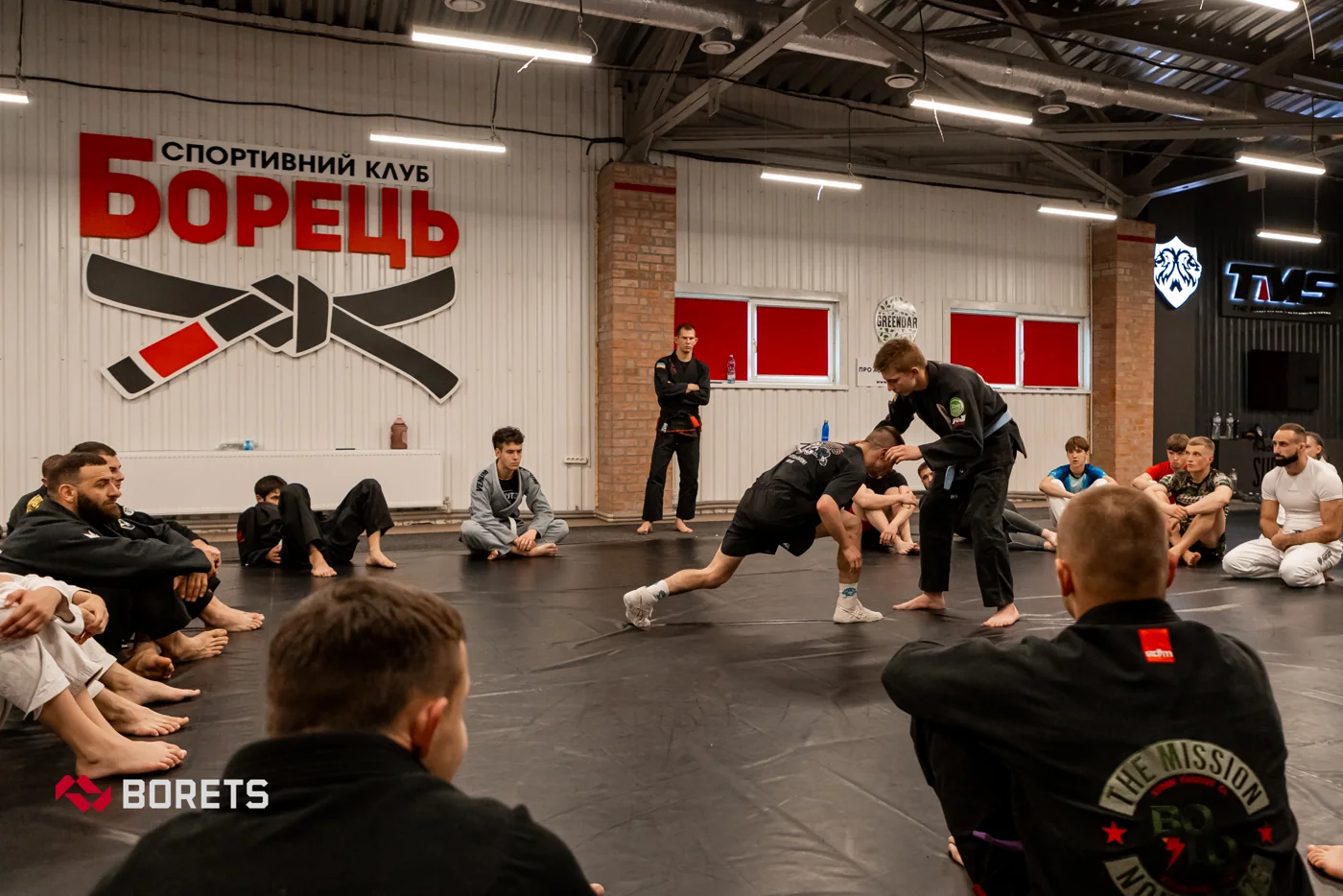
In this guide
Useful wrestling drills isolate a skill, give the partner a clear job and add resistance gradually. Repeating an entry without noticing distance or balance can rehearse the same mistake. Use the following examples to organise a focused practice block with movements you have already learned, then let your coach adjust the task to your level and ruleset.
Give every drill a clear question
Choose an observable objective: keep stance while changing direction, reach an angle after hand fighting or recover position when an entry is blocked. Tell the partner what they should do and when the repetition ends. “Wrestle a little” leaves too much uncertainty when you are trying to learn one detail.
Cooperative practice lets you find the movement. Limited resistance asks whether it works against a known response. A more open round tests whether you recognise the opportunity. These stages can overlap, but speed alone does not transform a memorised sequence into a usable skill.
Solo drills: stance and familiar floor movements
Practise short forward, backward and lateral steps while staying balanced. Add level changes without collapsing at the waist. Work in brief bouts with enough rest to maintain position. If the stance falls apart, reduce the pace and distance rather than trying to finish a prescribed number of laps.
On suitable mats, rehearse entry steps or a controlled sprawl already taught by your coach. For floor movement, choose familiar hip switches or shoulder-supported bridges with the head resting, rather than loading the neck. Solo drills are a place to refine known movement, not to teach yourself an unfamiliar acrobatic escape.
Partner drills: hand fighting with an agreed purpose
One task might be establishing inside position while the partner gives light resistance and then resetting. Another can alternate reaching a chosen tie from a neutral stance. Keep the pace low enough to notice which grip or step produced the opening.
Pummelling should preserve posture and shoulder comfort. If practising a snap or change of direction, begin with a cooperative response and avoid abrupt neck pulling. The partner’s role is to provide useful information, not to stay rigid until someone applies enough force to move them.
Entries, defence and simple combinations
Practise a learned entry to a paused position before adding the finish. The defender can then provide one known response, such as moving the target leg away, so the attacker learns whether to continue or reset. Add a second action only after the first decision is clear.
A useful combination drill is one entry, one agreed defence and one taught follow-up, followed by a reset. Keep the landing controlled when finishes are included. Lifts and mat returns need separate coached progression; a high repetition target does not make them suitable for an inexperienced pair.
Short rounds with limited choices
Use 30–45 seconds for a specific task, followed by a similar rest period and a role switch. For example, the attacker tries to reach an angle from hand fighting while the defender may circle and recover stance. End the exchange once that objective is reached, without automatically continuing into a full scramble.
Another round can begin after a blocked entry and focus only on recovering position. Define the permitted techniques and the intensity before starting. For BJJ athletes, decide whether submissions are excluded so a wrestling drill does not unexpectedly become a guillotine exchange.
An example 20-minute practice block
Use the first four minutes for easy stance movement and familiar solo patterns, with brief pauses. Spend the next five minutes on one partner hand-fighting task, alternating roles. Use six minutes for a learned entry and one agreed response, including resets and coaching corrections.
In the final five minutes, do three 40-second constrained rounds with about 40 seconds between them, using the remaining time to explain roles and review one finding. Adjust durations if movement quality falls. This is a skill block with built-in rest, not a requirement to fill every second with maximal work.
Progress when the task becomes reliable
Increase one demand at a time: less predictable timing, another permitted response or slightly more resistance. Do not change all three while also adding more repetitions. If the movement disappears under the new condition, return briefly to a simpler version and identify what changed.
Keep a short record of the task and the response that caused difficulty. BORETS LAB’s public guides and YouTube channel can help turn that observation into a focused question. Its online school is being prepared; register to follow the launch and check the membership page for current access while continuing coached partner practice.