
The direct answer
Learn the current NFHS or NCAA scoring model first, then build one takedown, one escape and one dependable ride.
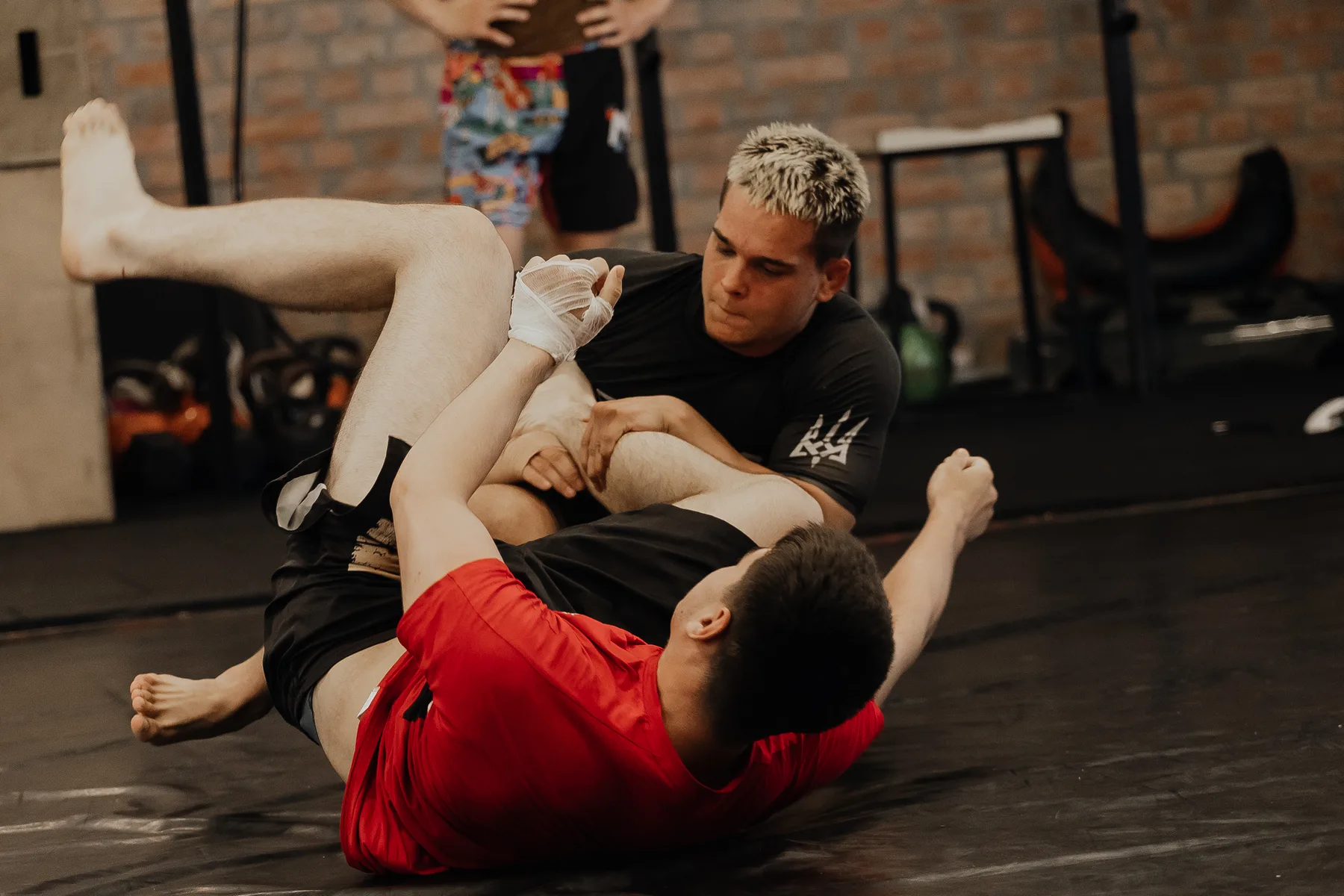
A useful folkstyle breakdown system does more than flatten the bottom wrestler for a moment. It wins the legal start, identifies which post supports the opponent's base, removes or redirects that post, controls the hips while the opponent rebuilds and arrives at a ride that can create a legal turn. Build two breakdown branches from the same first contact: one for a bottom wrestler who drives forward and one for a wrestler who rises or shifts weight back. The top athlete's knees, feet and chest should follow the hips so pressure comes from position rather than exhausted arms. If the first breakdown fails, return to stable hip control and attack the replacement post instead of forcing a stale grip. Editorial status: reviewed July 27, 2026. The legal referee start, locked-hands provisions, potentially dangerous action, mat-return limits, near-fall criteria, boundary treatment and activity expectations are current-rules questions. Verify the 2026–27 NFHS Wrestling Rules Book, state association and event packet for scholastic competition; use the current NCAA playing rules and interpretations for college. Qualified coaching governs all turns and returns.
01
What to understand
Capture the first direction
The first contact should tell the top wrestler whether the bottom athlete is standing, sitting, driving forward, sealing one side or replacing a hand. Rehearse the exact legal start, then move chest, hands and knees toward the same hip-control checkpoint. Speed without directional information creates a grip that can be escaped before the breakdown begins.
Remove one post at a time
A stable bottom base is supported by hands, elbows, knees and hip position. Select one post and make the opponent replace it. The replacement becomes the second attack cue. A breakdown should be described as post one, reaction, post two and hip direction, not as a single move applied harder until it works.
Keep hips predictable during the breakdown
Hand control matters, but the top athlete loses the sequence if the bottom wrestler's hips can freely turn, rise or separate. Follow with knees and active feet, keep chest pressure connected and steer from an angle. The athlete should be able to explain where the hips can and cannot travel before reaching for a turn.
Convert control into a turn picture
Once one shoulder line, wrist or hip is isolated, enter a coach-approved turn with explicit grip, alignment, rotation and safe-release checkpoints. Do not force a finishing hold against a rebuilt base. If the turn picture disappears, recover the ride immediately. The system values retaining control after a failed turn as much as the first exposure attempt.
Use score and clock to choose pressure
Top position while protecting a narrow lead may prioritize secure first-move capture and denial of escape, while a trailing athlete may need a faster route to a scoring turn. Current activity expectations still apply. Place a visible score and clock beside situational rounds so athletes choose the breakdown branch for the match state rather than repeating one habit.
02
How to train it
Block 1 · legal start to hip checkpoint
Begin in the exact referee position for the relevant ruleset. The bottom wrestler chooses one of two first movements; the top wrestler identifies the direction and reaches the planned hip-control checkpoint within a few seconds. Stop before any breakdown. A coach or qualified official corrects setup errors so the technical advantage is never built on an illegal start.
Block 2 · post-removal ladder
The top athlete names the first target post and applies the matching breakdown pressure. The bottom wrestler must replace that post in one of two known ways. Top follows to the second control and freezes. No turn follows. Randomize the replacement order and score whether the top athlete predicted it without losing hip connection.
Block 3 · forward-versus-rising branches
From the same first contact, the bottom wrestler either drives the base forward or gains height. The top wrestler chooses the matching breakdown, follows with feet and reaches stable ride control. If the athlete chooses the wrong branch, stop at the first lost checkpoint rather than allowing a long scramble to decide the drill.
Block 4 · breakdown-to-turn gate
Complete the breakdown and pause at stable hip control. The defender then either leaves the turn picture available or rebuilds the relevant post. The top athlete enters the coached turn only when the picture remains; otherwise, the athlete cycles to another breakdown. Use controlled rotation stops and direct qualified supervision.
Block 5 · top-control scoreboard rounds
Use 30–45 second top starts with several score and clock states. Award training points for first-direction capture, successful two-post chain, credible turn entry, ride recovery after failure and a correct release when safe control disappears. Review the first breakdown decision separately from final riding time or match outcome.
First contact captures direction.
Remove one post; attack its replacement.
Hands control posts; feet control hips.
Turn only after the base is predictable.
Failed turn means immediate ride recovery.
03
Common mistakes
Pulling with arms while the feet stop
When the top athlete's base remains behind, the bottom wrestler can rebuild height while the rider's grip fatigues. Move knees and feet with the hip line and let the arms transmit whole-body pressure. Side-view film often shows that an apparently weak breakdown actually began with missing footwork.
Trying to remove every post at once
Broad pressure without a target lets the bottom athlete replace structure unpredictably. Choose one post and make its replacement visible. A sequential breakdown is easier to coach, measure and connect to a turn. More force across the whole body is not automatically more control.
Chasing the turn before controlling hips
A wrist or arm may look available while the bottom athlete's hips still move freely. Reaching for the finish can surrender the ride or create unsafe pressure. Require the hip-control checkpoint and broken base before turn entry. If that checkpoint is lost, return to the breakdown rather than gripping harder.
Treating static holding as complete top control
Useful top control predicts and limits the bottom athlete while creating breakdowns, returns or turns under current activity expectations. Holding one position without a next decision may lose tactical value and attract official attention. Practice short decision windows that require purposeful progress or a clean rebuild.
04
Questions athletes ask
01 · Which folkstyle breakdown should be taught first?
Choose one that begins from the team's verified top start, removes a clearly named post, controls hips and connects to the primary ride and turn. It should also have a branch for the most common opposite reaction. The best first breakdown is a complete chain, not the move that looks strongest in a demonstration.
02 · Is flattening the opponent enough?
No. It is one possible checkpoint. The top athlete still needs stable legal control, an answer when the bottom athlete rebuilds and a route toward a productive turn or ride. Measure how long the hips remain predictable and whether the next action is available, not only whether the chest touched the mat.
03 · How is a breakdown different from a ride?
A breakdown removes or redirects the structure supporting the bottom wrestler. A ride maintains useful control and manages escape attempts. In a complete system they cycle: the breakdown creates the ride, the opponent rebuilds, and the ride supplies the next breakdown or turn. Teaching them separately without reconnecting them leaves a gap.
04 · Can this system be used in both NFHS and NCAA wrestling?
The positional principles can transfer, but exact starts, scoring details, locked-hands rules, riding-time implications, activity interpretation, mat returns, overtime and video-review procedures may differ. Rebuild the rules and scoreboard layer from the current official documents for the athlete's level.
05
Sources and further reading
Training needs vary by athlete, schedule and coaching environment. Use these sources as context, then adapt with qualified support. Educational content for athletes and coaches. This guide does not diagnose injury, replace individualized coaching or override event rules. Stop if an activity causes pain, and use an appropriately qualified coach or healthcare professional for your situation.