
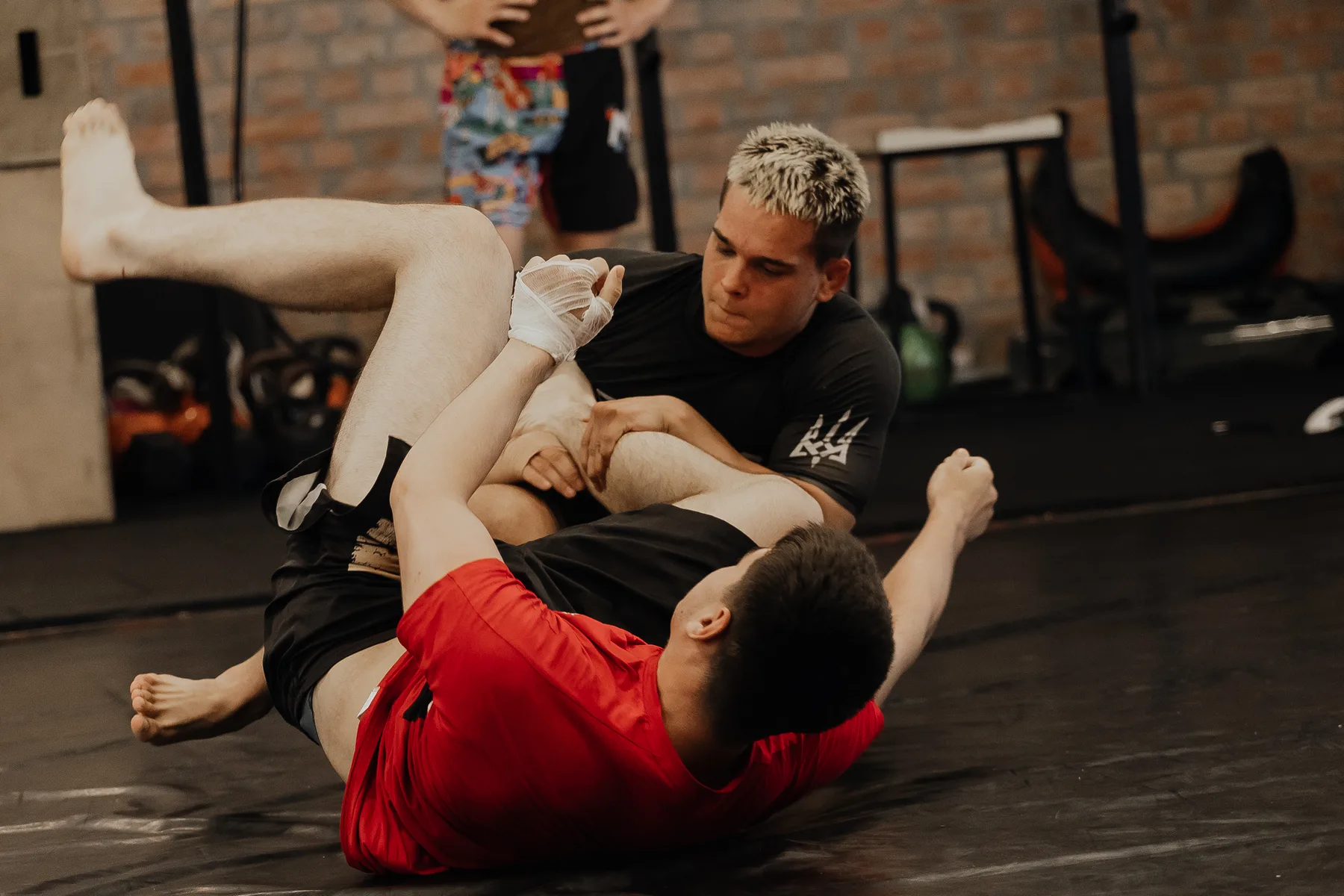
The direct answer
Learn the current NFHS or NCAA scoring model first, then build one takedown, one escape and one dependable ride.
A beginner does not need dozens of moves; the first season should build a reliable loop through stance, contact, one takedown entry, one finish, top control, one turn, bottom hand control, one escape and safe defense. Learn that loop in layers: perform each shape without resistance, recognize it in a cooperative exchange, choose it against constrained resistance, and finally use it in short live rounds. Keep a simple match notebook that records the position where each exchange began, the first useful decision and the reason the sequence stopped. This roadmap is organized around folkstyle because many U.S. beginners enter through scholastic programs, but its movement and decision habits transfer broadly. Editorial status: reviewed July 27, 2026. Coaches must verify competition details against the 2026–27 NFHS Wrestling Rules Book, their state association and the event packet; youth, club and independent events may use different periods, divisions or procedures. The official document in force on competition day controls.
01
What to understand
Build a small neutral game
Choose one dependable stance, one way to make first contact, one leg attack and one secondary action when the opponent blocks the first route. The goal is not stylistic perfection; it is a repeatable sequence that preserves balance and returns the athlete to a recognizable position. A beginner should be able to name the next checkpoint—inside contact, angle, penetration, finish or reset—instead of launching an attack and hoping.
Understand all three folkstyle positions
Give neutral, top and bottom equal space during the first month. Many novices spend practice collecting takedowns while remaining lost after the whistle restart. Use a one-page position map: neutral seeks controlled entry and finish; top seeks breakdown, ride and legal turn; bottom seeks hand control, hip separation and escape or reversal. The map helps athletes recognize what problem they are solving before selecting a technique.
Create defensive exits, not panic reactions
Early defense should teach posture, hands, hips and a route back to stance. When the opponent reaches a leg, the beginner learns to lower the hips, protect the angle, find useful contact and circle to safety or a scoring position. On bottom, defense means rebuilding a base rather than flattening and waiting. Safety, legal pressure and controlled partner behavior come before speed; a qualified coach should stop any position that cannot be practiced responsibly.
Measure decisions as well as wins
Track three weekly indicators: whether the athlete recognized the starting position, whether the first action matched the planned system, and whether the athlete could explain the failure without blaming strength or officiating. A novice can lose a live round while making the correct first decision, or score through an error that will fail later. Reward repeatable choices, clean restarts and honest review so performance improves without turning every practice into a selection trial.
02
How to train it
Weeks 1–3 · movement and position literacy
Spend most technical time on stance recovery, level changes, penetration shapes, circles, sprawls, base building and safe partner contact. End each lesson with three short games that have one objective, such as touching a lead knee, holding inside contact or standing from bottom with hand control. The coach pauses often, names the position and asks both athletes what legal, useful action comes next.
Weeks 4–6 · connect one complete route
Build a neutral chain from setup to controlled finish, then attach the correct top transition. On a separate day, begin in referee’s position and connect hand control, first movement and escape. Use progressive resistance: cooperative repetitions, predictable defense, two-choice defense and finally 20–30 second live starts. Do not add another move until the athlete can locate the failure point in the current chain.
Weeks 7–9 · score-and-clock situations
Add a visible scoreboard to constrained rounds. Give the beginner a simple assignment: secure a controlled score while tied, escape while trailing, or ride without reckless risk while ahead. Require a verbal plan before the whistle and a ten-second review afterward. This teaches that the same position can demand a different choice because time, score, restart and penalty risk have changed.
Weeks 10–12 · rehearsal and personal audit
Run complete match rehearsals with normal warm-up, equipment check, mat call, official commands and calm post-match review. Film one match-length effort, then tag every exchange as neutral, top, bottom, boundary, restart or administrative pause. Select only two repair priorities for the next week: one decision problem and one execution problem. The roadmap should narrow attention before competition, not create a last-minute catalogue of new techniques.
Stance first; technique second.
Name the position before choosing the move.
One clean route beats five unfinished ideas.
Finish into control, not just contact.
On bottom, win hands and hip space.
Review the first decision, not only the final score.
03
Common mistakes
Collecting moves without a system
A playlist of unrelated techniques gives the beginner no answer when the first attack is blocked. Organize every addition by its job: entry, finish, counter to a predictable defense or route back to a known position. If a new technique does not connect to the current map, save it for a later block. Depth creates confidence faster than an expanding vocabulary.
Making every round fully live
Unstructured live wrestling often allows the stronger novice to hide technical gaps and the less confident novice to repeat panic. Use constraints that make the target decision appear frequently, then expand freedom as recognition improves. Full live work remains important, but it should test learning rather than serve as the only teaching method.
Treating competition rules as permanent
A coach’s memory, an old video or a general article cannot certify the rules for a particular event. Put the season and governing body on every rules handout. Before travel, verify the current official book, state adoption, event packet, equipment procedure and any age-division modifications. Teach athletes to ask which ruleset applies instead of assuming every mat uses the same procedure.
04
Questions athletes ask
01 · How many moves should a first-season wrestler learn?
There is no universal number. A useful test is whether the athlete has one connected answer in every major position and can execute it against appropriate resistance. Add a second option only when it solves a recurring defense or tactical need. Ten connected actions usually teach more than thirty isolated demonstrations, but the coach should adapt the scope to age, schedule and practice frequency.
02 · When should a beginner enter a tournament?
Use readiness criteria rather than a fixed calendar: the athlete can follow commands, wrestle safely, identify positions, complete a normal practice, manage basic equipment and recover emotionally from difficult exchanges. The coach, athlete and guardian should understand the event format and purpose. Competition can provide feedback, but it should not replace skill development or be presented as a test of personal worth.
03 · Does this roadmap apply outside high-school folkstyle?
The learning method—small systems, progressive resistance, position recognition and review—transfers well. The scoring priorities, legal actions, restarts and match procedures do not automatically transfer. For freestyle, Greco-Roman, youth or college competition, rebuild the tactical layer from the current governing rules and event documents while keeping the same deliberate learning process.
05
Sources and further reading
Training needs vary by athlete, schedule and coaching environment. Use these sources as context, then adapt with qualified support. Educational content for athletes and coaches. This guide does not diagnose injury, replace individualized coaching or override event rules. Stop if an activity causes pain, and use an appropriately qualified coach or healthcare professional for your situation.