Adapt BJJ for MMA with better takedown connections, wall work, top control, strike-aware guard choices, stand-ups, and training structure.
The short version
- MMA-ready BJJ must connect striking range, takedowns, the fence, ground control, and safe exits.
- Top position becomes more valuable when it enables damage while limiting the opponent's offense.
- Bottom skills should prioritize posture control, protection, reversals, and reliable stand-ups.
Why sport BJJ needs translation
Sport BJJ teaches timing, leverage, positional control, and submissions against a resisting opponent. Those qualities are valuable in MMA, but the environment changes their application. Strikes alter posture and distance, the fence blocks movement, rounds begin standing, and judges evaluate more than submission threat. A technically elegant ground position can be a poor MMA choice if it leaves the athlete absorbing clean offense.
Translation starts by asking what a position permits next. Can the athlete strike safely, improve position, threaten a finish, or stand? Can the opponent do those things first? This filter does not eliminate guard or submission play. It prioritizes versions that control posture, manage hands, and create decisive movement before the opponent settles into a striking rhythm.
Build the bridge from striking to grappling
MMA takedowns rarely begin from the static tie-ups common in a grappling class. They appear after a jab, a level-change reaction, a kick catch, a defensive shell, or pressure toward the fence. Train entries in combination: strike to make the opponent's feet predictable, change levels behind defense, and finish only when position is strong. Failed shots should connect to the clinch or a safe exit rather than a long reach beneath incoming strikes.
The fence is its own position. Offensive athletes need head placement, underhooks, wrist control, trips, mat returns, and ways to prevent the opponent from turning off the wall. Defensive athletes need to build posture, win inside position, separate their hips, and circle to open space. These skills deserve dedicated rounds because ordinary BJJ rolling does not reproduce the geometry.
Top control that creates offense
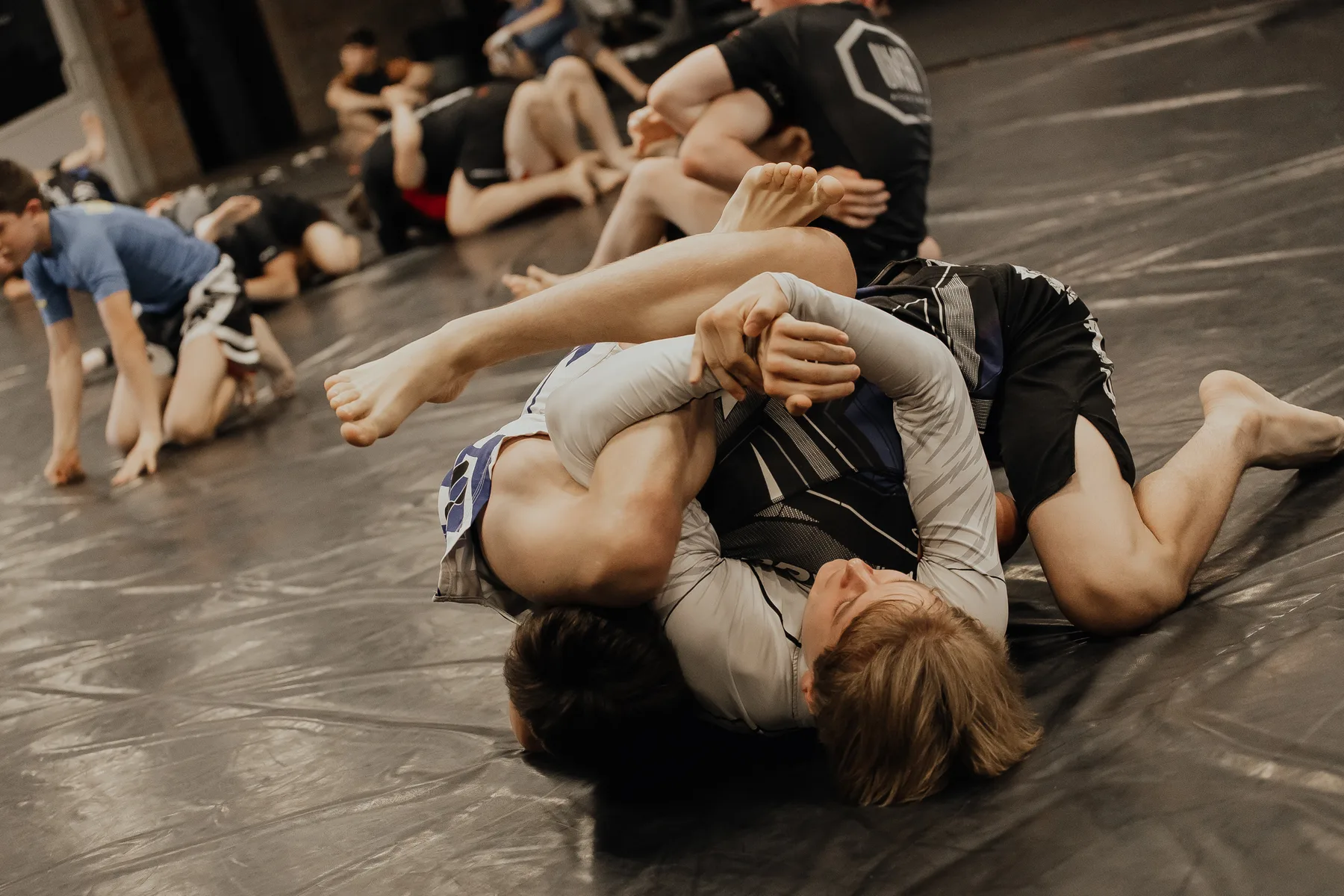
Top control in MMA is active. Half guard, rides, wrist control, and back exposure can be useful when they let the top athlete strike, pass, or force a defensive reaction. Chest pressure alone may hold someone temporarily, but control should lead somewhere. Train short sequences such as takedown to hip control, hand trap to strike, strike reaction to pass, and mat return when the opponent posts to stand.
Submissions are strongest when position and strikes make the defense predictable. An opponent who frames against ground strikes may expose an arm; someone turning to stand may expose the back. Chasing a low-percentage finish can surrender top position, so the athlete needs decision rules for when to commit. Those rules depend on time, score context, fatigue, and the opponent's escape route.
A bottom game designed to survive and reverse
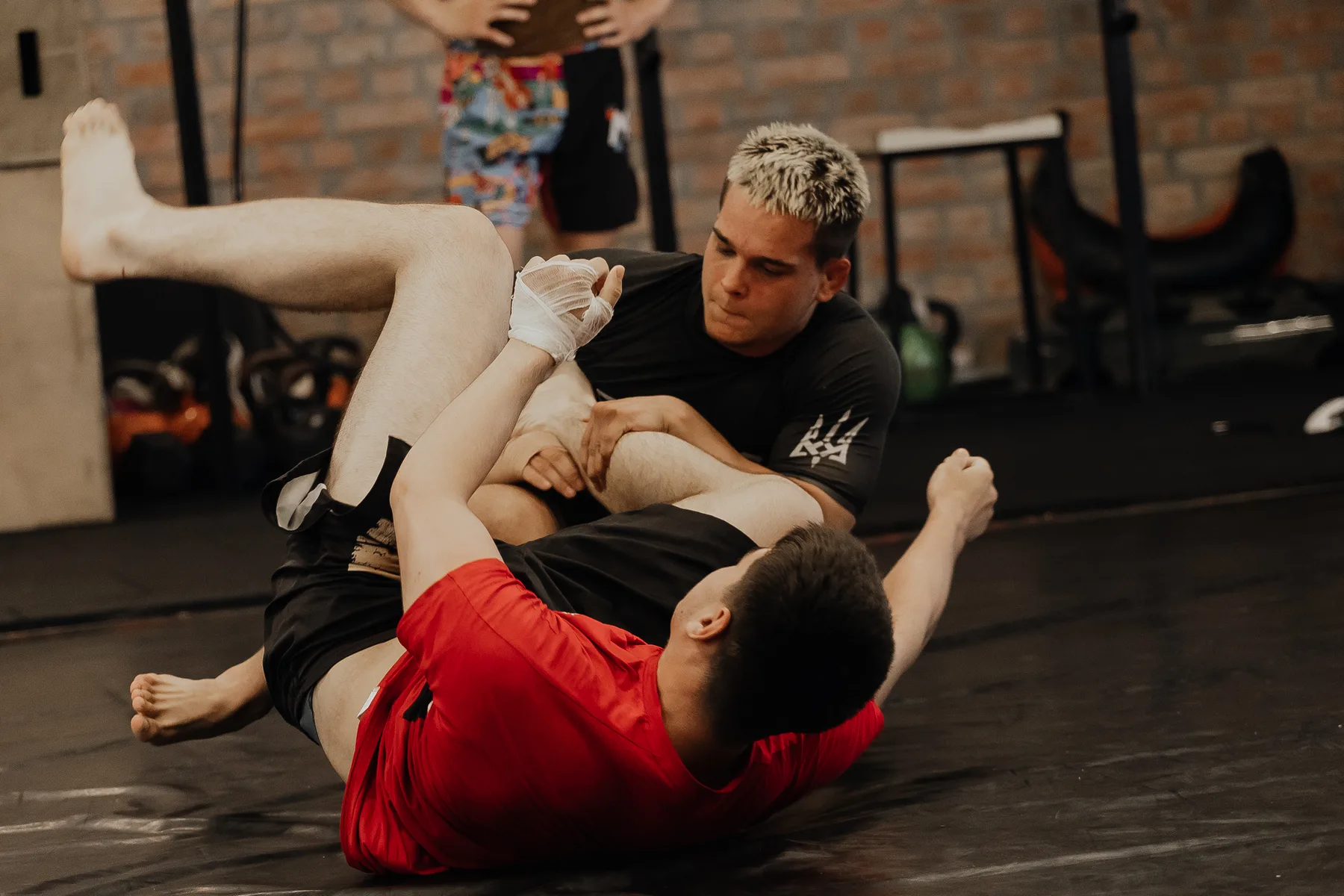
Bottom position is not automatically losing, but it carries additional cost in MMA. First manage posture, protect the head, and control the opponent's ability to strike. Closed and open guards need angle, wrist control, overhooks, or other connections that prevent free punching. Sweeps and submissions should arise from that safety structure, not from accepting damage while waiting for a grip.
Every MMA grappler also needs a stand-up system: frame, hip escape, underhook or post, wall walk when available, and protect the exit. Practice with controlled strikes so visual reactions and hand position become honest without turning technical rounds into unnecessary wars. Competition preparation should be supervised by coaches who can scale contact and comply with the current event rules and medical requirements.
How to structure MMA grappling practice
Use separate layers. Technical practice builds clean mechanics without meaningful impact. Situational rounds start from high-value positions such as fence underhook battles, completed takedowns, or bottom half guard. Integrated rounds add controlled strikes and time constraints. Full MMA sparring should be planned, infrequent enough to preserve athletes, and never used as the only way to test whether a technique works.
Review performance using outcomes that matter: entry quality, takedown completion, time to stable control, clean stand-ups, and unnecessary strikes absorbed. A submission count alone can mislead. The goal is a ground system that helps the athlete dictate phase and risk. BJJ remains a powerful engine when it is connected to wrestling, striking defense, and the realities of the cage.