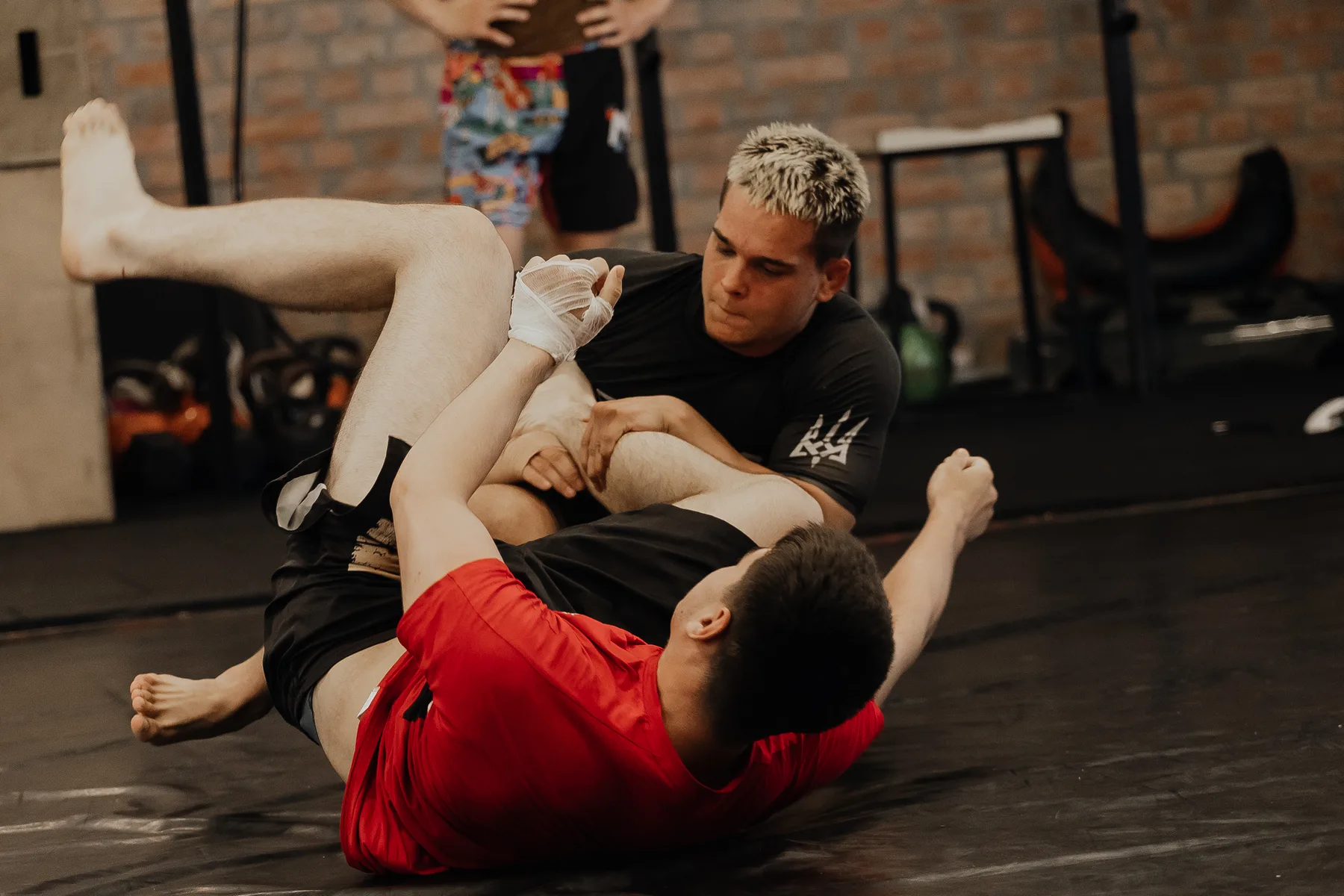
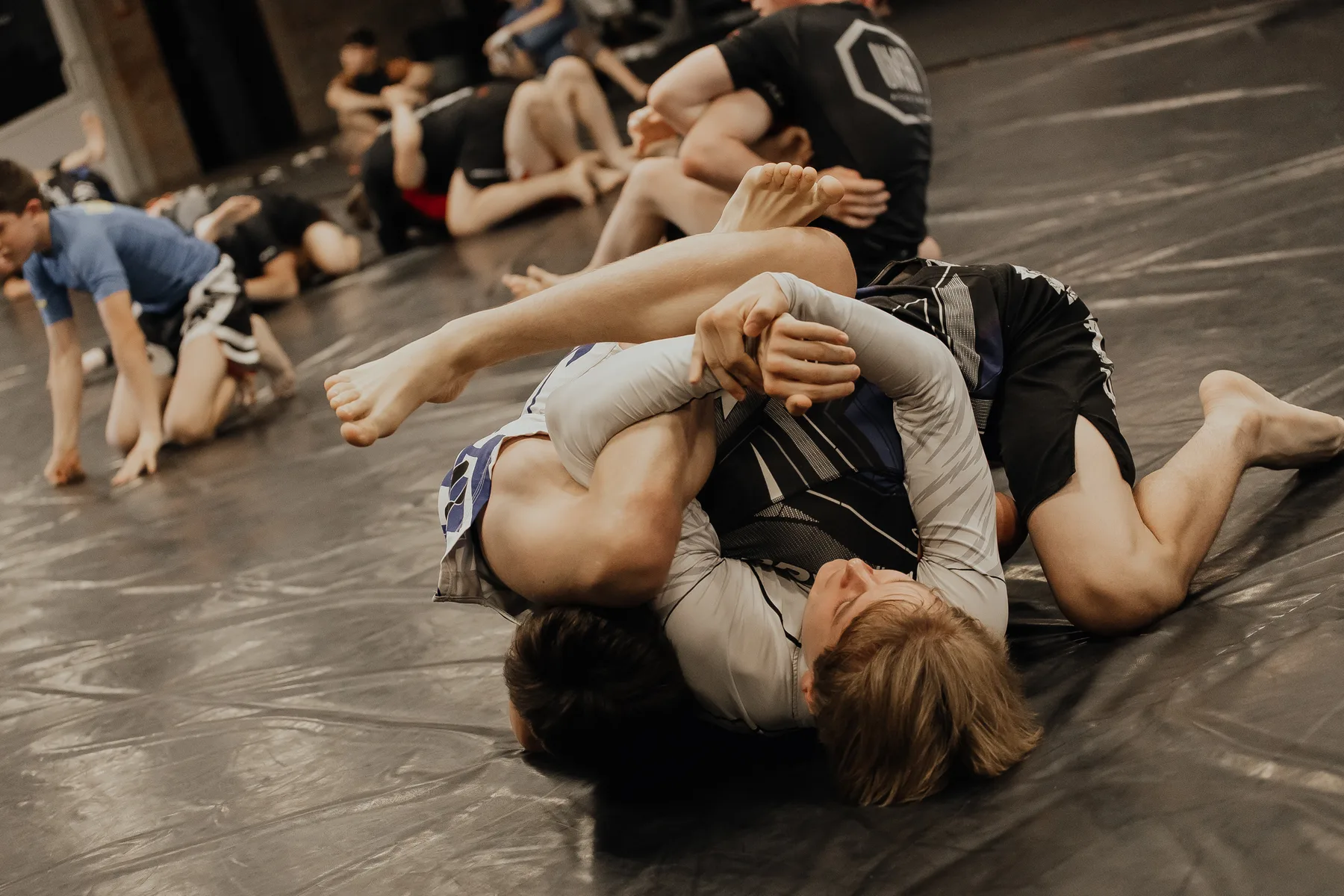
Build an MMA takedown system from entries, chain wrestling, fence finishes, mat returns, control, and measurable practice instead of isolated moves.
The short version
- Build around repeatable entries and reactions, not a catalog of unrelated takedowns.
- Open-space and fence finishes need separate practice because their geometry and risks differ.
- A takedown is incomplete until the athlete secures a useful control position or denies the stand-up.
Design a system, not a highlight reel
An MMA takedown system begins before contact. The athlete uses stance, feints, punches, kicks, and pressure to make the opponent's feet and hands predictable. A shot selected only because it looks powerful will fail when it has no reliable setup. Select one entry from open space and one from the clinch, then identify the two most common defensive reactions to each.
This creates a small decision tree. A jab draws a high guard, the athlete changes levels to a single-leg, and the opponent either sprawls, whizzers, or retreats to the fence. Each reaction connects to a practiced answer. The purpose is not to remove creativity; it is to give the athlete a stable route when speed, fatigue, and contact reduce thinking time.
Open-space entries without paying for them
Safe entries hide the level change behind offense or defensive responsibility. Jab to double-leg, cross to body lock, caught kick to outside trip, and counter-shot after a committed punch are examples of relationships rather than guaranteed combinations. Head position, spine alignment, and the ability to recover stance matter as much as reaching the legs. A failed entry should not leave both knees planted at striking range.
Drill the exit alongside the attack. If the hips are too far away, the athlete frames, circles, and returns to stance. If the opponent sprawls, the athlete may connect to a single, come up to a body lock, or disengage based on position. Coaches should reward correct abandonment because forcing a dead shot teaches athletes to absorb damage for no tactical return.
Fence wrestling is a separate skill set
The fence removes space behind the defender and creates leverage for both athletes. Offensively, head-under-chin pressure, underhooks, wrist rides, knee taps, inside trips, outside trips, and double-leg finishes can work as connected options. The athlete must control the opponent's ability to turn, pummel, and circle away. Defensively, the opponent uses frames, inside position, hip separation, and wall walks to rebuild stance.
Practice with a padded wall or properly installed training fence under coaching supervision. Start from exact positions rather than crashing into the barrier from across the room. Round constraints can include one athlete escaping to center while the other completes and settles a takedown. This creates honest resistance without requiring uncontrolled full-contact sparring.
Finish through the mat return
The first takedown often does not keep an opponent down. MMA athletes need mat returns, rides, wrist control, and the ability to follow a technical stand-up without losing safe position. After a finish, cover the hips and identify the first post the opponent needs to rise. Remove or redirect that post while improving your own control.
A useful training rule is that the offensive athlete must hold or advance for several seconds after the takedown. If the defender immediately reaches the wall and stands, the system has revealed its missing link. If the attacker dives for a submission and loses position, review whether the commitment matched the situation. Completion rate should include control, not just contact with the floor.
Measure the decisions that create takedowns
Film situational rounds and track a small set of outcomes: clean entries attempted, entries that reached a controlling grip, finishes completed, stable top positions, and escapes conceded. Also record where the exchange occurred and what set it up. These notes reveal whether the athlete lacks an entry, a finish, or a control layer. More live rounds cannot solve a problem that has not been named.
Competition rules, judging criteria, and medical requirements vary by jurisdiction and event, so preparation should follow the current official documents. Technique must also be scaled to the athlete's experience and health. A durable MMA takedown system is not one unbeatable move; it is a short network of choices the athlete can execute safely, under pressure, from the center to the fence.