
IBJJF age divisions: use the birth year, not the birthday
IBJJF competition age is the event year minus the athlete’s birth year. You do not have to wait for your birthday that year. For example, an athlete born in 1996 meets the Master 1 age minimum in 2026 even if the tournament happens before their thirtieth birthday.
Adult and Masters categories have minimum ages, not compulsory upper limits. An older adult can choose an eligible younger Adult or Masters division when the event offers it; reaching 30 does not force an athlete out of Adult. Juvenile athletes cannot enter Adult. Check the event’s belt-and-age table before registering, since not every event offers every division.
| Division | Competition age |
|---|---|
| Mighty Mite I–III | 4, 5 and 6 |
| Pee Wee I–III | 7, 8 and 9 |
| Junior I–III | 10, 11 and 12 |
| Teen I–III | 13, 14 and 15 |
| Juvenile I / II | 16 / 17 |
| Adult | 18 and older |
| Master 1 | 30 and older |
| Master 2 | 36 and older |
| Master 3 | 41 and older |
| Master 4 | 46 and older |
| Master 5 | 51 and older |
| Master 6 | 56 and older |
| Master 7 | 61 and older |
The six scoring actions
Takedown — 2 points. Bring the opponent down from standing and satisfy the control requirements for the resulting position.
Sweep — 2 points. Reverse from guard or half guard to the top under the rule’s criteria.
Knee on belly — 2 points. Establish the specified knee or shin position with the other knee off the mat.
Guard pass — 3 points. Clear the legs and stabilize the required side-control or north-south position.
Mount or back mount — 4 points. Meet the specific body-position and support requirements.
Back control — 4 points. Meet the prescribed control and leg-position requirements; a body triangle alone is not the scoring position.
Stabilization matters as much as arrival
Point-scoring positions generally require three seconds of stabilization and their particular criteria. Think of passing as reaching a destination and demonstrating control there. If you immediately abandon an unstable landing to chase a submission, you may not have completed the scoring action. A coach or referee can explain the particular sequence rather than judging from a single frozen image.
Side control itself has no standalone point value. A takedown that lands directly there is not automatically a takedown plus a guard pass: a guard must actually have been passed. Likewise, reversing from underneath mount is not automatically a sweep. These distinctions are useful when reviewing why a position improved but the scoreboard did not change.
Advantages are not smaller points you can add together
When points are tied, advantages can decide the result; if those are tied, the relevant penalties and ultimately the referee’s decision matter. Advantages recognize qualifying near-completions, not every attempt that looked promising. Do not assume several advantages outweigh a point lead. Check the complete result rather than reading just the largest number on the board.
Practice one simple scenario before competing: your partner leads by two points and you have limited time. Name an available scoring route from the actual position, then test whether you can establish it. The lesson is connecting position, score and time. It is not inventing a frantic attack just because the clock is running down.
How long is an IBJJF match?
Adult matches last five minutes at white belt, six at blue, seven at purple, eight at brown and ten at black. Master 1 uses five minutes for white and blue, and six for purple, brown and black. Master 2–7 matches are five minutes. Use your registered age and belt division; “all Masters matches are five minutes” is incorrect.
Know that clock before practicing a match scenario. A five-minute white-belt round and a ten-minute adult black-belt match require different pacing. In training, rehearse a full round at the relevant duration and a separate final-minute scenario. Read the scoreboard before choosing the task: retaining a lead and needing to score are different problems.
Weight classes: weigh yourself with the competition uniform
IBJJF weight limits include the uniform: gi for a gi event and the required no-gi clothing for no-gi. The official weigh-in is before your first match, with one attempt. Exceeding the limit means disqualification, without a same-day move to another weight class.
Read the chart for your event, age group and category. For example, current adult men’s middleweight limits are 82.3 kg in gi and 79.5 kg in no-gi; adult women’s middleweight limits are 69 kg and 66.5 kg respectively. The same category name does not mean the same maximum across formats.
For a first competition, choose a division you can make at your ordinary training weight with your actual kit. Check it in advance rather than discovering the difference on the venue scale. A category decision should leave you able to compete, not require a last-minute dehydration experiment.
Absolute divisions, walkovers and byes
An absolute or open-weight division removes the weight limit within its stated competition category. It does not automatically mix every age or belt, and entry conditions vary by event. Check eligibility and the separate registration deadline rather than assuming your weight-class entry includes it.
A walkover, often shown as WO, concerns a scheduled opponent who does not appear. A bye means the bracket advances an athlete through a round without a scheduled match. Neither is a fought win. If your bracket changes, confirm your next reporting time and stay available; an empty first-round slot is not permission to leave the venue.
Illegal actions are wider than the submission list
Slamming, striking and manipulating individual fingers are examples of prohibited actions. Clothing grips matter too: the inside of a sleeve or trouser opening is not a permitted finger grip, and no-gi does not allow gripping the opponent’s uniform. Submission permissions add a separate layer determined by age, rank and format.
When learning a technique, check three things: the starting grip, the action itself and the position it creates. A legal finish does not make every entry legal. Have the coach or referee resolve the exact sequence before competition practice, particularly when transferring a movement from another grappling ruleset.
Legal techniques depend on the exact division
For example, heel hooks and knee reaping are permitted in Adult brown- and black-belt no-gi divisions under the current chart. That permission does not extend to Masters, lower belts or gi categories. The federation’s illegal-moves poster separates these groups. A technique seen in an elite no-gi match is not permission to use it in your own bracket.
Review the division chart, prohibited grips, uniform requirements and the event’s weigh-in instructions before entry. In preparation, agree on permitted techniques with every partner, release immediately on a tap and never use unfamiliar joint pressure or neck pressure to test a rule. Resolve uncertainty before the round, not during a submission attempt.
Explore the video library
Published lessons in this training category, ready for your next session. Watch them all with your school membership.
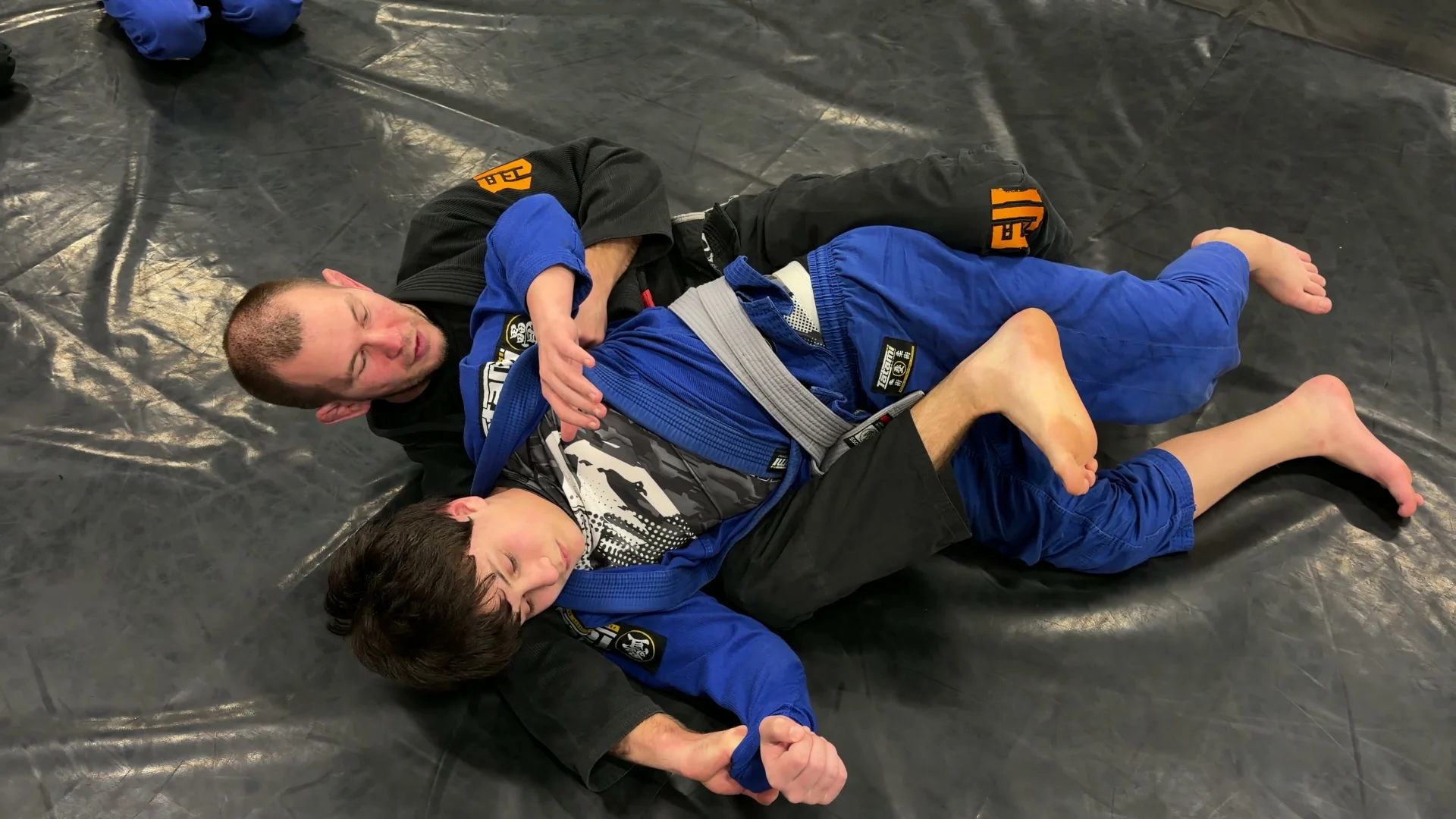 Closed Guard Arm Drag: Back TakeYaroslav Blazhko
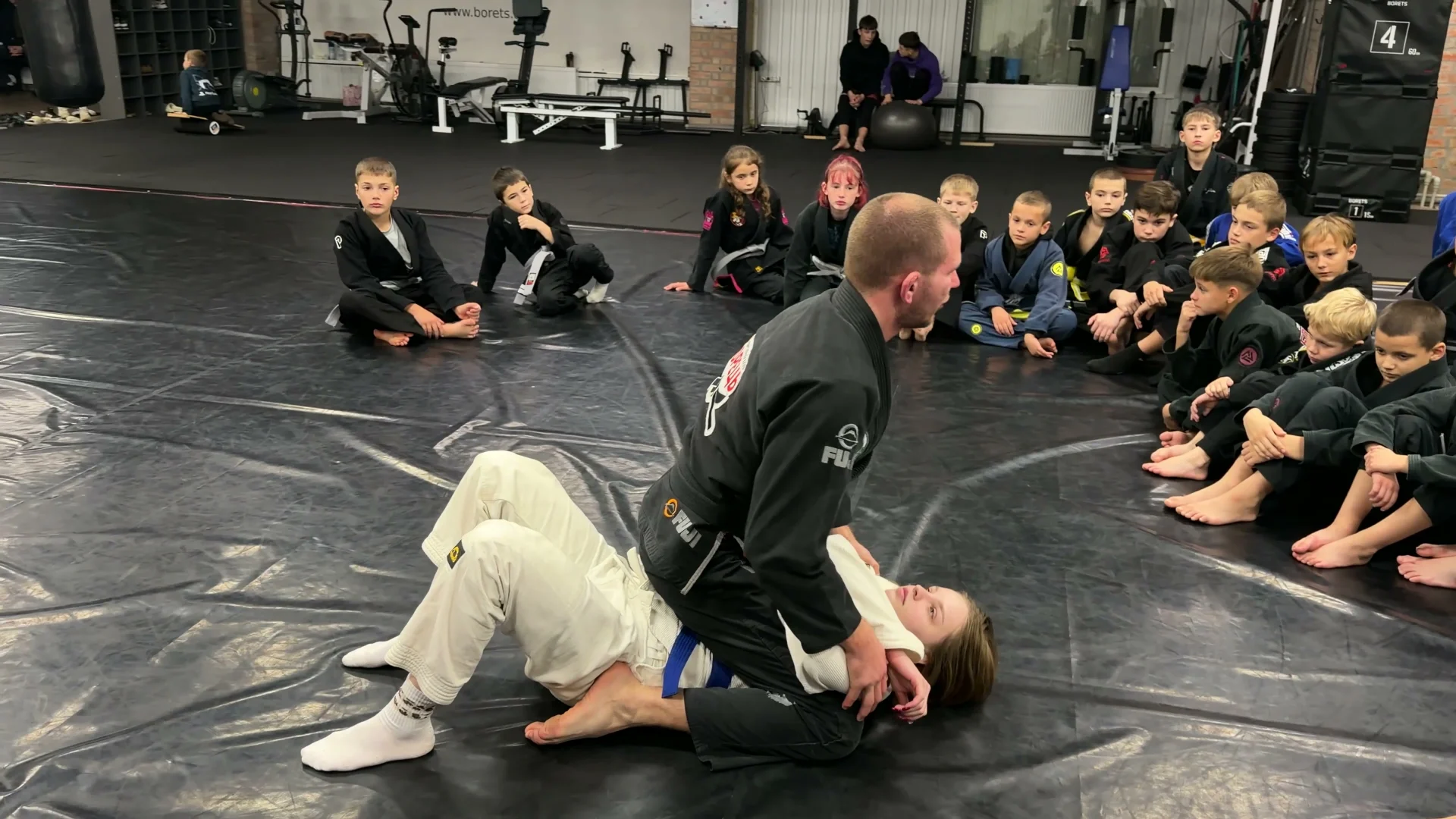 Closed Guard Arm Drag: Sweep to MountYaroslav Blazhko
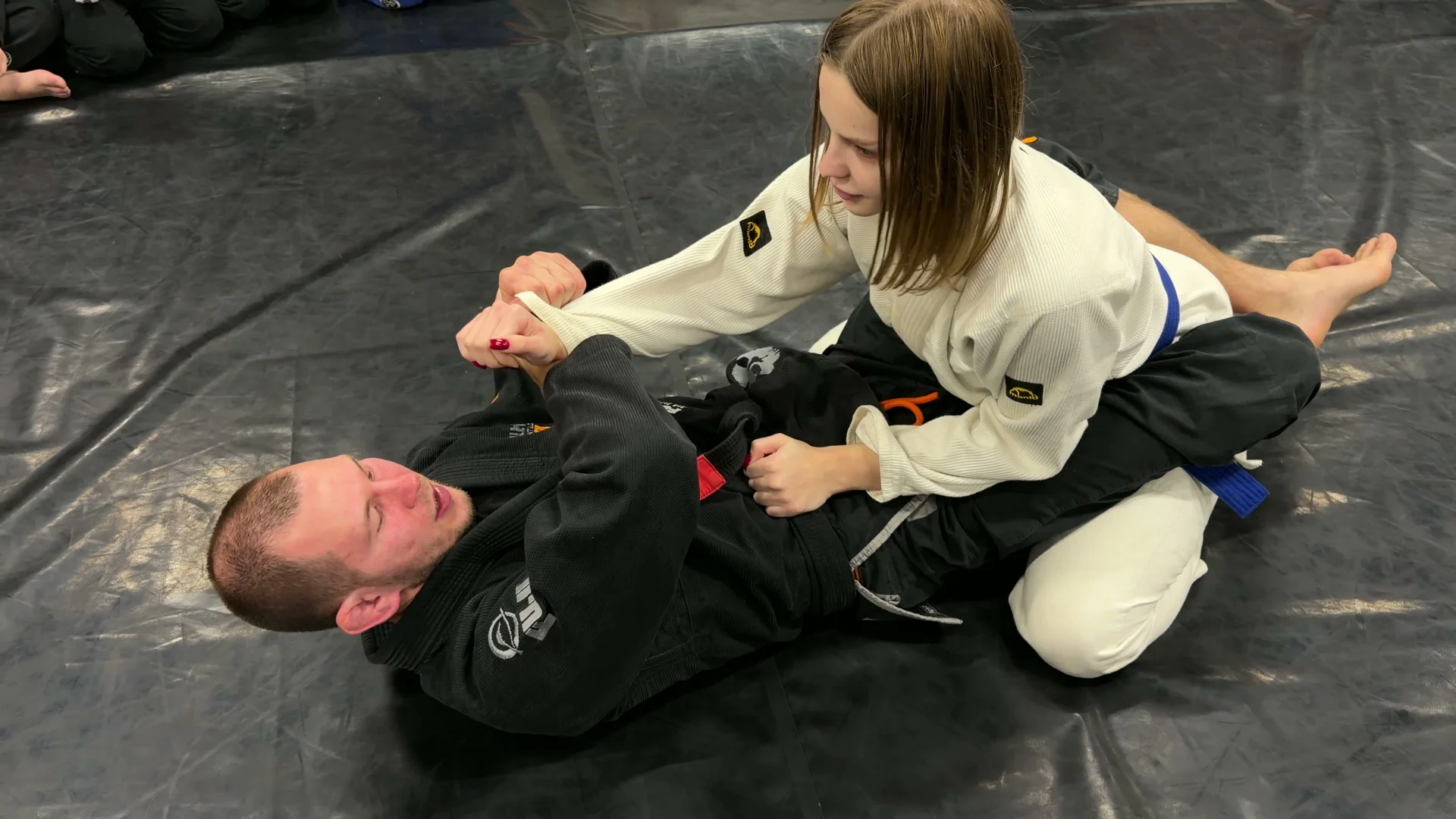 Breaking Grips from Closed GuardYaroslav Blazhko
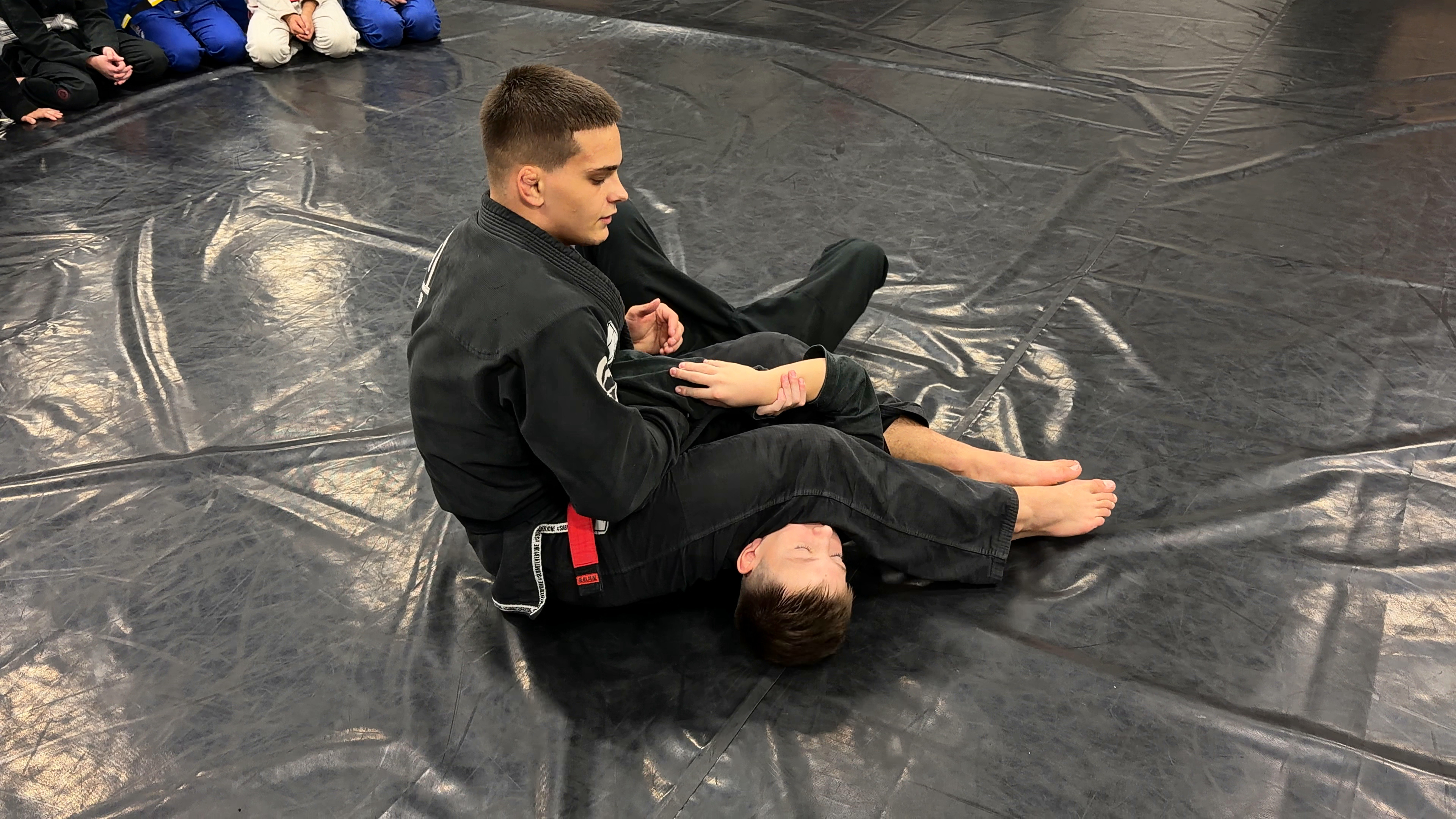 Armbar from Knee on BellySanya Oliinyk
Common questions
How do IBJJF age divisions work?
Subtract your birth year from the competition year. Adult starts at 18, Master 1 at 30 and Master 2 at 36, with further Masters minimums shown above. The event’s belt-and-age table determines the divisions available.
Can a Masters athlete compete in Adult?
Yes, an eligible older adult may choose Adult or an eligible younger Masters division offered by the event. Adult and Masters groups have minimum ages; an athlete does not have to leave Adult on turning 30.
How many points is a BJJ guard pass?
Under IBJJF rules a qualifying guard pass is worth three points after the required control. Takedowns, sweeps and knee-on-belly are worth two; qualifying mount and back control are worth four.
Build a more complete grappling game.
Learn from the team that developed homegrown black belts and an adult ADCC Trials finalist at 16.
One membership unlocks every published lesson in sambo, BJJ, freestyle wrestling, strength and conditioning, and mental preparation. Pick your focus, study the details and take them into your next session.
1,340 UAH / month · 13,400 UAH / year
Payments are charged in Ukrainian hryvnia (UAH). Your bank determines the conversion to your currency.
Continue reading
- What Is Grappling? BJJ, Wrestling and Sambo ExplainedUnderstand grappling, takedowns, ground control and submissions, and how BJJ, wrestling and sambo differ. A practical introduction for your first class.
- Leg Locks in BJJ: Ankle Lock, Kneebar, Toe Hold and Heel HookLeg locks explained: the straight ankle lock, kneebar, toe hold and heel hook, the ashi garami and saddle positions, early defense, and the IBJJF, ADCC and sambo rules.
- BJJ positions: a practical map of guard, pins and escapesUnderstand the main BJJ positions, what each athlete is trying to control, and how to connect guard, side control, mount and back control in training.
- Omoplata in BJJ: Shoulder Control, Entries and SweepsUnderstand the omoplata position, shoulder control, common entries and the transition to a sweep when an opponent rolls. Learn what to check before finishing.