
Give strength work one clear job
Choose a goal you can assess in the gym, such as more controlled repetitions of a familiar pulling exercise or improved ability to maintain position under a chosen load. Then name the mat problem you hope it will support. Keep those observations separate: a stronger row does not prove that a guard pass improved. The NSCA’s BJJ programming article treats strength, power and endurance as distinct considerations alongside technical training. That is a useful starting distinction when choosing your emphasis.
Place the mat sessions first
Suppose your week includes technical practice on Monday, demanding sparring on Wednesday and positional work on Saturday. Mark Wednesday as the session you most want to protect. Before placing a strength session immediately before it, consider how you have responded to that combination previously. Write down work commitments and realistic training windows too. A program that requires a free afternoon you never have cannot be followed consistently. Discuss whether two strength slots fit; a week with fewer available slots needs a different plan.
Choose movement patterns before collecting exercises
Use a short checklist: a knee-dominant movement, a hip hinge, an upper-body push, a pull and a task for controlling the trunk. A squat variation, a familiar deadlift variation, a press and a supported row are possible examples. Your coach can choose versions you already perform well and decide whether single-leg or carrying work belongs in the session. These categories organize gym work; they are not a claim that a particular lift reproduces a submission or replaces learning the position.
Watch the cost to your next practice
Combining demanding conditioning and strength sessions adds another recovery demand to an already busy BJJ week. Notice whether a gym change repeatedly leaves you unable to practice your chosen mat task as intended. Keep a record of the session order and how the next class feels. Bring that pattern to your coach and consider session placement or workload before adding another difficult workout.
Keep a gym-and-mat log
Record the date, exercise variation, load, completed sets and repetitions, and how demanding the session felt. Add one note after the following mat session. An illustrative entry might read: “Row completed as planned; Wednesday’s first positional rounds felt normal, but gripping faded earlier in the later rounds.” This is an observation, not proof of a cause. Compare several similar sessions and note changes in partners or sparring intensity. Those details keep one unusual training day from becoming a verdict on the whole program.
A concrete two-day strength plan for BJJ
This is an example for a healthy adult already familiar with the exercises, starting a modest strength block alongside two or three mat sessions. It is not a requirement to add lifting on top of a week you cannot recover from. Put the two sessions on nonconsecutive days and keep the day before your hardest sparring relatively light. Warm up with easy movement and lighter practice sets.
Session A: goblet squat, 2 sets of 6–10; supported dumbbell row, 2 sets of 8–12 per side; push-up or incline push-up, 2 sets of 6–12; dumbbell Romanian deadlift, 2 sets of 8–10; side plank, 2 holds of 15–25 seconds per side. Use a push-up height and weights that leave roughly two or three clean repetitions available.
Session B: supported split squat, 2 sets of 6–10 per side; dumbbell floor press, 2 sets of 8–12; supported row or secure band row, 2 sets of 8–12; glute bridge, 2 sets of 10–15; dead bug, 2 sets of 5–8 controlled repetitions per side. Rest about two minutes after demanding squat, hinge, press and row sets, and 60–90 seconds for the smaller trunk tasks. Take longer when needed to repeat good technique.
Progress the work; do not turn every session into a test
Keep the same exercise versions for several weeks. First add repetitions within the stated range. When both sets reach its upper end on two exposures, with the same control and spare repetitions, make the smallest available load increase and return toward the lower end. For push-ups, a slightly lower support can be the progression. Change one variable at a time.
If the extra work repeatedly leaves your legs or grip unable to perform normal technical practice, reduce one set from the affected exercises or move the gym session. A missed workout does not create a debt to repay with twice the work. Keep a manageable weekly routine and adjust it with your coach; you do not need to reach muscular failure to make every exercise count.
Three shorter days, or a home version
If three short gym visits fit your life better, redistribute the same weekly work rather than adding another full session. For the first block, use squat, row, push-up and side plank on Monday; Romanian deadlift, split squat and dead bug on Wednesday; floor press, row and glute bridge on Friday. Keep the same two sets and repetition ranges. This is a shorter-session version of the example, not an increase in weekly volume.
At home, replace the goblet load with a securely closed backpack, use supported bodyweight split squats and incline push-ups, and perform a backpack row with the free hand on a stable support. A properly anchored resistance band can supply the row instead. Keep the bridge, side plank and dead bug. Use an anchor designed for the band, not a door handle or loose furniture.
Progress home work by adding controlled repetitions and then a small, secure load. Once the resistance is too easy for your goal, stronger equipment may be useful; hundreds of hurried repetitions are not the only alternative. Home training can build strength, but the program still needs a measurable challenge and enough room for your mat work.
Bring a specific question to the lab
A useful coaching question includes your mat schedule, current strength work and the change you observed. Ask: “Which part should we adjust first, and what should I record to judge it?” In BORETS LAB, conditioning connects with sambo, wrestling and jiu-jitsu. Explore the conditioning section and check the membership page for current access. When working through a published release, open a separate consultation in your account to connect the material to a precise question from your training log.
Related video lessons
See the technique in action and study the details with BORETS. Watch with a school membership.
Browse this training category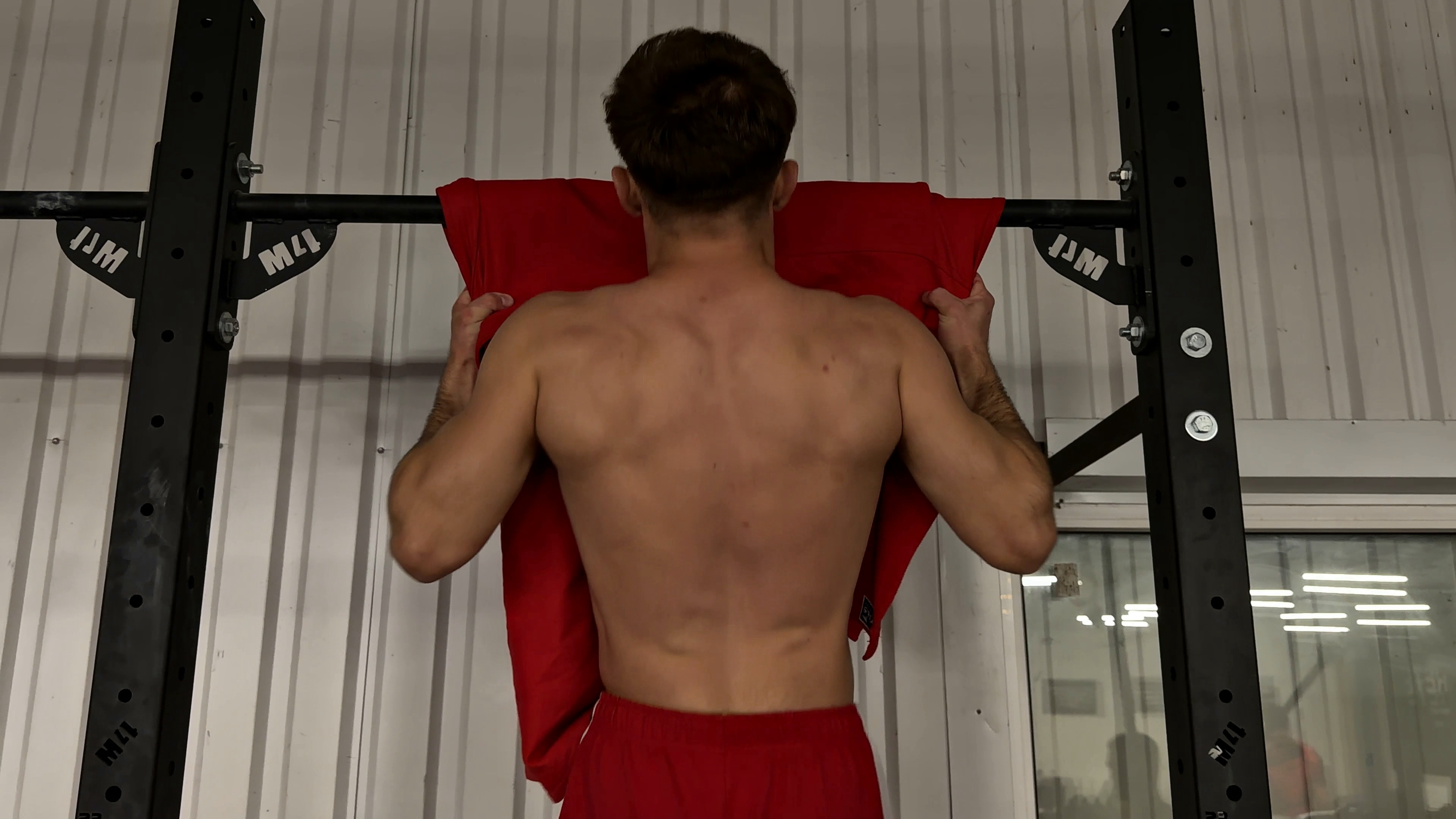
Build a more complete grappling game.
Learn from the team that developed homegrown black belts and an adult ADCC Trials finalist at 16.
One membership unlocks every published lesson in sambo, BJJ, freestyle wrestling, strength and conditioning, and mental preparation. Pick your focus, study the details and take them into your next session.
1,340 UAH / month · 13,400 UAH / year
Payments are charged in Ukrainian hryvnia (UAH). Your bank determines the conversion to your currency.
Continue reading
- Freestyle Wrestling for BJJ: Connect the Takedown to the GroundUse freestyle wrestling to improve BJJ entries and transitions. Learn what transfers, what changes under BJJ rules and how to review one complete exchange.
- Wrestling Conditioning: Build Endurance for Repeated AttacksPlan wrestling conditioning around repeatable mat tasks, pacing and recovery. Track attack quality and output instead of measuring a workout by exhaustion.
- Realistic BJJ Training Schedules for 2, 3 and 4+ Sessions a WeekBuild a sustainable BJJ week with examples for two, three or more classes, strength work, competition preparation and recovery.
- Strength Training for WrestlingBuild a wrestling strength plan around useful movements, manageable gym work and mat practice. Learn what to track and how to review exercise videos.