
Begin with a small set of scoring facts
A scored hold-down earns four points at 20 seconds, or two at 10–19 seconds. For a throw from standing onto the opponent’s side, remaining standing earns four points; falling with the throw earns two. An advantage of eight or more points ends the bout. These examples are a starting reference, not the complete scoring table.
Put those facts beside a blank score sheet when you watch a match. Your first task is to connect an observed event with an awarded score. Do not try to memorize every exception while also recognizing unfamiliar grips. Once a basic example makes sense, look up the neighboring cases in Article 30 and compare them with your coach.
Watch both athletes through the landing
A useful viewing exercise is to describe a throw without naming it. Write the defender’s starting position, whether the attacker stayed on their feet and the part of the defender’s body that reached the mat. That description is easier to compare with the scoring table than a technique name remembered from another sport.
Keep the camera’s limitations in mind. A hidden knee or obscured landing can make an apparently simple decision unclear. Replay the whole action, then separate what you can see from what you infer. If you cannot establish the starting position, that is the question to bring to a coach or referee.
Practice reading the score difference
Consider a simplified example with no penalties or other scoring actions. Red earns four points from a throw, blue earns two, then red receives four for a completed hold-down. The score is 8–2: red has eight points, but the lead is six. Reaching eight on one side of the scoreboard is different from having an eight-point advantage.
Write the score after each action rather than adding everything at the end. This habit makes the tactical situation visible. It also stops you from treating each successful movement as equally valuable. In a learning exercise, have a partner read out the awarded scores while you keep the record, then compare your final tally with the official display.
Understand why a bout has stopped
Points are only part of reading a match. Learn to distinguish a temporary interruption from an announced result. Article 28 sets out total-victory conditions, including a perfect throw and a submission signal. Ask your coach to show contrasting examples and explain the official decision rather than guessing from the athletes’ celebration.
At practice, stopping is a shared responsibility. Agree on the task and stop signals before beginning, release immediately when a partner signals and follow the coach’s limits. Understanding a submission as a sporting result is separate from knowing how to practice a particular hold. A rules summary cannot supply that practical supervision.
Check current rules, including activity
FIAS’s September 2026 update explains an activity mark for a bout that ends without technical points or warnings. In that situation, the athlete holding the mark wins. This is one reason an old highlight video or an undated scoring graphic is an incomplete competition guide.
Keep a link to the current rulebook with your event information. When something differs from what you remember, locate the article and check the event’s adopted version. Avoid building a strategy around an interpretation heard secondhand. Rules questions are easier to resolve before registration than during a close bout.
Your first-event preparation list
Confirm your division, eligibility, weigh-in arrangements, bout length, approved uniform and check-in time with the organizer and your coach. Have the actual clothing checked in advance. Bring your unanswered rules questions to training, with one example for each. A compact, verified plan is easier to use on competition day than a long collection of untested assumptions.
Explore the video library
Published lessons in this training category, ready for your next session. Watch them all with your school membership.
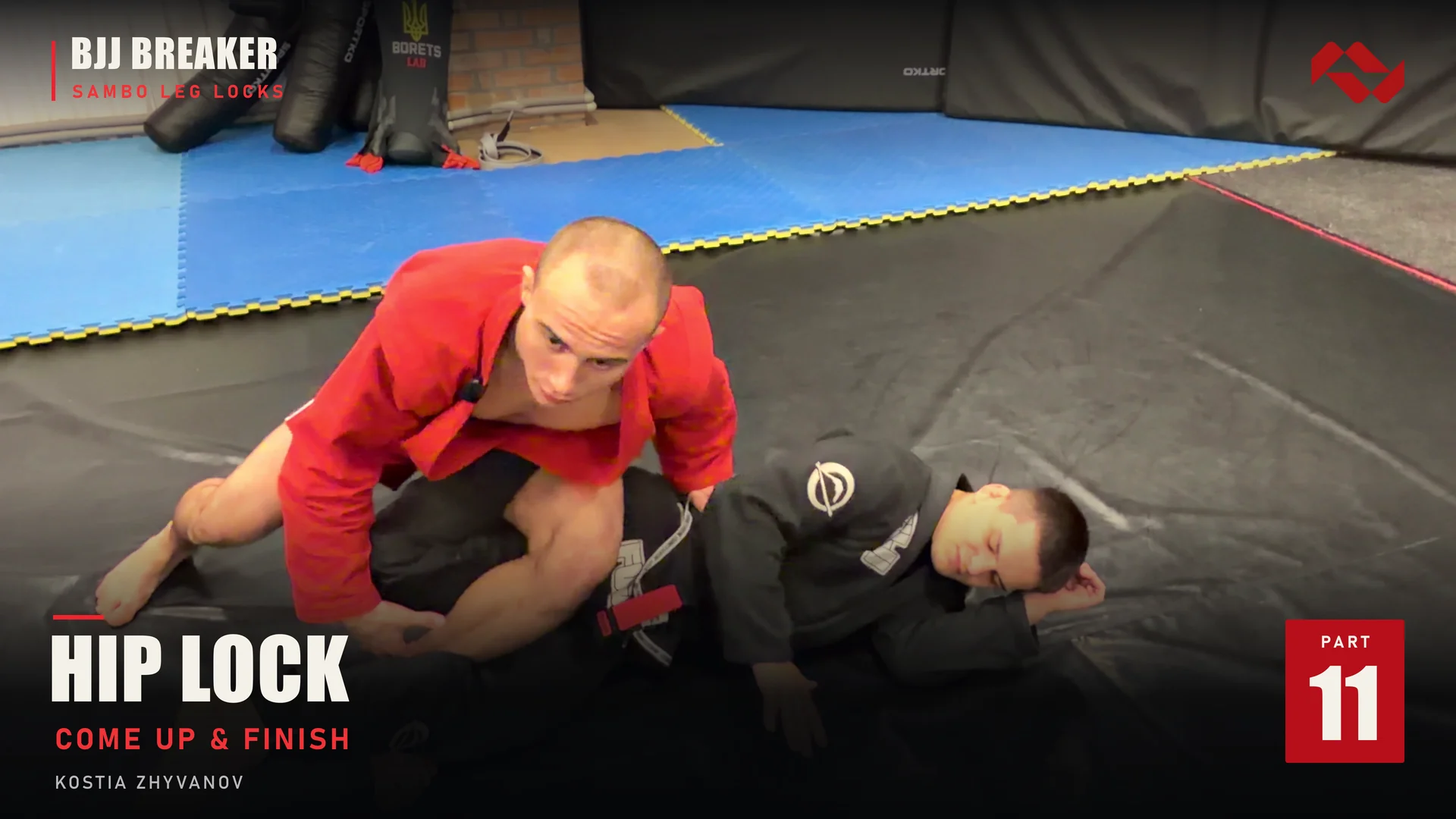 Hip Lock: Coming Up to FinishKostya Zhyvanov
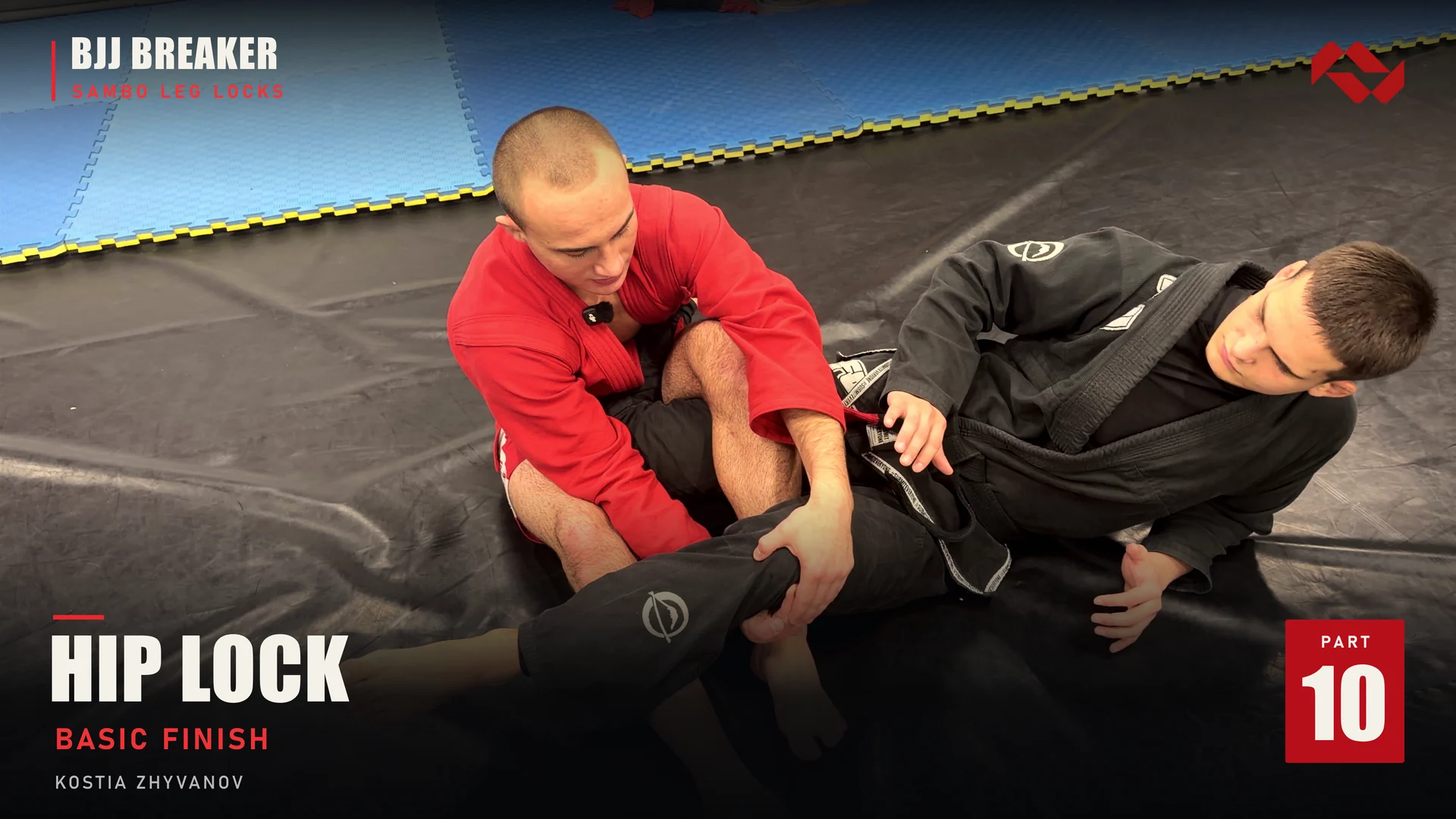 Sambo Hip Lock: Basic FinishKostya Zhyvanov
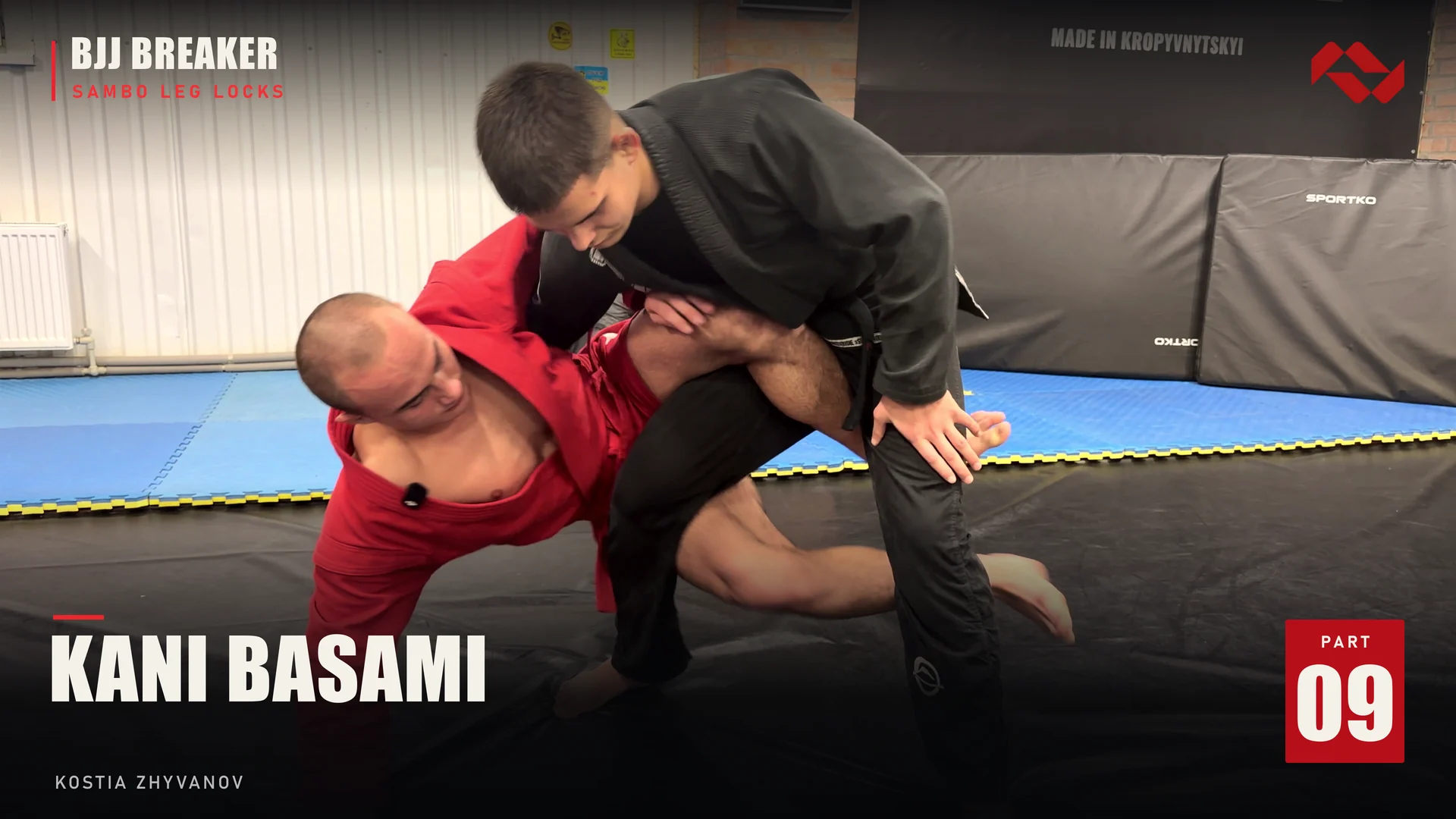 Kani Basami: Sambo Scissor TakedownKostya Zhyvanov
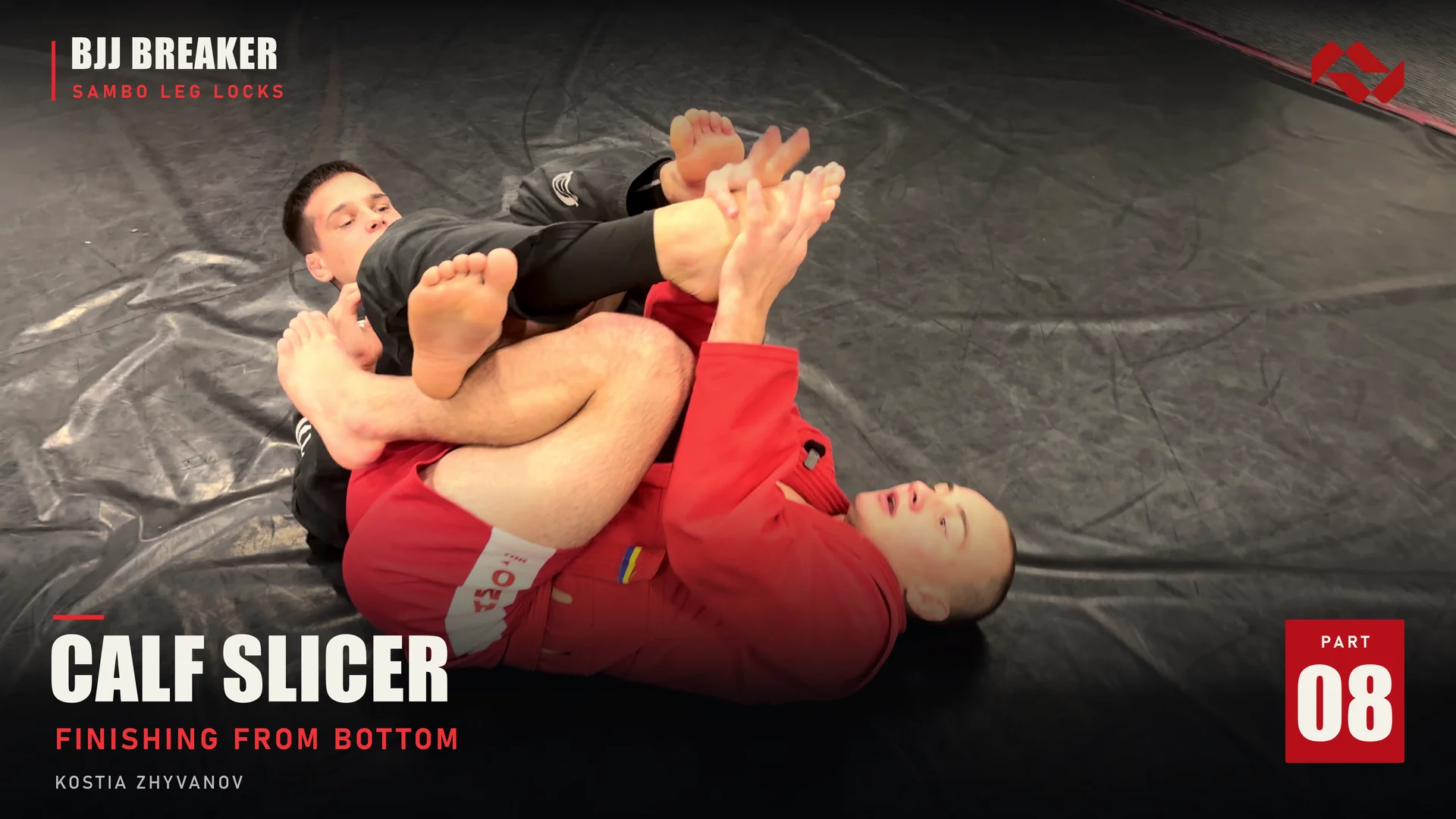 Calf Slicer from Bottom: Finishing DetailsKostya Zhyvanov
Common questions
How many points is a sambo hold-down?
A qualifying hold-down earns two points at 10–19 seconds or four points at 20 seconds under the FIAS sport-sambo rules. Referee recognition and the rulebook’s conditions still apply.
Does scoring eight points automatically win a sambo match?
The early-win condition is an advantage of eight or more points, not simply reaching eight on the scoreboard. For example, 8–2 is a six-point lead.
Build a more complete grappling game.
Learn from the team that developed homegrown black belts and an adult ADCC Trials finalist at 16.
One membership unlocks every published lesson in sambo, BJJ, freestyle wrestling, strength and conditioning, and mental preparation. Pick your focus, study the details and take them into your next session.
1,340 UAH / month · 13,400 UAH / year
Payments are charged in Ukrainian hryvnia (UAH). Your bank determines the conversion to your currency.
Continue reading
- What Is Grappling? BJJ, Wrestling and Sambo ExplainedUnderstand grappling, takedowns, ground control and submissions, and how BJJ, wrestling and sambo differ. A practical introduction for your first class.
- Straight Ankle Lock (Achilles Lock): Control and DefenseStudy the straight ankle lock, also called an Achilles lock: leg control, early defense and the differences between IBJJF, ADCC and sport sambo rules.
- What is sambo? The sport, its origins and where to startA practical introduction to sambo: its origins, sport and combat formats, beginner skills and questions to ask before choosing a class.
- Sambo Leg Locks for BJJ, Grappling & MMAExplore sambo leg locks for BJJ, grappling and MMA with Kostya Zhyvanov: 11 lessons covering ankle locks, kneebars, calf slicers and hip locks.