
What the term describes
A straight ankle lock, also called a straight foot lock, primarily loads the ankle toward a pointed-foot position while the leg is controlled. Pressure may be felt around the Achilles area, which explains the “Achilles lock” label used in some rooms. That label must not be treated as proof that the technique only causes temporary discomfort.
A heel hook is a different submission family: it uses control of the heel to create rotational force through the leg. It is not another name for a straight ankle lock. A leg entanglement is the position around the legs, not the submission itself; several different attacks can arise from similar-looking positions.
Position before finishing pressure
Holding a foot and controlling the exchange are different things. The defender may still move their hips, free the knee, change the angle or come on top. Study which movements the position permits before worrying about whether you can produce a tap. That is a problem you can observe without escalating pressure.
For example, if the attacker repeatedly loses the leg as the partner changes position, the training question is about retaining or safely abandoning the connection. Adding force to an unstable hold does not answer it. Ask your coach to identify the first lost connection and the appropriate reset point.
IBJJF: a legal ankle lock is not permission for every leg attack
The current IBJJF chart permits straight foot locks for adult white belts. Heel hooks are restricted to adult brown- and black-belt no-gi divisions. The legality of the leg position and the direction of movement still matter. Check the complete chart for your age, rank and format, rather than using those two examples as a complete rules summary.
This distinction matters during partner practice. “We allow ankle locks” is not a sufficiently clear agreement if the partners mean different positions or actions. Before the round, have the coach define the permitted attack, the legal starting position and the point where the exercise resets.
ADCC and sport sambo: read the actual division rules
ADCC professional events and Open divisions do not use one universal submission list. Age and experience categories affect what is permitted, and an adult rule is not a youth rule. Check the current table for your actual division, including permitted leg positions and movements, before adapting an ankle-lock sequence.
Sport sambo has its own submission restrictions and ground-fighting conditions. A BJJ or ADCC permission does not carry over automatically. The current FIAS sport sambo rules are the relevant starting document for a sambo event, including the listed prohibited leg actions.
A controlled practice protocol
Start under a qualified coach with an agreed position and a cooperative partner. The first task can be identifying the connection, the legal boundaries and the release, with no finishing pressure. Only progress to resistance in the phase the coach has selected. Do not combine an unfamiliar escape with a tightly held submission and hope the direction is correct.
Any tap, verbal stop or uncertainty ends the exchange immediately. Do not wait for pain as a test of whether the position is effective, and do not continue turning against a trapped leg. The attacker must be willing to release a promising attack. The defender must be willing to stop before finding an escape.
What to record after the test
Record the starting position, the rule set, the connection that changed and why the exchange stopped. “The knee became free before the attack developed” describes something repeatable. “I could have finished if I pulled harder” does not demonstrate control.
BORETS LAB treats the link between sambo and jiu-jitsu as a question to test through positions and resistance. For ankle locks, the useful result is understanding what your partner can do, what the rules allow and when to release. A tap is an outcome; a repeatable, controlled decision is the skill to develop.
Related video lessons
See the technique in action and study the details with BORETS. Watch with a school membership.
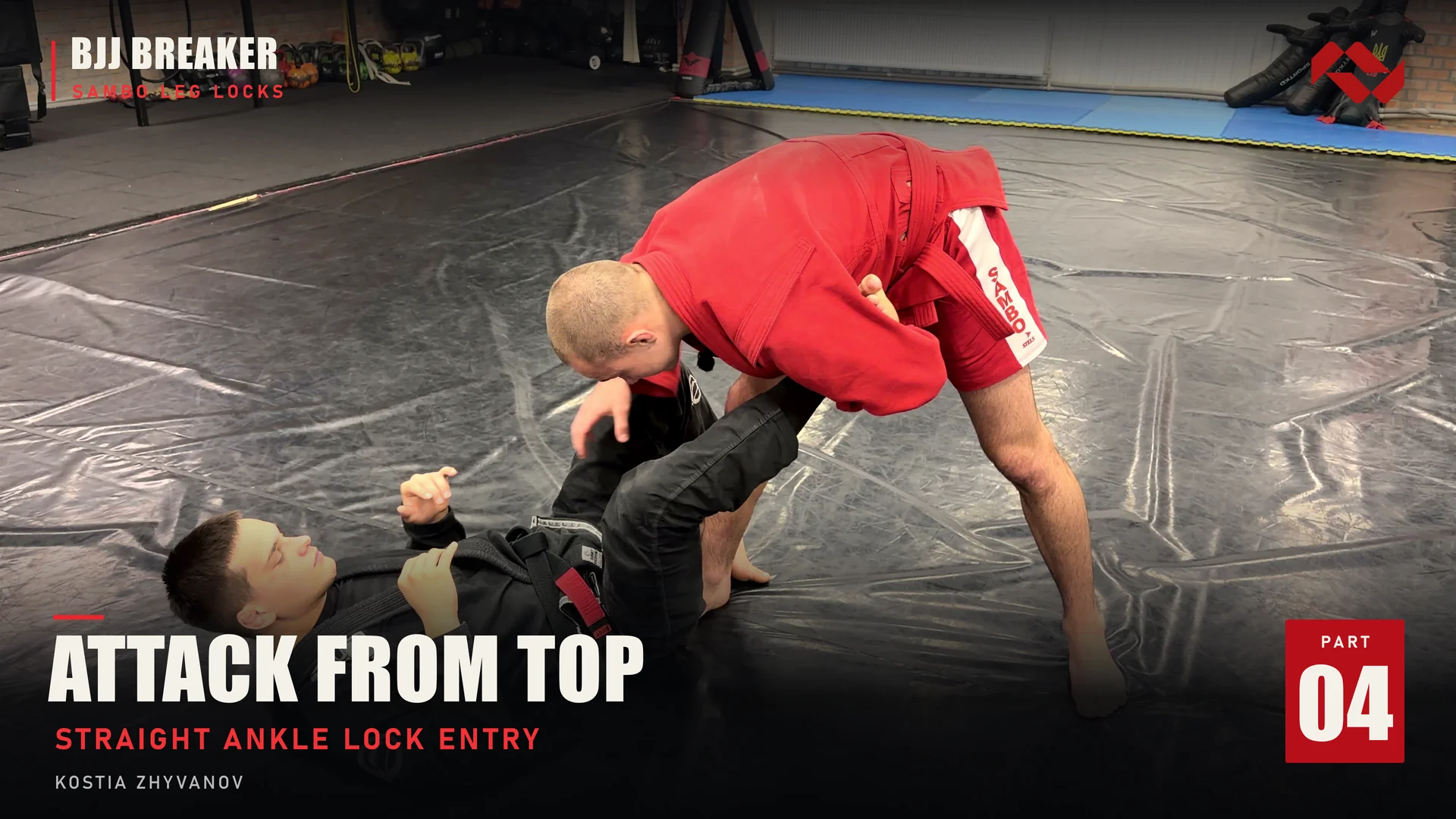 Straight Ankle Lock Entry from Top PositionKostya Zhyvanov
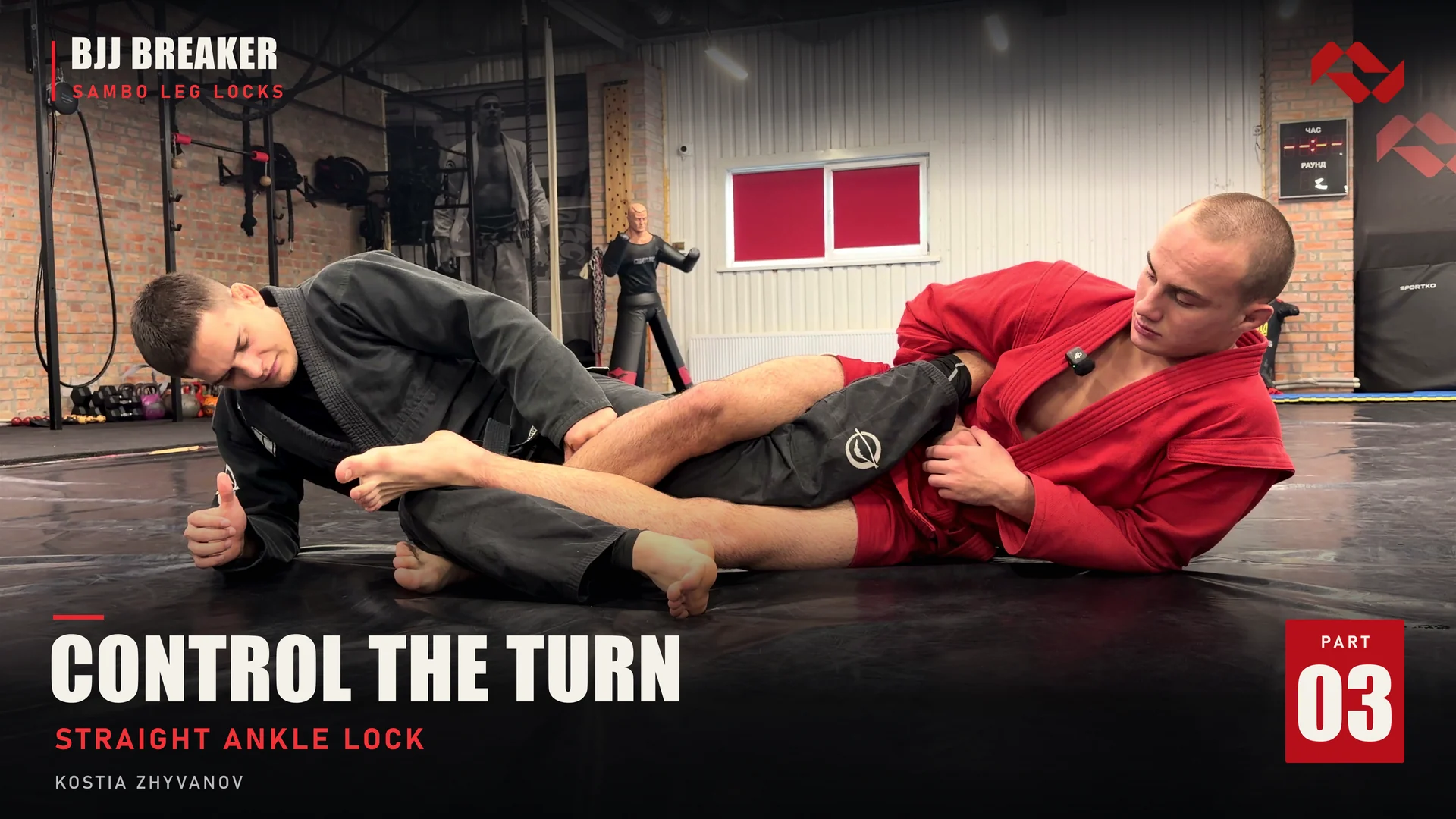 Straight Ankle Lock: Control as Your Opponent TurnsKostya Zhyvanov
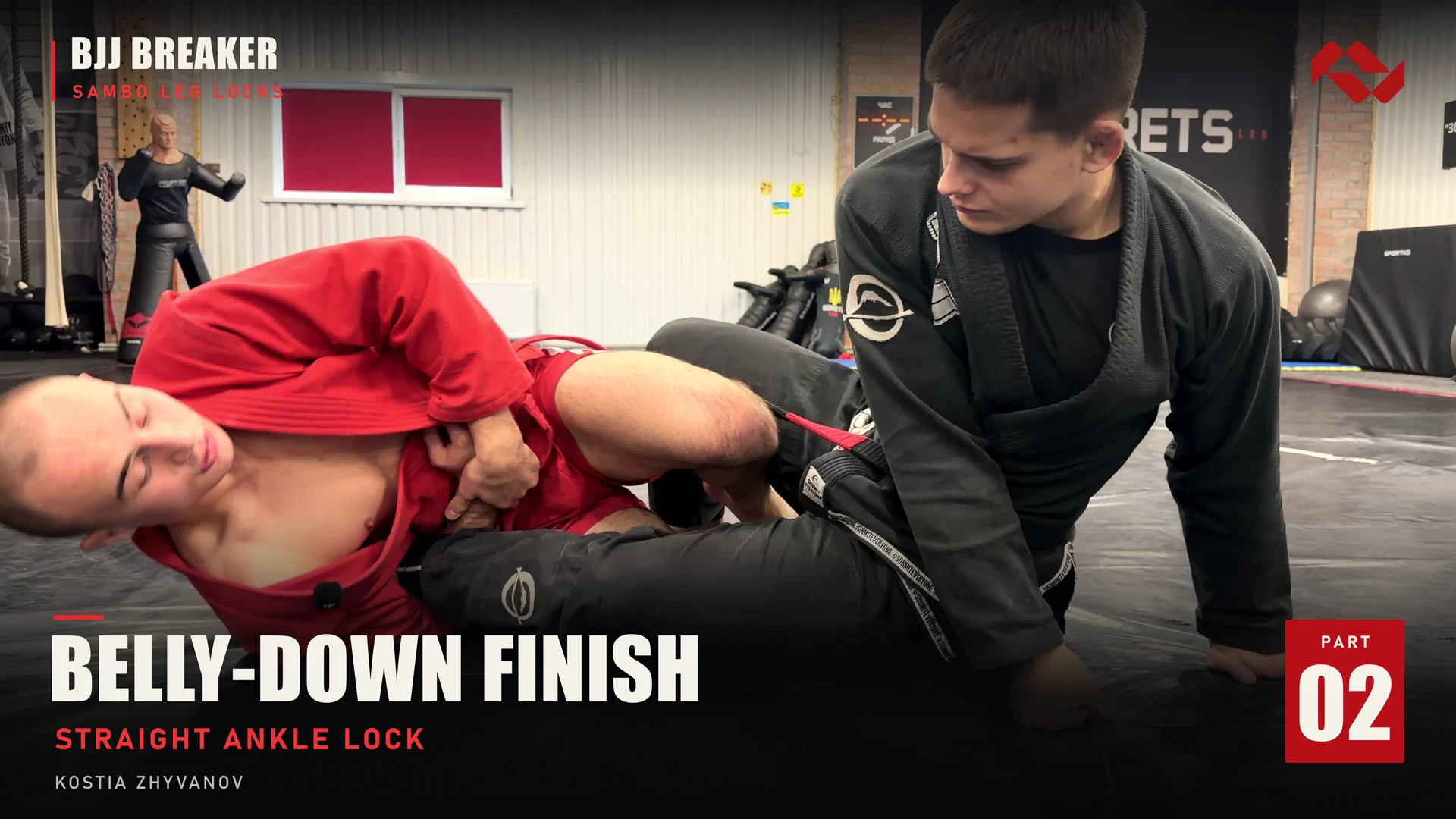 Belly-Down Straight Ankle Lock: How to FinishKostya Zhyvanov
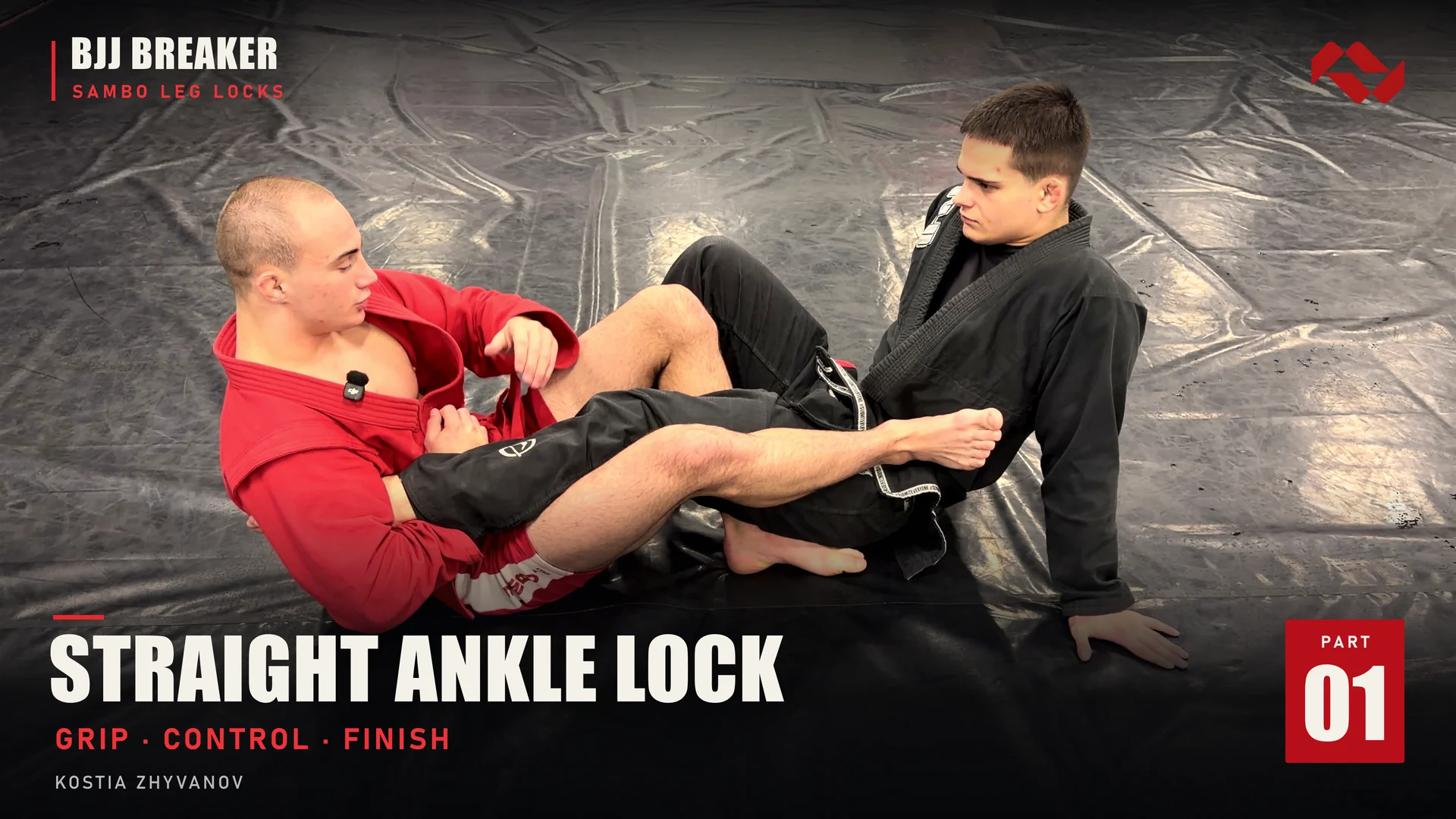 Sambo Straight Ankle Lock: Grip, Control & FinishKostya Zhyvanov
Build a more complete grappling game.
Learn from the team that developed homegrown black belts and an adult ADCC Trials finalist at 16.
One membership unlocks every published lesson in sambo, BJJ, freestyle wrestling, strength and conditioning, and mental preparation. Pick your focus, study the details and take them into your next session.
1,340 UAH / month · 13,400 UAH / year
Payments are charged in Ukrainian hryvnia (UAH). Your bank determines the conversion to your currency.
Continue reading
- BJJ positions: a practical map of guard, pins and escapesUnderstand the main BJJ positions, what each athlete is trying to control, and how to connect guard, side control, mount and back control in training.
- What is sambo? The sport, its origins and where to startA practical introduction to sambo: its origins, sport and combat formats, beginner skills and questions to ask before choosing a class.
- Sport sambo rules: a beginner’s guide to throws, hold-downs and the scoreLearn how to read a sport sambo score, why the attacker’s landing matters, how hold-downs score and what to confirm before your first competition.
- Sambo Leg Locks for BJJ, Grappling & MMAExplore sambo leg locks for BJJ, grappling and MMA with Kostya Zhyvanov: 11 lessons covering ankle locks, kneebars, calf slicers and hip locks.