 BORETS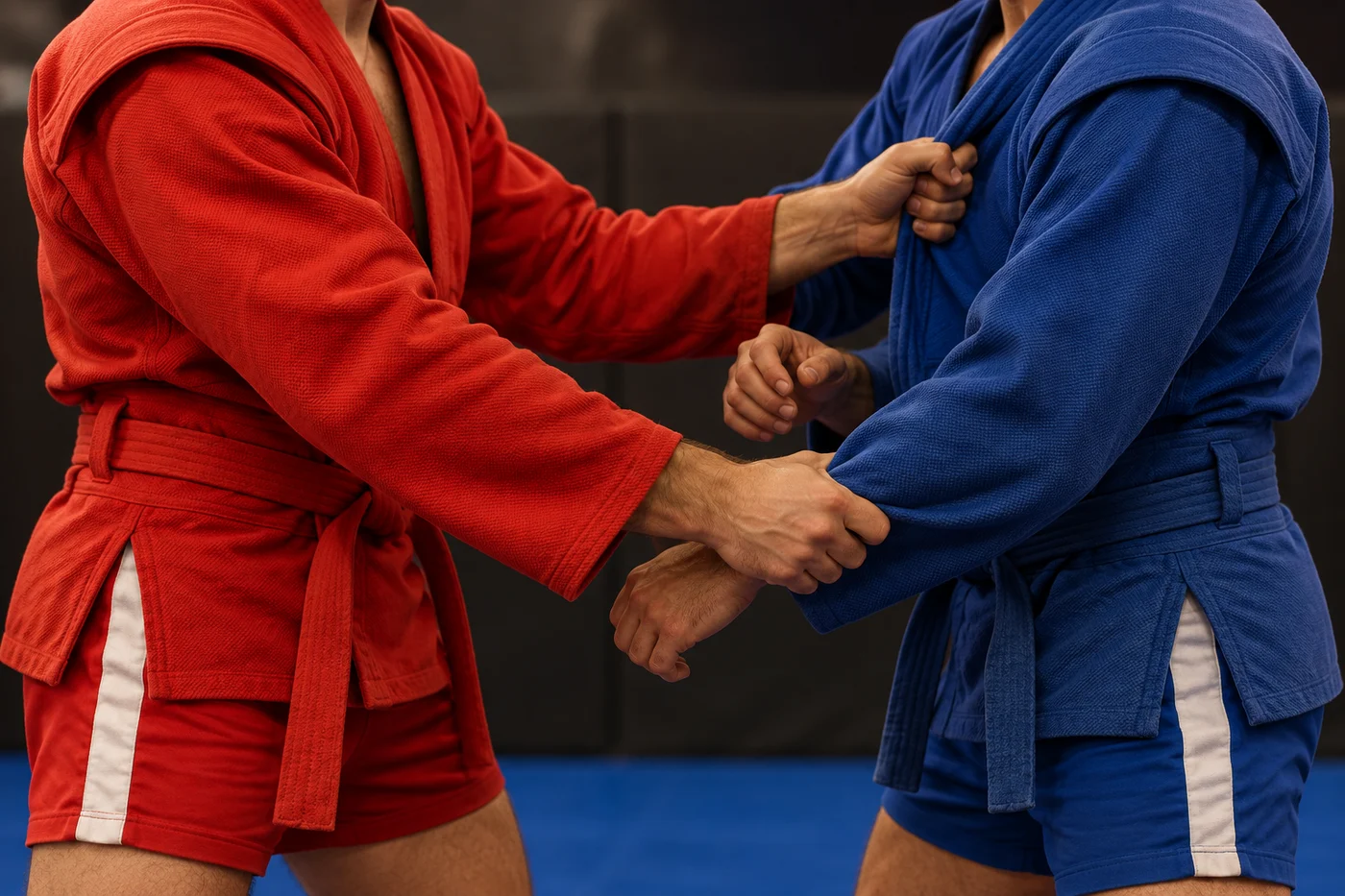
In this guide
A shoulder throw can look like a quick turn followed by a lift. The useful part to study happens earlier: how the attacker connects the opponent’s upper body to the entry without losing balance or exposing an uncontrolled back. A fast rotation cannot replace that connection. Begin with one named variation, then examine what changes when the defender stops following.
Which shoulder throw are you studying?
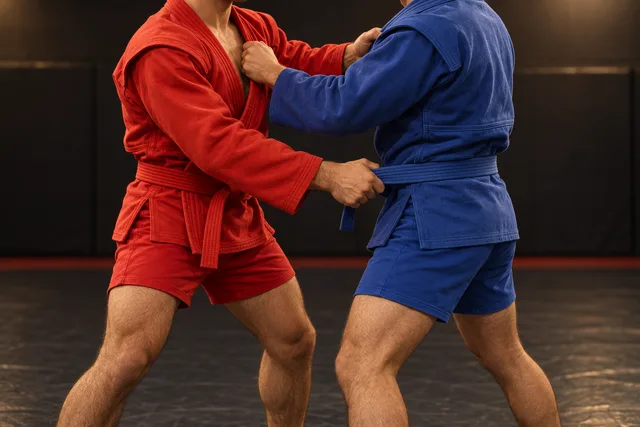
FIAS’s technical curriculum includes throws over the back with different arm and jacket grips. “Shoulder throw” is a useful search term, but does not specify all those details. IJF’s ippon-seoi-nage provides a recognizable judo reference for a one-armed shoulder throw; it does not make every sambo version mechanically identical.
Record whether the demonstrated entry stays standing or drops, which arm is controlled and where the second hand works. Do not quietly replace a standing practice entry with a drop variation. That changes the landing and the demands on both partners, so it needs its own instruction and appropriate preparation.
The arm connects the turn to the opponent
Look at the defender’s shoulder as well as the attacker’s feet. If the attacker turns while the shoulder remains comfortably behind, the entry may create space instead of carrying the opponent with it. The hand grip alone can disguise that separation: fabric can stay in the hand while the bodies disconnect.
Ask the coach to pause the entry before completion. Can you identify the controlled arm, the shared direction of movement and the attacker’s stable support? This is a better checkpoint than whether the attacker has turned far enough to face away. Turning is a component, not proof that a throw is available.
Distance and posture before effort
An entry from too far away asks the arms and back to bridge a gap that the position should have solved. Watch for reaching, a collapsed posture or feet that keep chasing after the turn. These are reasons to revisit the starting distance and the defender’s movement, not instructions to pull harder.
The opposite problem is turning into a space the defender has already closed. Compare two attempts from the same grips: one while the partner follows an agreed step, another after the partner settles. Explain which condition disappeared. Keep the comparison slow enough to see it rather than trying to rescue both attempts with speed.
A missed entry is part of the technique
A defender may withdraw the controlled arm, move around the entry or stop the forward movement. If the connection is gone, forcing a completed throw can leave the attacker underneath or with the back exposed. A coach should show the agreed reset or recovery alongside the successful demonstration.
For a constrained test, let the defender choose between following the initial movement and withholding it, without adding counters. The attacker’s task is to recognize whether the entry remains available. Count a correct decision to stop as useful evidence. This tests recognition without turning every failed attempt into an uncontrolled scramble.
Finish the lesson at the landing
Practice the full throw only with suitable mats, prepared receiving skills and the coach’s chosen variation. The partner’s head and neck must not become a substitute landing surface. Stopping an unsafe entry is part of control; a dramatic fall is not a better repetition.
After a controlled landing, identify whether the attacker remains standing, follows to the ground or loses the connection. Sambo scoring and a grappling continuation ask different questions about that outcome. Study the version’s actual result, then connect it to a stable next position instead of treating the airborne moment as the whole technique.