 BORETS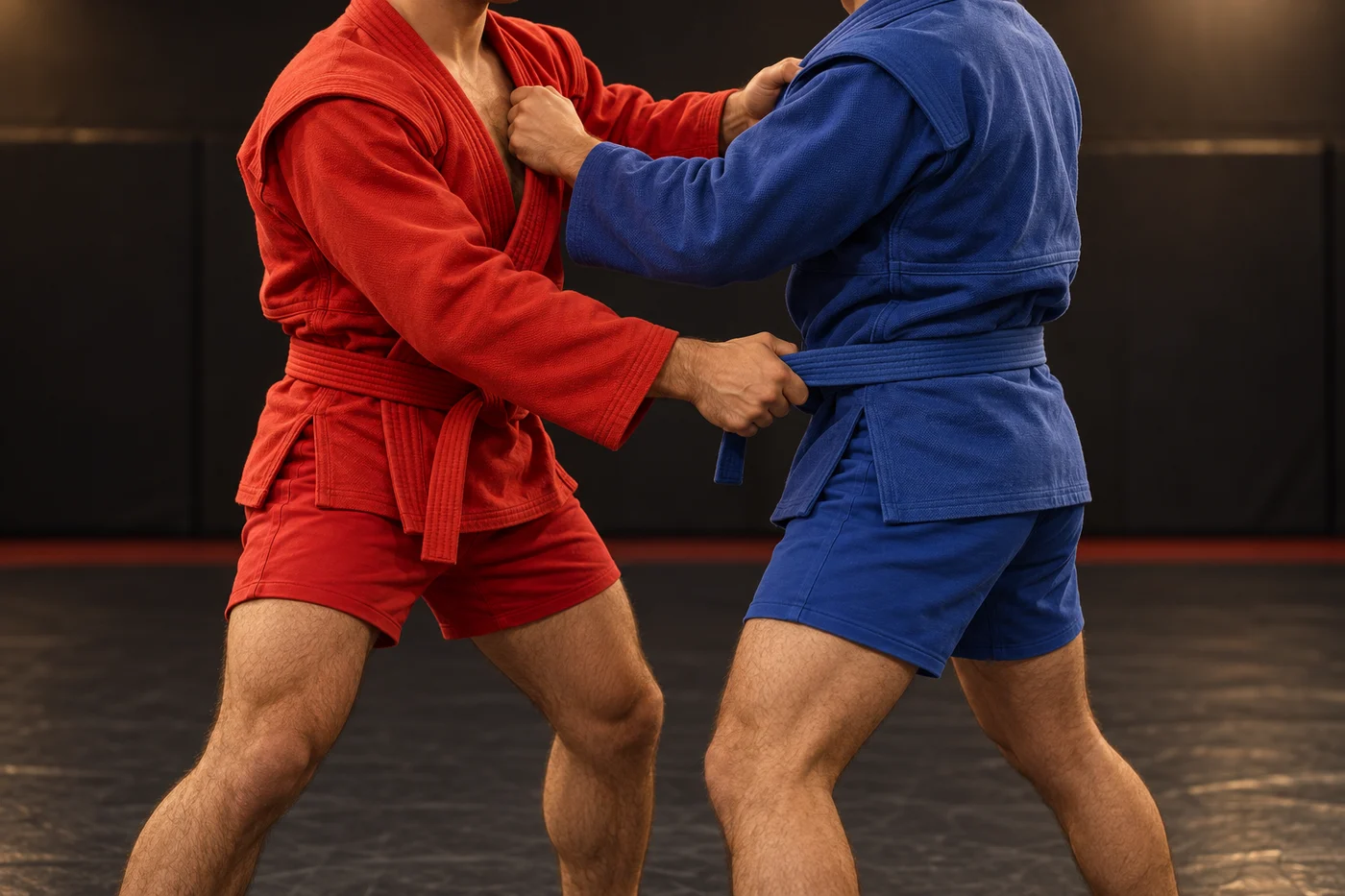
In this guide
A hip throw uses the attacker’s turning body and hip connection to direct the opponent over a controlled base. The arms, feet and hips have to cooperate. Simply turning your back and trying to lift can leave a gap between bodies or put your own posture under strain. Study how the opponent arrives on the hip connection before concentrating on the throw’s visible rotation.
Choose a grip-specific version
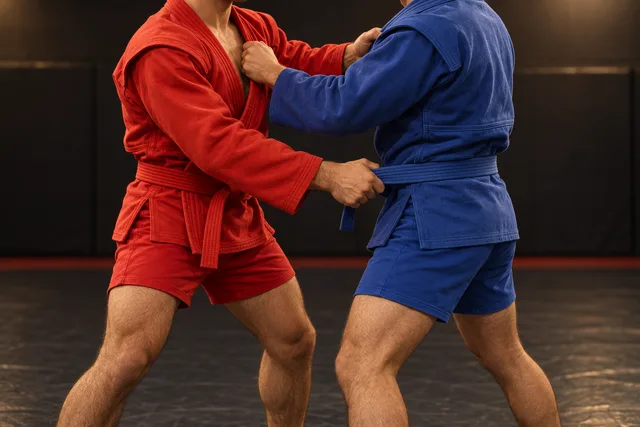
Sambo’s technical curriculum includes hip throws with different grips, including an arm and the belt at the back. IJF’s o-goshi reference offers a useful comparison for recognizing a large hip throw. The shared shape does not tell you which jacket contact a particular sambo version requires.
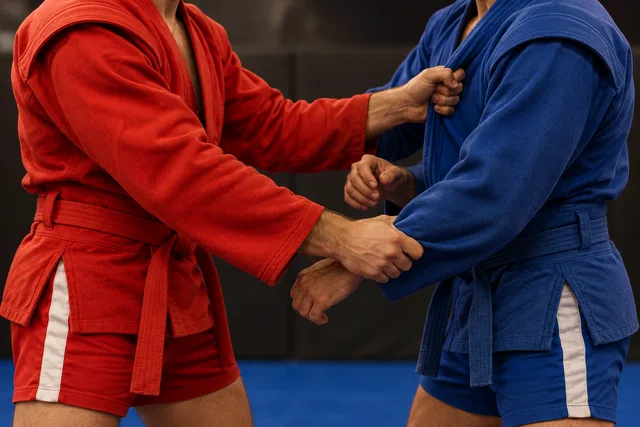
Ask the coach to identify what each hand controls before the turn. One connection may guide the arm while another keeps the bodies close. If you change the grip, revisit the entry rather than assuming the same turn will produce the same result. A belt-based version also needs a plan for establishing that grip under resistance.
Three details before lifting
First, balance: observe whether the opponent has been brought into the direction the throw needs or remains settled away from the entry. Second, distance: a gap can make the attacker reach backward with the hips while pulling forward with the arms. Third, base: the turn must leave the attacker able to support and guide the movement.
These are relationships, not identical foot marks for every pair of athletes. Differences in height, stance and grip change how the coach sets up the entry. Ask for a paused demonstration from the side, where the gap between bodies and the position of both athletes’ hips are easier to see.
Avoid turning into an empty space
If the defender steps away as you turn, the hip connection may never form. Finishing the rotation anyway can expose your back while leaving the opponent upright. Recognize the missing contact early enough to recover your stance. The aim of the study is an entry that responds to the partner, not completion of a memorized turn.
Another common problem is attempting to lift before the partner’s balance has changed. Ask whether you are supporting a connected opponent or trying to carry someone who remains organized over their own feet. More effort from the lower back does not resolve that difference. Revisit the setup with your coach.
Separate entry practice from complete throws
With suitable mats and a partner trained to receive the throw, the coach can begin with entries that pause at a stable connection. The receiver should know when a repetition will stop and when it will continue. Add the landing gradually rather than surprising a partner who expects only a turn-in.
A constrained resistance task might allow the defender one agreed step while the attacker selects a valid entry or resets. Count a clear decision to abandon a lost entry as useful information. If the bodies separate or either athlete loses balance unexpectedly, stop and reconstruct the position before increasing speed.
Finish with a readable ground position
Continue the analysis through the landing. Does the attacker remain connected without collapsing onto the receiver? Can the defender turn, recover space or bring a leg between the bodies? Those details determine which ground-control option is available. A spectacular flight with an unclear finish leaves half the lesson unexplained.
FIAS evaluates the actual throw and landing, while a BJJ or other grappling event may reward the exchange differently. Keep the intended ruleset visible in practice. For no-gi adaptation, study how to replace the clothing connection before copying the hip movement; the same rotation cannot compensate for a grip that no longer exists.