 BORETS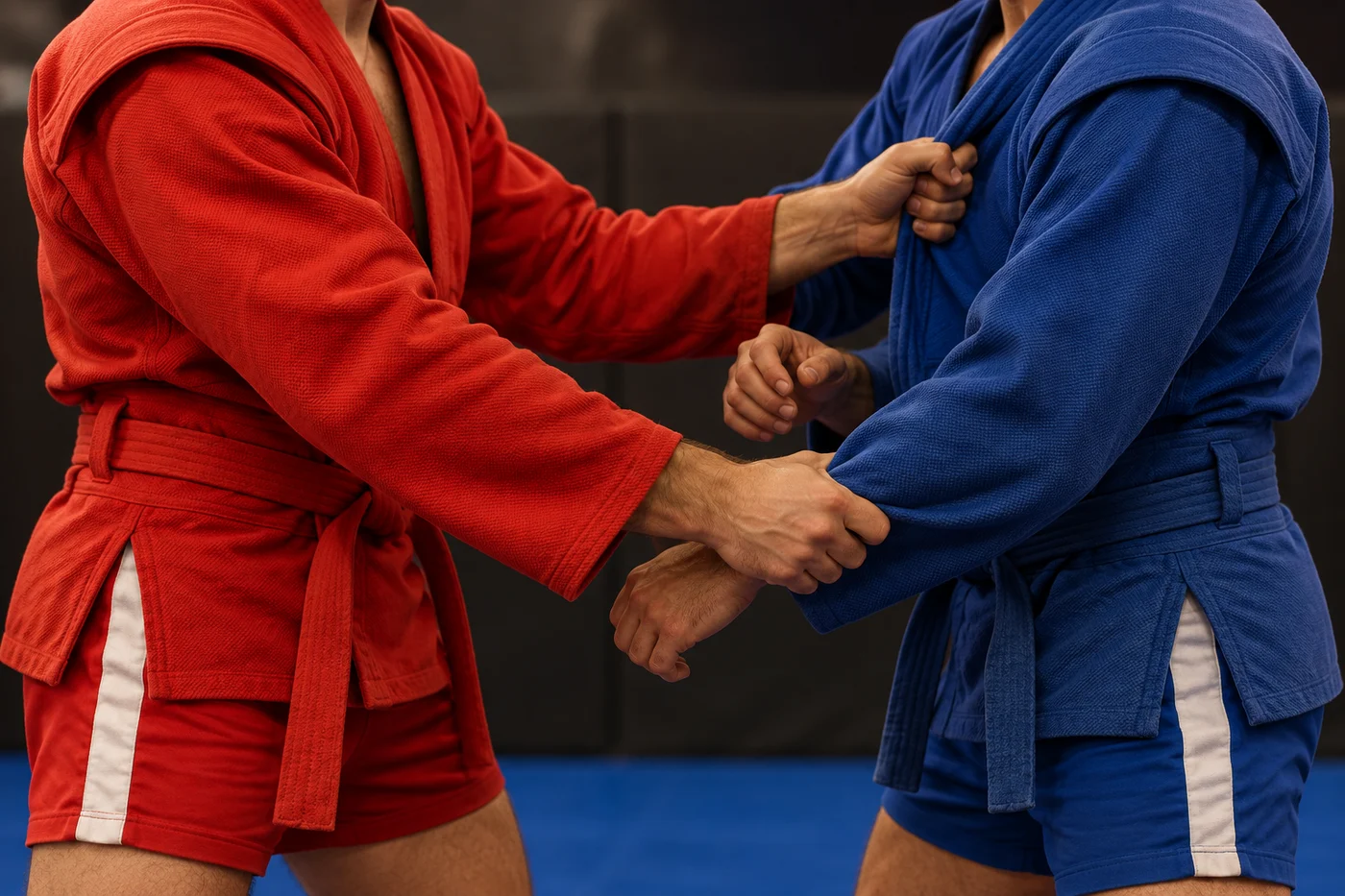
In this guide
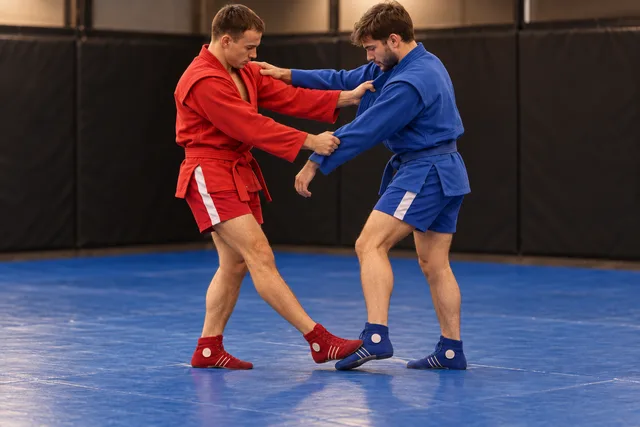
An inside trip uses a leg connection from between the opponent’s legs while upper-body control directs their balance. The foot action is only part of the throw. If the opponent can keep the torso stable and freely move the targeted leg, reaching farther with your foot usually creates a longer reach rather than a better opportunity. Begin by studying the stance and the contact above it.
Identify the version being taught
English-language “inside trip” can describe a family of hooks and reaps. Sambo’s technical curriculum distinguishes those actions. IJF’s o-uchi-gari reference provides one recognizable large-inner-reap comparison, but the label should not erase differences in gripping, stance or whether the attacker stays standing.
Ask your coach to name the targeted leg and show the intended finish. Are you studying a close jacket-grip entry, a reaction to the opponent stepping or a continuation from another attack? Record one starting condition. Mixing several versions before you can identify their different entries makes a simple foot action unnecessarily confusing.
Three details to observe together
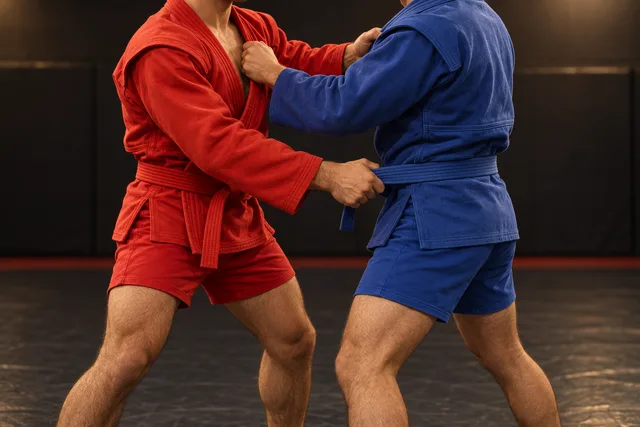
First, distance: your leg should not have to search for the opponent while your chest remains far away. Second, direction: watch whether the upper-body connection actually changes the opponent’s balance toward the intended landing. Third, support: the attacking athlete needs a stable supporting leg while the other leg makes contact.
Pause a demonstration just before the leg action. Can you identify all three? If the attacker is already leaning beyond their own base, a successful finish may depend on the partner cooperating. A coach can show the difference between a connected entry and the same leg shape performed from the wrong distance.
Read the step instead of chasing the ankle
The opponent may withdraw the target leg, widen the stance or shift weight onto another support. Each response changes the available attack. Treat the withdrawing foot as information about distance and timing. Following it with a stretched leg while losing your own posture can make you easier to counter.
For a useful comparison, have the coach show a successful entry and one in which the defender removes the leg early. Look at the moment before contact. Did the attacker’s upper-body action arrive late, or did the available leg change? The answer determines whether to adjust the entry or move to another agreed attack.
Test entry and balance before completing throws
Begin with a coach-selected grip and a partner who can safely receive the eventual throw. A constrained task can stop at the entry: the defender takes one agreed step, and the attacker establishes the intended contacts without forcing the landing. Reset if the target is unavailable or either athlete loses control of their base.
Progress to a controlled completion only when the coach approves. Keep the attack away from lateral pressure on a planted knee; this is a throw study, not a test of the partner’s joint tolerance. Review whether the upper body and leg action arrived together, rather than rewarding a fall obtained through a sudden collision.
Connect the throw to the next position
After the landing, identify who remains balanced and which grips survive. The same entry can lead to different ground positions if the attacker follows carelessly or the defender turns. Include that moment in your study rather than cutting the demonstration at impact.
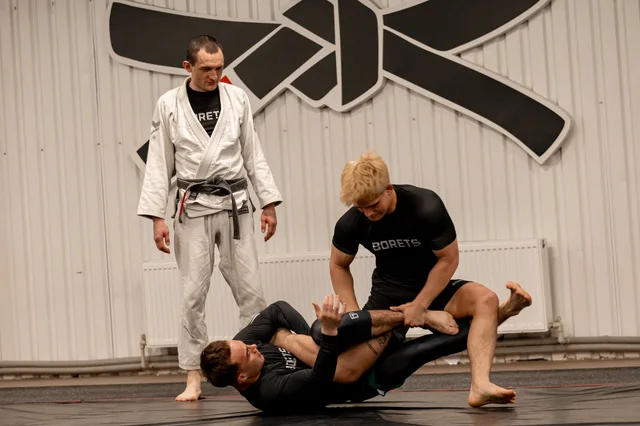
For no-gi grappling, investigate which body connection can replace the jacket grip before assuming the trip transfers unchanged. Competition legality and scoring come from the applicable rules, not from the technique’s name. Your coach should choose the version and resistance level appropriate to the group’s age and experience.