 BORETS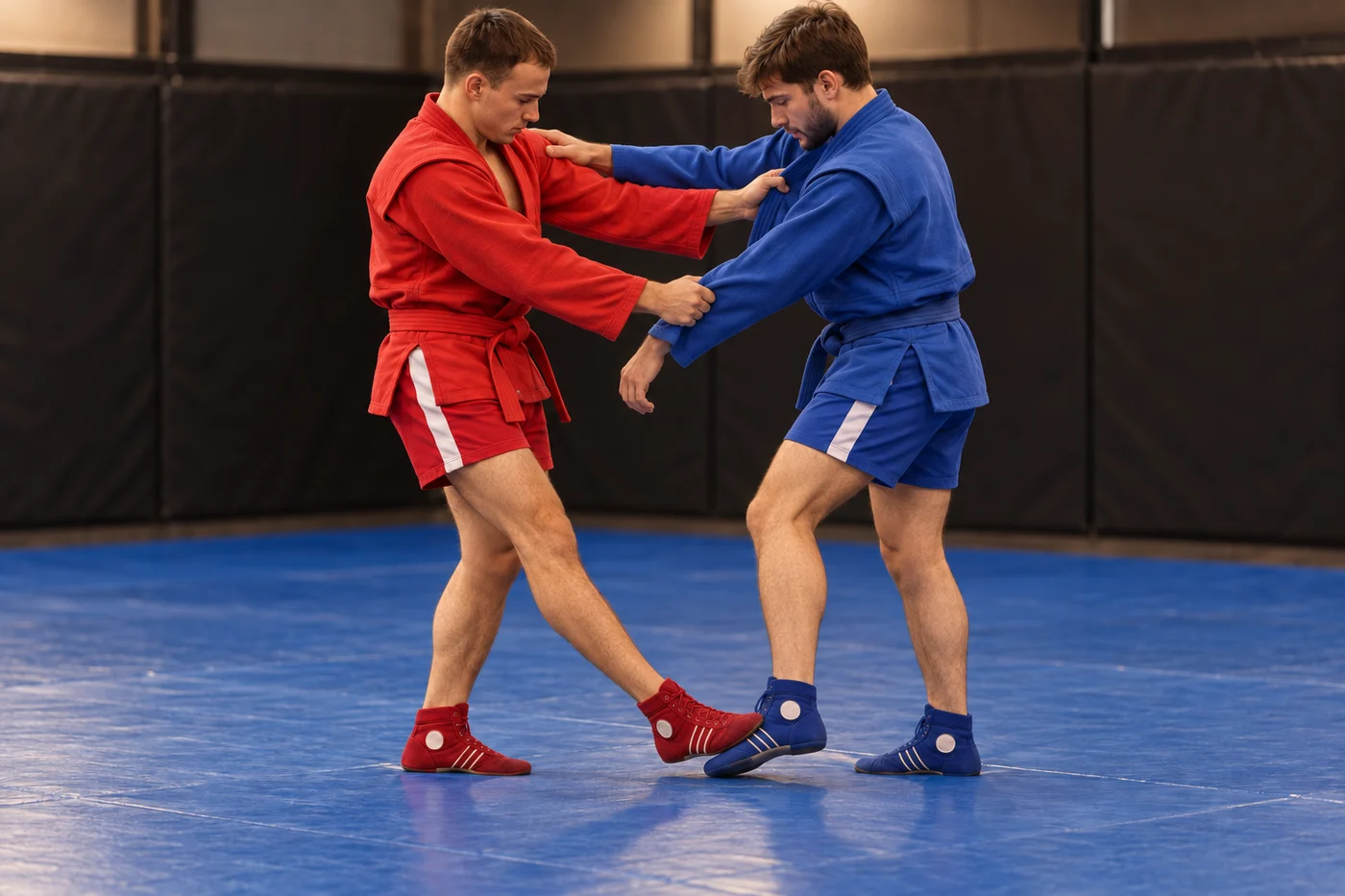
In this guide
An outside trip attacks a support from outside the opponent’s stance while their upper body is directed toward the intended fall. Reaching behind a leg can make the movement look correct before the opponent’s balance has changed. The useful study is the relationship between those two actions: the upper-body connection and the removal or blocking of support.
Distinguish a trip, a reap and a hook
“Outside trip” is a convenient search term, but several leg actions can appear under it. Sambo distinguishes trips, hooks and reaps. IJF describes o-soto-gari as a large outer reap and o-soto-otoshi as a related outer-drop action. The reference helps name a difference; it does not make every outside-leg throw identical.
Ask the instructor to show whether the leg is moving the support, holding a connection or acting as a barrier while the upper body turns. Follow one version for the session. Trying to combine its grip with another version’s leg action can leave you with two movements that no longer cooperate.
Check direction, distance and your supporting foot
The first detail is the opponent’s balance. Can they remain upright over both feet while you reach behind the leg? If so, the upper-body task is unfinished. The second is distance: your attacking leg should connect without your body being left at the end of a long reach.
The third detail is your own supporting foot. Its placement must let you maintain balance while the other leg works. Watch the attacker’s whole body in a demonstration, including the foot that does not perform the visible attack. That quiet support often explains why one attempt feels connected and another becomes a contest of pushing.
Recognize when the defender has changed the problem
The defender may step away, turn the hips or recover their upper body over a different support. If you continue the original leg action after that change, the intended landing may no longer be available. Keep the ability to withdraw and return to a balanced stance; remaining attached to a failed attack is not control.
Compare a clean entry with one where the defender recovers posture early. Ask which event happened first: loss of the jacket connection, a change in the hips or the attacker’s support moving out of place. Addressing that event is more useful than making the final leg movement larger.
Use a partner task with a controlled landing
With the coach supervising, begin from an agreed grip and let the defender offer one predictable step. Study whether you can reach the intended position without rushing. Start with entries that stop before the throw; add completion only after both partners can maintain the task and the receiver is prepared to fall.
Do not drop your weight sideways across a planted knee or force a backward fall beyond your ability to guide it. Stop when the leg connection or supporting stance is wrong. For younger or inexperienced groups, the coach may keep the task at balance recognition and entries rather than completing the throw.
Keep the landing in the lesson
A throw that reaches the mat still leaves a grappling question: can you settle into useful control without losing the connection? Observe whether the defender turns and whether your own legs remain available to move. The first ground position belongs in the same study as the standing attack.
FIAS scores throws according to the actual exchange, including the landing and whether the attacker falls. A familiar technique name does not guarantee a particular score. When adapting to no-gi, have the coach replace the jacket-dependent control deliberately and test that connection before expecting the same outside-leg action to work.