 BORETS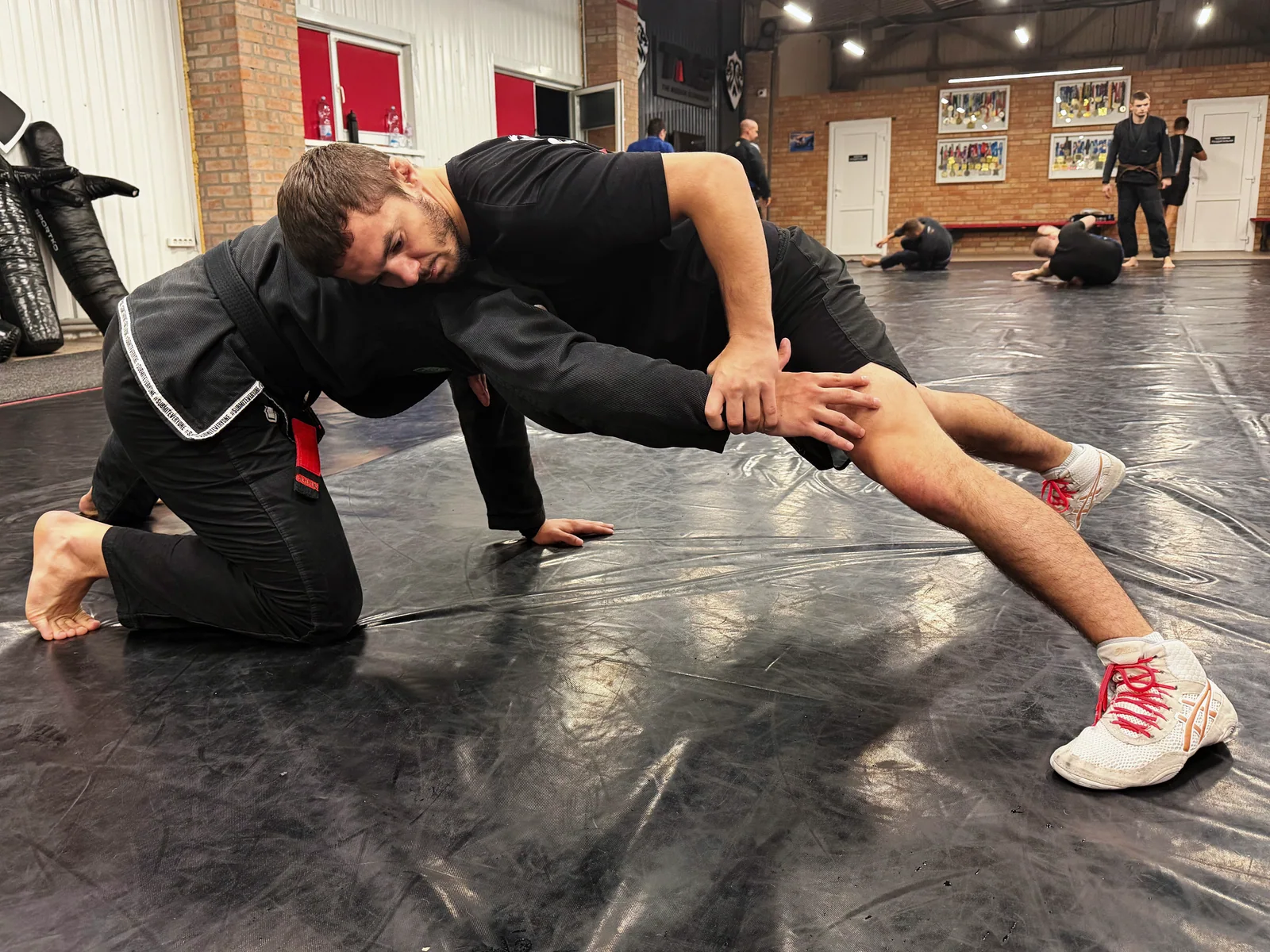
In this guide
A sprawl moves the legs and hips away from a leg attack while the upper body manages the attacker’s connection. Its purpose is to interrupt the entry and leave you able to wrestle again. Dropping heavily without reading the attack can miss the problem or leave both partners in an awkward position. A useful sprawl combines recognition, contact and the recovery that follows.
Defence begins before the drop
Keep a stance from which your feet can move and your hands can meet an approaching opponent. Look for the change in level and the closing distance together. A hand reaching toward your leg from far away is different from a shoulder already entering underneath your hips. Practise responding early with footwork and appropriate hand contact so that the sprawl is part of your defence rather than the only available response. Staying upright until both legs are collected makes the task much harder.
Move the target away and stay connected
As the attacker enters, move the feet back and bring the hips away from their collecting arms. Use controlled upper-body contact to manage their shoulders and upper back. Keep your own neck aligned and your weight distributed through a position you can recover from. The exact placement depends on whether the attack is on one leg or both. Have a coach demonstrate the contact point. The drill should never depend on dropping your body weight onto a partner’s neck or forcing their face into the mat.
Check whether the hands still control a leg
A sprawl can look convincing while the attacker still has a strong connection behind a knee. Before circling, identify what they are holding and whether their shoulders can keep following your hips. A single-leg attachment may need a different adjustment from an attack whose hands have already separated. Do not wrench the trapped leg sideways while the foot is fixed. Work with the coach on freeing the connection or returning to stance, keeping the knee and hip moving in a coordinated way.
Recover an angle instead of waiting underneath pressure
Once the entry is stopped, choose a manageable next action: recover your stance or circle toward a position behind the opponent. If circling, maintain control of their upper-body line while moving your feet around, then connect to the hips. Moving the hands first and leaving the feet behind can create space for a second attack. The attacker should be allowed to face you during later drills, so that the go-behind depends on maintaining an angle rather than on a partner freezing in place.
Distinguish timing errors from position errors
If your hips arrive after the opponent is already underneath and driving, inspect the earlier recognition and distance. If you react on time but slide past the shoulders, inspect contact and direction. If you stop the first attempt but are immediately attacked again, inspect your recovery. These observations lead to different drills. Counting every unsuccessful defence as a need for more explosive sprawls hides the distinction. Use a side-view recording to see when the attacker reaches your legs and when your feet actually begin to move.
Increase uncertainty before collision
Start with slow, announced entries and a controlled defensive pause. Next let the attacker choose between approaching without a shot and making one agreed leg attack. Add recovery to stance before practising a go-behind. For children, use movement and contact games with a coach choosing appropriate pairings; avoid repeated heavy landings onto a partner. Record early recognition, preserved posture and a completed recovery separately. Defence becomes more useful when you can remain ready for the next exchange, not merely survive the first contact.