
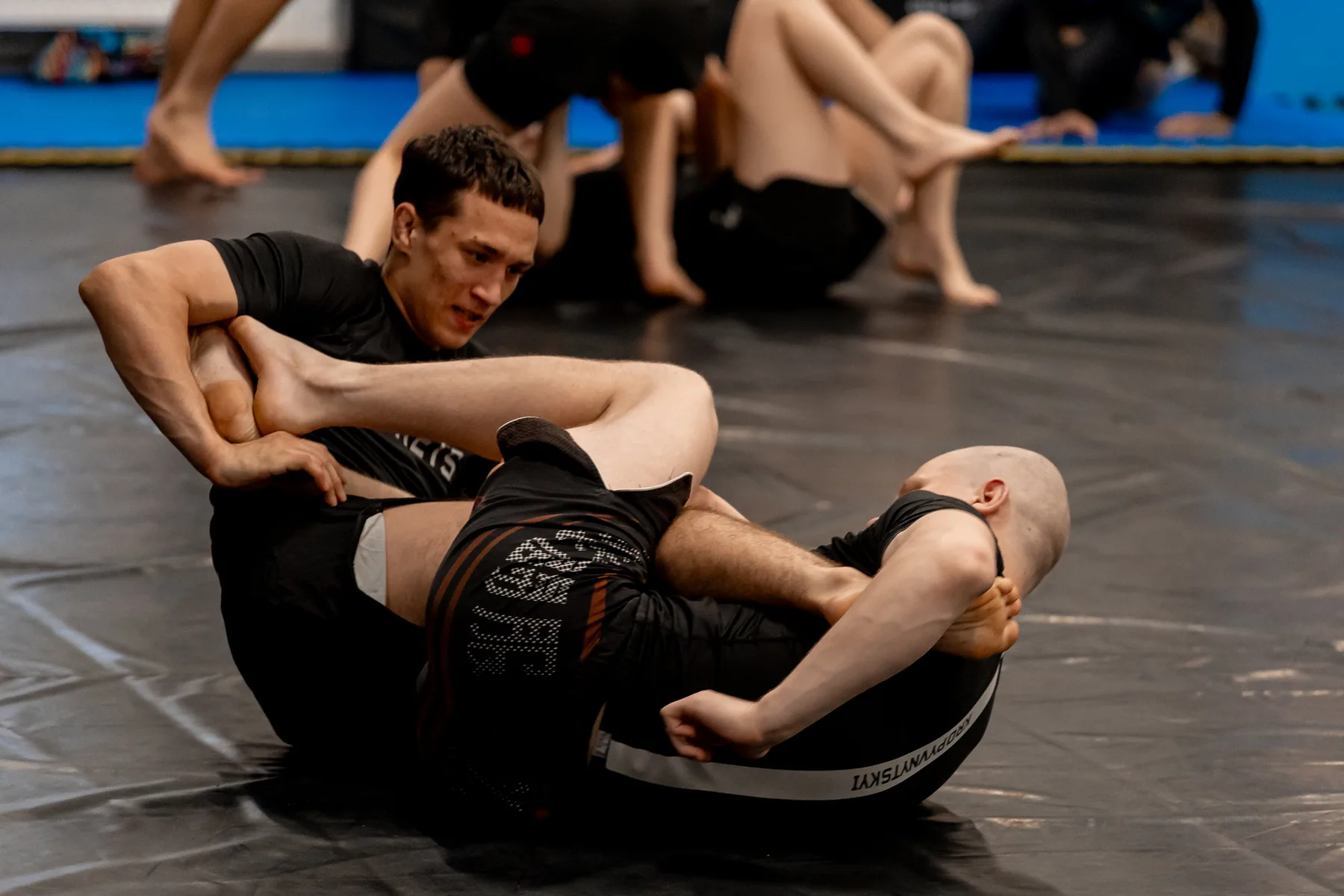
The direct answer
Check the event rules before choosing takedown, guard and leg-lock priorities.
A complete no-gi passing system needs three connected lanes: outside movement around the feet, inside control between or over the legs, and close body connection that limits hip rotation. Start by identifying the guard’s immediate controls—feet, knees, hands, hooks and head position—then remove the control that blocks your chosen lane. Outside passing works when you can redirect the legs and win an angle before the guard re-centers. Inside passing works when your knees, shins or arms occupy useful space without exposing easy leg entries or upper-body attacks. Connected passing works when shoulder, head, hip and hand pressure control the near hip and far shoulder without collapsing your own base. The bottom athlete’s response selects the transition: square hips invite another angle, frames can expose an underhook or leg staple, and a turn to the knees can open a front-headlock or ride. Do not count passing the feet as success. Establish a stable checkpoint beyond the legs, control the first escape and only then advance. Train each lane with progressive resistance, clear rules around leg entanglements and enough space. Pressure should come from alignment and wedges, not from driving through a partner’s neck or forcing painful joint positions.
01
What to understand
Read the guard’s control map
Before moving fast, identify which feet manage distance, which knee protects the inside lane, whether a hand controls your posture, and where the bottom athlete’s hips can rotate. Name the first control you must clear. Trying to beat every frame at once makes the passer square and reactive.
Own an outside lane
Use posture, hand placement and lateral footwork to move beyond the line of both knees without diving the chest forward. Redirect the legs, step to an angle and keep enough distance to avoid being reattached. If the guard squares before your shoulders pass the knee line, reset the angle instead of racing blindly.
Own an inside lane
Place a knee, shin or safe hand frame inside the guard’s leg structure while protecting your own knee line and posture. Inside position should separate or pin one leg and reduce the guard’s ability to connect both sides. It is a platform for a pass, not a reason to remain stationary.
Connect upper and lower body control
Once distance closes, pair control of the near hip or leg with influence over the far shoulder or head line. This diagonal connection limits the guard’s ability to face you. Keep your knees and feet available so pressure can follow movement rather than pinning your own base to the floor.
Stabilize beyond the legs
Choose a clear post-pass checkpoint such as hip-and-shoulder control, a balanced ride or another rules-appropriate top position. Anticipate the first frame, underhook, hip escape or turn to the knees. The pass is reliable when you can answer that first recovery without exposing a reversal or submission.
02
How to train it
Step 1 · control-map freeze
Start from several open guards. The passer has five seconds to point to the distance controls, inside blocker and hip direction, then names an outside, inside or connection objective. The bottom athlete confirms the map. No pass occurs until the read becomes quick and consistent.
Step 2 · outside angle race
Bottom may re-center the hips but cannot grip above the passer’s elbows. Top wins by redirecting the legs and placing the shoulders beyond a knee line with posture intact; bottom wins by reconnecting both feet or squaring the hips. Reset before either athlete dives or scrambles.
Step 3 · inside-position handoff
The passer enters a chosen inside frame, then the bottom athlete alternates between recovering a knee shield and pummeling a foot inside. Top must transfer control from hand to shin, knee or hip without leaving both sides free. Finish at a stable passing checkpoint rather than a submission.
Step 4 · reaction-selected transition
Begin from one passing lane. Bottom gives one of three coached reactions: square the hips, build a strong frame or turn toward the knees. Top chooses the trained transition and stops after establishing the next checkpoint. Announce reactions first, then randomize with measured resistance.
Step 5 · pass plus first recovery
Run short rounds that begin at open guard and continue only until bottom makes one genuine recovery attempt after top clears the legs. Award the passer only for answering that attempt with balance and legal control. Add submissions later, after positional choices remain clear under resistance.
Clear one control to enter one lane.
Move past the knees before chasing the torso.
Inside position must create the next action.
Connect near hip to far shoulder.
Control the first recovery to finish the pass.
03
Common mistakes
Moving before identifying attachments
Fast footwork fails when a foot, grip or hook still controls the passer’s center. Read the attachment, clear or redirect it, and then accelerate into the available lane.
Driving pressure with a collapsed base
Falling the chest forward can feel heavy but leaves the hips behind and makes direction changes slow. Use connected wedges, active feet and diagonal control so pressure follows the guard’s movement.
Staying in one lane against every reaction
A committed outside chase, fixed knee-cut angle or static body lock becomes predictable when the guard has already changed alignment. Keep a named transition to another lane and a deliberate reset when neither connection is favorable.
Calling leg clearance a completed pass
The guard may immediately frame, invert, recover an underhook or turn to the knees. Plan for the first recovery and establish stable control before advancing to a submission or celebrating the position.
04
Questions athletes ask
01 · Should I specialize in pressure passing or speed passing?
Develop a preferred lane, but keep a connection to another lane for the reaction it attracts. Fast outside movement and close pressure are not opposing identities; they are distances within one system. Choose emphasis from your body, rules and recurring opponents rather than a label.
02 · What should I do against a flexible guard?
Do not try to exceed the athlete’s range or force joints to end range. Control the direction of the hips, separate upper and lower body alignment, and pass to a stable checkpoint. Flexibility may expand movement options, but it does not remove the need for frames and connection.
03 · How can I avoid leg locks while passing no-gi?
Track your knee line, keep posture and inside relationships, and recognize when a passing step exposes an isolated leg. Learn the relevant entanglements and legal threats with a qualified coach. Avoid escaping by sudden rotation when the foot is already controlled; reset or tap as needed.
04 · How should beginners practice no-gi passing?
Begin with one guard, one control map and one passing lane. Use cooperative repetitions, then constrained rounds with a single defensive reaction. Add choices only when posture, partner safety and the post-pass checkpoint remain consistent. A qualified coach should supervise pressure and leg-position details.
05
Sources and further reading
Training needs vary by athlete, schedule and coaching environment. Use these sources as context, then adapt with qualified support. Educational content for athletes and coaches. This guide does not diagnose injury, replace individualized coaching or override event rules. Stop if an activity causes pain, and use an appropriately qualified coach or healthcare professional for your situation.