
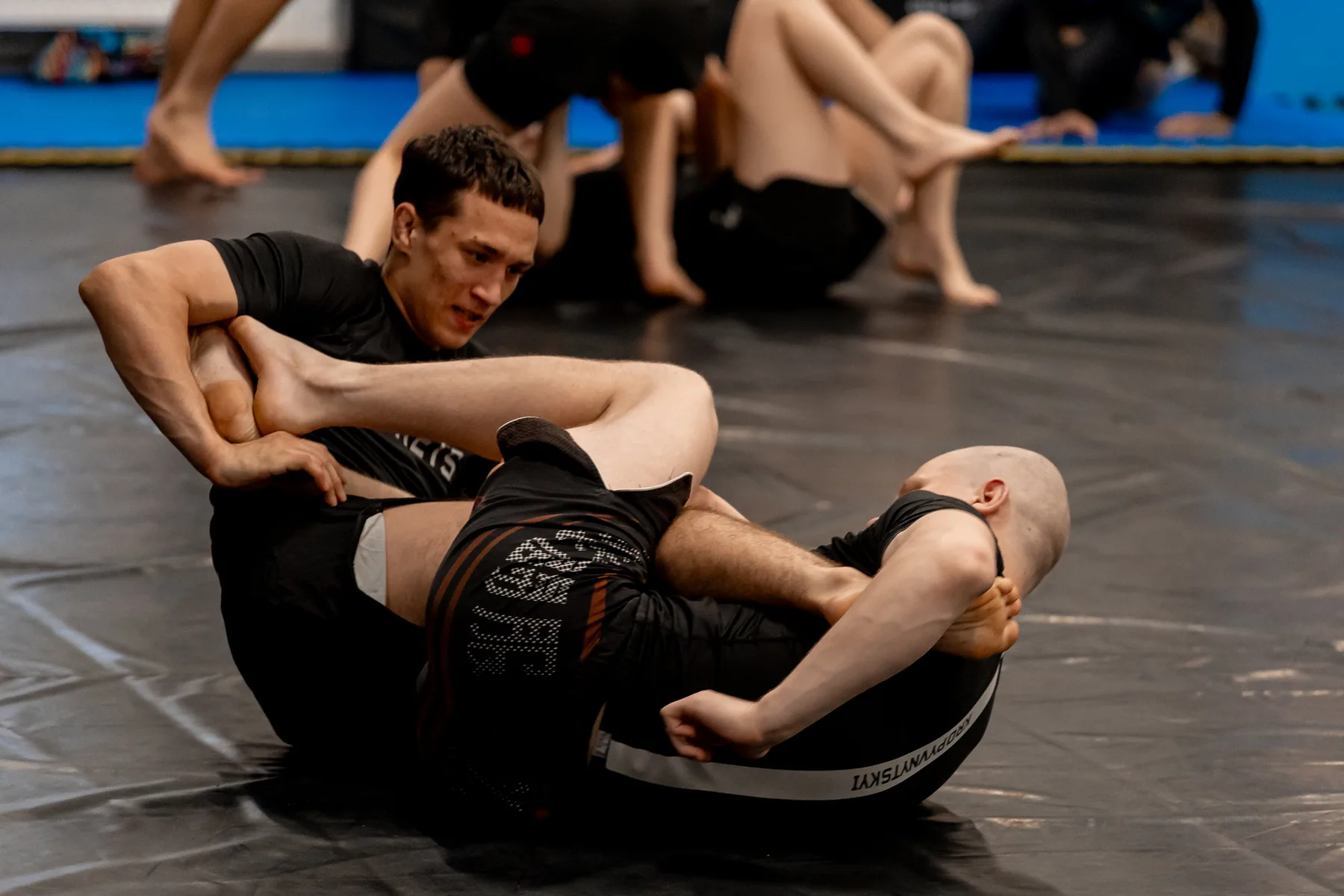
The direct answer
Check the event rules before choosing takedown, guard and leg-lock priorities.
There is no single universal submission-grappling ruleset. A useful comparison begins with the exact organizer, event, division and current document version, then maps seven questions: how the match starts, when points can be earned, what establishes a score, which submissions are legal, how the boundary is handled, what creates a penalty, and how a tie is resolved. Those answers shape behavior. A points match may reward consolidating a takedown, pass or control before chasing a finish; a submission-only phase may change the value of positional risk; a special overtime can make escape skill unusually important. Do not import a rule from another promotion because its format looks similar. Age, experience, belt, weight class and uniform can all change legality within one event. Build a one-page matrix from the official source, have a coach verify it, and turn every consequential rule into a training scenario. This guide provides a comparison method rather than a frozen chart of values, because organizers revise language and event briefings may supersede older summaries. Competitors remain responsible for checking the latest official regulations and the referee meeting for their specific bracket.
01
What to understand
Identify the governing document
Record the organizer, event name, date, division, uniform and rules PDF or official web page. Note its publication or revision date and save a copy for the coaching team. A social post, old athlete handbook or another tournament’s summary may be useful context, but it is not the controlling source for your bracket.
Map the scoring phase
Write when scoring begins, what action must be established, how long control must be demonstrated if a duration is specified, and whether advantages, riding time, activity criteria or referee decisions exist. Separate the physical action from its scoring condition: reaching a position and receiving credit for it are not always the same event.
Audit submission legality by division
Create three columns: clearly permitted, clearly prohibited and needs confirmation. Classify the finishing mechanics your team actually uses, not every technique on the internet. Include grip configuration and direction of force where the rule distinguishes them. Ask the organizer a precise written question when official language remains ambiguous.
Understand boundaries and restarts
Document what happens when athletes leave the area during neutral wrestling, a scoring action, a control position or an active submission. Determine whether the referee returns athletes to standing, recreates a position, awards anything or applies a penalty. Boundary knowledge should improve safe decision-making, never encourage dangerous flight from the mat.
Translate rules into match priorities
Choose an opening objective, a response when ahead, a response when behind, a late-match boundary plan and a tie-resolution plan. Keep each instruction observable: secure top control before opening the submission, recover inside position before conceding a penalty, or preserve enough time for the required scoring condition. Avoid slogans that do not tell the athlete what to do.
02
How to train it
Step 1 · build the rules matrix
Before technical practice, the athlete and coach complete one page covering match structure, scoring, legality, boundaries, penalties and tie resolution. Highlight only the rules that change a decision your athlete commonly faces. Recheck every highlighted statement against the current official source rather than copying a third-party chart.
Step 2 · score-or-no-score review
Show short, controlled sequences from your team’s normal positions. At a freeze signal, both athletes state whether the action would score and what must still happen. The coach then cites the relevant wording. Use uncertainty as a prompt to verify the document, not as an invitation to invent a referee interpretation.
Step 3 · legal-technique lanes
Start in positions where division-specific legality matters. The attacker may use only the verified legal family; the defender practices early recognition, controlled defense and an immediate tap when escape is no longer responsible. No one should apply a joint lock explosively or use a rules drill to test pain tolerance.
Step 4 · boundary and penalty rounds
Mark a safe inner boundary on the mat and give one athlete a score, time and position problem. Rehearse the event’s expected stop or restart without sprinting off the surface. In separate rounds, a coach calls common inactivity or conduct situations and the athlete must show the legal corrective action.
Step 5 · full rules simulation
Run representative matches with the correct period structure, scoreboard language, coaching limits and tie procedure. Assign a third person to officiate from the document and record every disputed moment. Afterward, resolve disagreements with the latest official material and update the team matrix before the next simulation.
Name the event and division before naming the rule.
Separate reaching a position from earning its score.
Verify legality by mechanic, not by technique nickname.
Know the restart before working near the boundary.
Train the clock and scoreboard, not only the position.
03
Common mistakes
Using a generic internet chart
A polished comparison can still be outdated, omit division exceptions or combine separate promotions. Use summaries to locate questions, then answer those questions with the organizer’s current official material and event briefing.
Memorizing points without conditions
Knowing a number is not enough if the athlete cannot identify control, duration, continuity or phase requirements. Rehearse the exact evidence a referee must see and the transition that follows once the score is established.
Ignoring penalties until competition
Inactivity, illegal grips, boundary conduct, communication and uniform problems can change a close match. Include the team’s most likely penalty situations in simulations and teach a calm, legal correction rather than arguing with the official.
Treating overtime as a separate sport
Special tie procedures deserve practice, but they should not erase the skills needed to reach them safely and competitively. Allocate enough time to understand starting positions, winning conditions and escape priorities while preserving the main-match game.
04
Questions athletes ask
01 · Which submission-grappling ruleset is best?
That depends on the athlete’s goals, development stage and event access. A ruleset can reward certain decisions without proving that one style is universally superior. For competition, the relevant question is which current rules govern your exact bracket and how those rules change your preparation.
02 · Are heel hooks legal in every no-gi advanced division?
No universal answer is safe. Legality may depend on organizer, age, experience, division, phase and the exact finishing mechanic. Read the current official rules and bracket information, then seek written clarification from the organizer when the wording does not resolve your case.
03 · How close to an event should we review the rules?
Build the first matrix when the event is selected, then check again before the final simulation and at the official briefing or published update. This timing leaves room to train meaningful differences while still catching late revisions. Keep the source version beside the matrix.
04 · What if a referee explains a rule differently?
Stay respectful and follow the event’s formal process. Before the match, ask a concise question and, when appropriate, show the relevant official wording. During competition, protect the athlete’s composure and use only the review or appeal mechanism the organizer provides; do not assume an argument will change the call.
05
Governing and institutional sources
Rules can change. The linked governing document—not this summary—controls your event. Educational content for athletes and coaches. This guide does not diagnose injury, replace individualized coaching or override event rules. Stop if an activity causes pain, and use an appropriately qualified coach or healthcare professional for your situation.